


 IndieHow Two Friends Made Hollow Pines in a Garage Over Five YearsSavings, a borrowed laptop and 4,000 hand-drawn frames: the story behind the year’s best mystery.
Indie Rafael Ortega6 min read
The Pixel Art Revival: Why Developers Keep Going Back to Small Sprites
It is cheaper, faster and — artists say — more expressive than you would think.
Rafael Ortega6 min read

Written by
Rafael Ortega
Rafael plays forty indie games a month so you only have to play the best five.
7Articles
2026Writing since
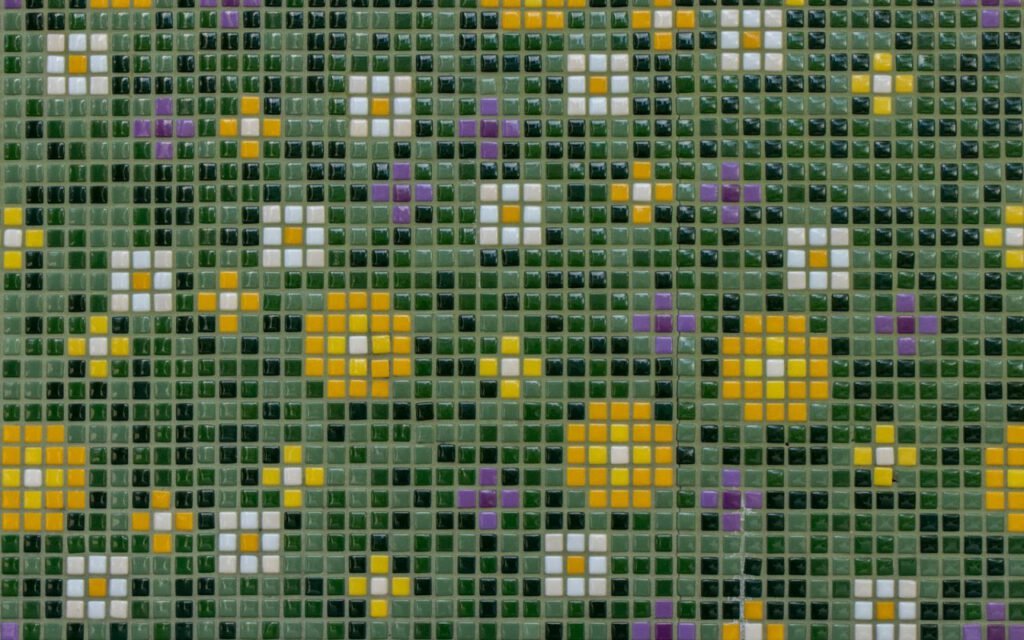
Pixel art never went away, but it is having a moment. Six of this year’s best-reviewed indie games use it. Walk through any digital storefront and you will find blocky heroes, glowing sprite cities and hand-placed dots of color sitting right beside photorealistic blockbusters, often with better reviews. For a style that began as a technical limitation of early home computers and arcade machines, pixel art has shown remarkable staying power, and the artists who work with it today say that is no accident.
We spoke with developers, artists and longtime players about why small sprites keep winning hearts, and why so many new studios choose them on purpose rather than out of necessity.
Limits help
A 32-pixel character forces artists to decide what really matters in a face or a walk. With so few dots to work with, there is no room for decoration. Every choice, from the tilt of a head to the length of a stride, has to carry meaning. Artists describe the process as a kind of editing, where the work is mostly deciding what to leave out.
With 16 colors you can’t hide behind detail. Every pixel has a job.
Nina Cho, co-founder of Two Owls Games
Cho, whose small studio in Minneapolis released a pixel art adventure earlier this year, said she sets strict limits on purpose. Her team works with a fixed palette for each area of the game, chosen before a single sprite is drawn. “When we started, we thought more colors would mean more beautiful art,” she said. “It was the opposite. Once we limited ourselves, the art started to feel like one world instead of a collection of drawings.”
Those limits also shape animation. A pixel character might have only four frames for a walk cycle and three for a jump. Animators have to exaggerate movements so they read clearly at small sizes, which often gives pixel art games a lively, cartoonish energy that more realistic games struggle to match.
Cheaper and faster, in the right hands
For small studios, pixel art also makes practical sense. Detailed 3D models can take weeks to build, texture, rig and animate. A skilled pixel artist can often draw and animate a character in days. That speed lets small teams iterate quickly, testing ideas and throwing away what does not work without losing months of effort.
But artists are quick to push back on the idea that pixel art is easy. “People think it’s fast because the images are small,” said Marco Delgado, a freelance pixel artist in Phoenix who has worked on more than a dozen indie games. “It’s fast once you know what you’re doing. Getting good takes years, just like any other art form.”
Delgado described the subtle techniques that separate professional pixel art from amateur work:
- Clean lines. Avoiding stray pixels, called jaggies, that make curves look rough and uneven.
- Careful shading. Using a handful of shades to suggest volume and light without muddying the image.
- Hue shifting. Shifting colors slightly toward warmer or cooler tones as they get lighter or darker, instead of just adding white or black.
- Readable silhouettes. Making sure a character can be recognized from its outline alone, even at a tiny size.
- Consistent scale. Keeping every sprite on the same pixel grid so nothing looks stretched or out of place.
Tools have improved, too. Free and inexpensive programs built for pixel art make it easy to draw on a grid, preview animations and swap palettes with a single click. Many artists share tutorials and palettes online, and a generous community has grown around the craft. Delgado said several of his clients first contacted him after seeing his short animation clips posted on social media.
Pixel art also ages gracefully. Detailed 3D games from fifteen years ago often look dated today, because they were reaching for realism with limited technology. Pixel art was never chasing realism, so a well-made pixel game from a decade ago can look just as good now as it did on launch day. For developers who hope people will keep playing their work for years, that matters.
Key takeaway: pixel art is a deliberate style with its own craft, not a shortcut. The best examples take as much skill as any hand-painted or 3D game.
Players fill the gaps
Simple sprites let imagination do some of the work, which makes stories feel personal. When a character’s face is just a few pixels, players project their own feelings onto it. A tiny figure standing alone in the rain can feel more heartbreaking than a detailed close-up, because players supply the emotion themselves.
Writers who work on pixel art games say this changes how they tell stories. Instead of relying on facial animation, they lean on dialogue, music, pacing and small gestures. A character who turns away, a sprite that sits down on a bench, a scene that holds still for a moment longer than expected, all of these become powerful tools.
Sound plays a bigger role in pixel art games than many players realize. Without detailed faces, a short musical sting or a soft sound effect often tells you how a character feels. Composers working on these games describe writing music that does the emotional work an animated close-up might do elsewhere. A single piano note when a character looks out over a city can say more than a page of dialogue.
Longtime players also point to nostalgia, though artists say it only explains part of the appeal. Many of the people buying pixel art games today were born long after the arcade era ended. For them, pixel art is not a memory but simply a style they like, the same way someone might prefer watercolor to oil paint.

A modern style, not a retro one
Today’s pixel art games look very different from the classics that inspired them. Modern engines allow pixel sprites to be combined with dynamic lighting, particle effects, smooth camera movement and high-resolution backgrounds. Some games mix pixel characters with painted environments. Others layer pixel art over 3D scenes, creating a look that would have been impossible on older hardware.
That blend has given rise to what some developers call high-definition pixel art. Characters remain small and carefully drawn, while lighting and effects add atmosphere. Rain reflects neon signs. Torches cast flickering shadows across stone walls. Fog drifts through forests in soft layers. The result feels both familiar and new.
Cho said her team spent nearly as much time on lighting as on sprites. “The pixels give you the character,” she said. “The light gives you the mood. Together they let a tiny team make something that feels big.”
Why it keeps coming back
Pixel art endures because it solves real problems for small teams while offering a distinct, expressive look. It is quick to iterate on, timeless in style and easy to read on screens of every size, from a phone to a big television. It also gives players room to imagine, which makes stories feel like their own.
If you want to explore the style, our indie spotlight features a new pixel art game each month, and our release calendar marks upcoming launches. You might be surprised how much feeling fits inside a 32-pixel sprite. As Nina Cho puts it, every pixel has a job, and the best artists make sure each one does it well.
Written by
Rafael Ortega
Rafael plays forty indie games a month so you only have to play the best five.
7Articles
2026Writing since
Read next
IndieHow Two Friends Made Hollow Pines in a Garage Over Five YearsSavings, a borrowed laptop and 4,000 hand-drawn frames: the story behind the year’s best mystery. IndieTen Indie Games You Probably Missed This YearPuzzle boxes, tiny city builders and a cooking game about grief — the hidden gems of…
 IndieGame Jams Are Where the Next Big Hits StartThree of this year’s best indie games began as 48-hour jam prototypes.
 IndieGarden Guild Review: The Most Relaxing Game of the YearBuild a village garden, trade seeds with friends and forget about your inbox.
2 Comments
Sharing this with my friends.
Saved this one for later. Really useful.