The Case for Rereading
Why the books we return to change more than we do.
 Nora Ellis6 min read

Nora Ellis
Nora is a registered dietitian who writes about food without rules, guilt or powders.


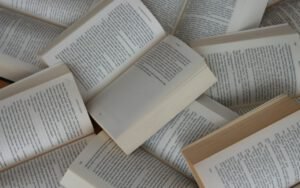
I reread the same novel every winter. Each time, it is a different book, because I am a different reader. The words on the page have not changed since 1958, when it was first published. The plot is the same, the ending is the same, and I could probably recite the first paragraph from memory. And yet every December, when I open it again, I find something I swear was not there the year before.
Rereading isn’t lazy. It is a conversation with an older version of yourself. I know that sounds like the kind of thing people say to justify not trying new books, and I understand the suspicion. There are so many books in the world and so little time. Why spend any of it on a book you have already finished? This post is my answer.
 Sponsored · Quietdesk Writing AppWrite without distractionsFree for 30 days.Try free
The winter book
The novel I return to is a quiet story about a schoolteacher in a small town in Vermont during a single hard winter. Not much happens. She teaches, she shovels snow, she falls a little bit in love with the wrong person and decides not to do anything about it. I first read it at nineteen, for a college class, and I thought it was the most boring book ever written.
I read it again at twenty-six, after my first real heartbreak, and I cried for an entire afternoon. I read it at thirty-four, after my father died, and found it was really a book about grief, which I had somehow missed twice. I read it last year and discovered it was funny. Genuinely, deliberately funny, in ways that went right over my head when I was younger.
Same book. Five completely different experiences. The book did not change. I did.

Margin notes from the past
My old pencil marks are like letters from a stranger who happens to be me. I have always written in my books, and the winter novel is now covered in notes from five different readings. Some are in pencil, some in blue pen, one set is in a purple gel pen that I am choosing not to explain.
Reading those notes is one of the strangest and most moving experiences I know. At nineteen, I underlined almost nothing and wrote “BORING” in the margin of chapter three. At twenty-six, I underlined every sentence about loneliness, sometimes twice. At thirty-four, I wrote “Dad” next to a passage about a man fixing a clock, and I had forgotten I did that until I found it again last winter.
A great book waits for you to grow into it.
Nora
The notes show me who I was, what I cared about and what I was afraid of at each stage of my life, more honestly than any diary could. A diary is written for yourself on purpose. Margin notes are written by accident, in the heat of reading, and they reveal more because you never meant them to be read.
A small tip
If you write in your books, date your notes. Even just the year, in the corner of the page where you started. I didn’t do this for my first two readings and I wish I had. Now I can only guess which notes came from which version of me.
What rereading teaches
When you read a book for the first time, a lot of your attention goes to what happens. You are following the plot, wondering how it ends, keeping track of who is who. On a reread, all of that falls away. You already know what happens. That frees your attention for everything else.
Here is what I tend to notice on a second or third reading that I missed the first time:
- The craft. How a writer sets up a moment fifty pages before it pays off.
- The minor characters. The people I rushed past the first time often turn out to be the most interesting.
- The sentences. Without the pull of the plot, I can slow down and enjoy the language itself.
- The silences. What the book chooses not to say, which is often where the meaning hides.
For writers especially, rereading is one of the best teachers there is. The first time through, a good book casts a spell. The second time, you can see how the spell was cast.
The comfort of knowing
There is another reason I reread, and it is a simpler one. Sometimes I just want a book I know will be good. After a stressful week, I do not always have the energy to take a chance on something new. Rereading a favorite is like visiting an old friend. You know you will be welcomed. You know how the evening will go. And you still come home feeling better.
I used to feel slightly guilty about this, as if comfort reading were a lesser kind of reading. I don’t anymore. Plenty of readers I know say the same thing: a familiar story calms them down in a way a new one cannot. I have no science to offer, only experience. I know that the winter book has carried me through a few hard Decembers, and I am grateful to it.

Pick one this year
Choose a book you loved at twenty and read it again. Notice what you notice now. That is my challenge to you, and here is how I would go about it.
- Pick a book with a memory attached. Not just one you liked, but one you remember where you were when you read it.
- Find your old copy if you can. If you wrote in it, even better. If not, any copy will do.
- Before you start, write down what you remember. A few lines about the plot, the characters and how it made you feel.
- Read slowly. You are not in a hurry to find out how it ends. You already know.
- When you finish, compare. What did you remember correctly? What did you get completely wrong? What surprised you?
That last step is the most revealing. Our memories of books are often wildly inaccurate. Scenes we thought were central turn out to be a single paragraph. Characters we hated turn out to be sympathetic. Endings we remembered as happy turn out to be bittersweet. The gaps between the book and our memory of it are a map of how we have changed.
If you want to go further, keep a short reading note when you finish, and tuck it inside the cover. A few lines about where you are in life, what struck you and what you think the book is about this time. In ten years, when you take it down again, that note will be waiting for you like a message in a bottle.

Key takeaway: a reread is never a repeat. Bring a pencil, date your notes and pay attention to how the book has changed, because that is really how you have changed.
See you in December
In a few weeks, when the first real snow falls here, I will take the winter book down from the shelf, find a fresh pencil and start again from page one. I don’t know what I will find this time. That is the whole point. I am a slightly different person than I was last December, and the book will meet me exactly where I am.
If you take up the challenge, I would love to hear which book you chose and what surprised you. Leave a comment or reply to the newsletter. And if you want company, I will be posting my margin notes from this year’s reading on the Notebook page as I go. We can reread together.
Nora Ellis
Nora is a registered dietitian who writes about food without rules, guilt or powders.


Thanks for explaining this so clearly.
Great reporting — please keep following this story.