On Writing Badly Every Morning
Three pages before breakfast, and permission to make them terrible.
 Nora Ellis6 min read
Nora Ellis
Nora is a registered dietitian who writes about food without rules, guilt or powders.


For eleven years I have written three pages before breakfast. Most of them are bad. That is the point. They are clumsy and repetitive and full of grocery lists and complaints about the weather, and I would be mortified if anyone read them. They are also the reason I have finished two novels, a stack of essays and this blog you are reading right now.
The morning pages are not for readers. They are where I clear the throat so the real sentence can come out later. I think of them the way a singer thinks of scales, or a runner thinks of the first slow mile. Nobody claps for scales. But try skipping them for a week and see what happens to the performance.
 Sponsored · Quietdesk Writing AppWrite without distractionsFree for 30 days.Try free
People ask me about this habit more than anything else I write about, so I want to explain how it works, why I keep doing it and what it has given me, even on the mornings when every word feels like sand.
Bad pages are still pages
A terrible paragraph still teaches me something, usually what I don’t actually think. I will start a page convinced I am angry about something a friend said, and by the bottom of it I realize I am not angry at all. I am worried about her. I could not have gotten there by thinking. I had to write my way through the wrong answer to find the right one.
This is the thing I wish someone had told me at twenty-five, when I would sit in front of a blank screen for an hour waiting for a sentence good enough to deserve typing. Good sentences do not arrive on their own. They show up after a long line of bad ones has cleared the path. If you refuse to write the bad ones, the good ones have nowhere to stand.
Write badly on purpose, and the good sentences stop being afraid of you.
Nora
I mean that literally. Some mornings I set out to write the worst page I can manage. Clichés, run-ons, adverbs everywhere. It is a game, and it takes the pressure off completely. And almost every time, somewhere in the middle of the mess, a sentence slips out that I actually like. I circle it and move on.

The kettle rule
I start when the kettle starts and stop when the coffee is gone. The timer is the cup. I don’t use an alarm or a word count. When I first started this practice, I tried a timer on my phone, and I spent the whole session glancing at it. The cup works better because it is slow and forgiving. Some days I drink fast and write fast. Some days the coffee goes cold and I keep going anyway, because something has finally started to move.
The kettle rule also solves the hardest problem of any habit: starting. I don’t have to decide to write. I only have to decide to make coffee, which I was going to do regardless. The writing just hitches a ride.
Why longhand
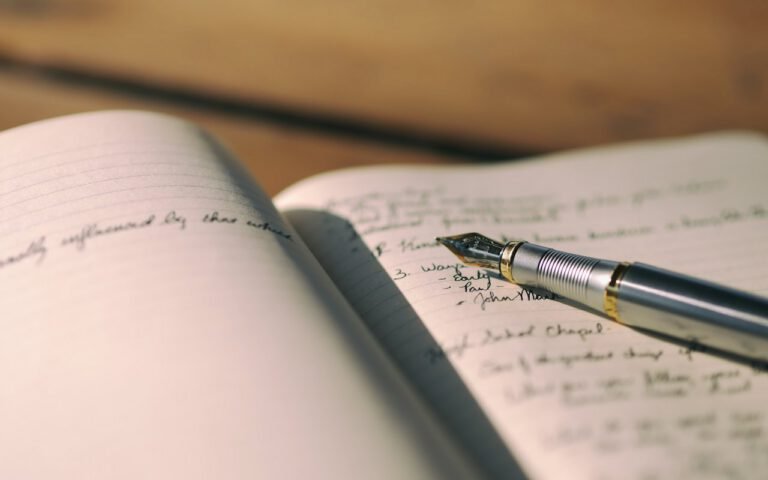
I write the morning pages with a pen in a cheap spiral notebook. Not a laptop, not the nice leather journal someone gave me for my birthday. A spiral notebook from the drugstore, college ruled, a few dollars apiece. Longhand is slower than typing, and slow is good at seven in the morning. I can’t delete anything, so I don’t try. And a cheap notebook gives me permission to waste it.
I go through about one notebook a month. They live in a cardboard box in the closet, and I almost never open them. That is fine. Their job was done the morning they were filled.
My small rules
Over eleven years I have collected a handful of rules. Most of them I learned by breaking them first.
- Same chair, same hour
- No rereading until Friday
- Stop mid-sentence so tomorrow starts easy
The first one is about friction. When the chair and the hour are fixed, there is nothing left to negotiate. My body knows what happens in the gray armchair by the window at 6:30. It is the same reason people who walk every morning do not debate whether to walk.
The second one protects the pages from me. If I reread yesterday’s mess before I start, I get discouraged, or worse, I start editing. On Friday afternoon I flip through the week with a highlighter and mark anything worth keeping. Usually it is a line or two. Sometimes it is the seed of an essay. Once it was the first chapter of a novel.
The third one is an old trick I borrowed from a much more famous writer, and it works better than anything else I know. If I stop at a natural ending, the next morning I face a blank page. If I stop in the middle of a sentence, the next morning I already know the next word. Momentum is a gift you can leave for yourself.

What the pages have given me
I could tell you that morning pages made me a better writer, and I think that is true, but it is not the most important thing. The most important thing is that they made me a calmer person. I get the noise out first. The worries, the to-do lists, the arguments I am rehearsing in my head all go onto the page, and when I close the notebook, they stay there.
Here is what else I have noticed over the years:
- I almost never get writer’s block anymore. I have already written three pages by the time I sit down to work.
- My first drafts are looser and braver, because I am used to writing without judging.
- I remember my life better. Small moments that would have disappeared are written down somewhere.
- I am kinder to myself about bad days. A bad page is just a page. Tomorrow there will be three more.
Key takeaway: you do not need talent, a plan or even a good idea to start. You need a pen, a cheap notebook and a fixed time each morning.
If you want to try it
Start smaller than you think. One page is plenty for the first week. Pick a time you can actually keep, ideally before you look at your phone, and tie it to something you already do, like the coffee or the dog’s walk. Write anything. Write “I don’t know what to write” twenty times if you have to. It counts.
Give it a month before you decide whether it works. The first week will feel silly. The second week will feel like a chore. Somewhere in the third week, most people tell me, something shifts. The page stops being a test and becomes a place.
A few practical notes from my own false starts. Do not share the pages, not even with a partner or a writing group; the moment you imagine a reader, you start performing. Do not turn them into a diary of accomplishments, either. They are not a report card. And if you miss a day, do not try to make it up with six pages the next morning. Just write your three and carry on. The habit survives a missed day easily. What it does not survive is guilt. Treat the notebook like a friend who is always glad to see you, no matter how long it has been.
Tomorrow morning I will fill the kettle, sit in the gray chair and write three pages that nobody will ever read. Most of them will be bad. I can hardly wait.
Nora Ellis
Nora is a registered dietitian who writes about food without rules, guilt or powders.

Thanks for explaining this so clearly.
Great reporting — please keep following this story.