


 AI & RobotsSchools Test AI Tutors — With Teachers Firmly in ChargeTwelve middle schools are trying chat-based math help this fall. Here’s what students and teachers think…
AI & Robots Hannah Scott6 min read
Robots Are Running Experiments in Self-Driving Labs
Machines that mix, measure and decide what to try next.
Hannah Scott6 min read

Written by
Hannah Scott
Hannah covers space, energy and health research.
7Articles
2026Writing since
In a growing number of labs, robotic arms carry out experiments around the clock while software chooses the next test. There is no one at the bench at 3 a.m., yet small vials are being filled, heated, mixed and measured, and a computer is quietly deciding what to try next based on what just happened. Scientists call these setups self-driving labs. They are still rare, and still expensive, but they are changing how some kinds of research get done, especially the slow, trial-and-error search for new materials and medicines.
What a self-driving lab actually is
Labs have used automation for years. Machines that process blood samples or copy DNA are common in hospitals and research centers. What makes a self-driving lab different is that it closes the loop. Instead of a human looking at results and deciding what to test next, software does that step too.
A typical setup has three parts working together:
- The hands. Robotic arms, liquid handlers and conveyor tracks move samples, measure out chemicals and load instruments.
- The eyes. Sensors and instruments measure what happened: the color of a solution, how much current a battery material can store, how brightly a compound glows.
- The brain. A machine learning program reads those results, updates its best guess about which conditions lead to good outcomes and picks the next experiment.
Picture a small example. A team wants a coating that resists scratches but stays clear. They tell the system which ingredients are allowed, what range of amounts is safe and how to measure clarity and hardness. The robot mixes a first handful of samples more or less at random, cures them, scratches them with a test probe and photographs them. The software notices that one ingredient seems to help hardness while another hurts clarity, so it proposes a new batch exploring the trade-off between the two. By the end of the day, it has narrowed a vast menu of options down to a few dozen worth a closer look.
Then the cycle repeats, sometimes dozens or hundreds of times a day. Over a week, the system can explore a range of possibilities that might take a human team months.
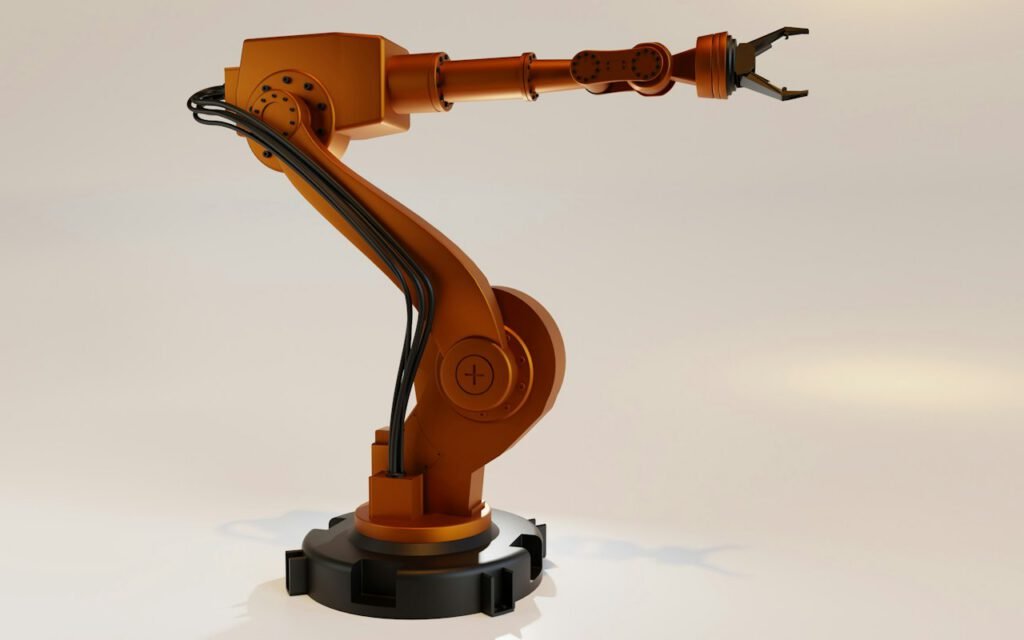
Speed
Automated labs can test thousands of combinations of new materials or medicines. That matters because many scientific problems are, at heart, search problems. A new battery electrolyte might involve choosing among dozens of ingredients, each at many possible amounts, mixed at different temperatures. The number of possible recipes quickly runs into the millions. No team can try them all.
Traditional research tackles this by combining expert intuition with careful, one-at-a-time experiments. That approach has produced most of the discoveries we rely on, but it is slow. A self-driving lab does not try every option either. Its software is designed to be smart about the search, balancing two goals: testing ideas that look promising and testing ideas it is unsure about, in case something surprising is hiding there.
Learning from failure
One quiet advantage is that robots record everything. Human researchers often publish only their successes, and failed experiments end up in notebooks no one reads again. A self-driving lab logs every attempt in detail, including the ones that went nowhere. That data is valuable. It teaches the software which paths to avoid and can help other researchers skip the same dead ends.
The robot does the pipetting. The scientist does the wondering.
Dr. Mia Chen, computer scientist
Dr. Mia Chen, a computer scientist who has worked with chemistry teams on lab automation software, says her favorite part of the job is watching researchers’ faces change. “At first they’re nervous the robot will replace them,” she said. “After a few weeks, they realize it has taken away the most repetitive part of their day. They finally have time to think about the big questions.”
Where these labs are making a difference
Self-driving labs work best on problems where experiments are small, fast and easy to measure. Several areas stand out.
- Batteries and energy storage. Teams search for safer, longer-lasting materials for electric cars and home storage, testing many small recipes in parallel.
- Catalysts. These substances speed up chemical reactions. Better ones could make manufacturing cleaner and cheaper.
- Drug discovery. Automated systems can make and test many candidate molecules, helping chemists narrow down which ones deserve a closer look.
- Solar materials. Researchers screen new light-absorbing compounds for cheaper, more efficient solar panels.
- Thin films and coatings. Robots can deposit and test coatings for everything from electronics to corrosion protection.
In each case, the robot is not inventing a new field. It is helping scientists move faster through a large space of possibilities they already know how to measure.

Scientists still in charge
Researchers set the goals, design the systems and interpret the results. That last point is easy to overlook. A self-driving lab can find a recipe that scores well on a measurement, but it takes a person to ask whether the measurement was the right one, whether the result makes physical sense and whether it could ever be made at scale safely and affordably.
Humans also have to build and maintain these systems, which is no small task. Robots jam. Tubes clog. Sensors drift out of calibration. Most self-driving labs have an engineer or technician who knows every part of the setup and keeps it running. Many teams also keep a human check in the loop for anything involving hazardous chemicals.
There are real limits, too. These labs are costly to build, and the software only works well when the problem can be described in clear, measurable terms. Messy, open-ended questions, such as why a disease behaves the way it does, still rely heavily on human creativity, conversation and luck.
What it means for the next generation of scientists
Students entering chemistry and materials science now are likely to work alongside automation for much of their careers. Many universities have started adding coding and data skills to lab courses. Dr. Chen thinks that is the right move, but she cautions against losing the basics. “You still need to understand the chemistry,” she said. “If you don’t, you won’t notice when the robot is confidently heading in the wrong direction.”
She also sees a chance to widen access. Some research groups are building cloud labs, where scientists anywhere can design an experiment online and have it run on robots in another state. If that model grows, a small college or a startup without its own expensive equipment could still run serious experiments, sending instructions over the internet and getting data back the next morning.
Key takeaway: self-driving labs speed up the trial-and-error side of science, freeing researchers to focus on ideas, judgment and meaning.
Quick facts
- Useful for batteries, catalysts and drugs
- Robots don’t get tired of repetitive tasks
- Humans still ask the questions
The picture of science as a lone genius scribbling in a notebook was never quite accurate, and it is getting less accurate every year. More and more, discovery is a partnership: patient machines that can run the same careful steps all night, and curious people who decide what is worth finding. If self-driving labs live up to their promise, the next breakthrough battery or medicine may have been tested by a robot at 3 a.m., and dreamed up by a scientist over morning coffee.
Written by
Hannah Scott
Hannah covers space, energy and health research.
7Articles
2026Writing since
Read next
AI & RobotsSchools Test AI Tutors — With Teachers Firmly in ChargeTwelve middle schools are trying chat-based math help this fall. Here’s what students and teachers think… ScienceUniversity Telescope Spots a Comet That Will Be Visible This WinterAstronomers say it may be bright enough to see without binoculars by mid-January.
 AI & RobotsInside the Data Center Boom on the Edge of TownThree new facilities will use as much power as 90,000 homes. The utility says it’s ready.…
 ScienceCommercial Rocket Launch Lights Up the Coast at DawnThousands gathered on the beach for the first launch from the new coastal pad.
 AI & RobotsInside a Robotics Lab Building Machines That Pick StrawberriesEngineers say the robots are gentle enough for ripe fruit — and could ease a farm…
 ScienceWildfire Season Is Starting Earlier. Here’s How the County Is PreparingNew evacuation zones, cameras on ridgelines and a text-alert system go live this month.
 AI & RobotsHow AI Language Models Learn, in Plain EnglishPredicting the next word, billions of times.
 ScienceQuantum Computers, Without the HeadacheQubits, superposition and why they won’t replace your laptop.ScienceWhy Rockets Launch Toward the EastEarth’s spin gives every launch a free boost.
Start the conversation