Math Anxiety Is Real — and It Can Be Fixed
Confidence first, then speed.
 David Park6 min read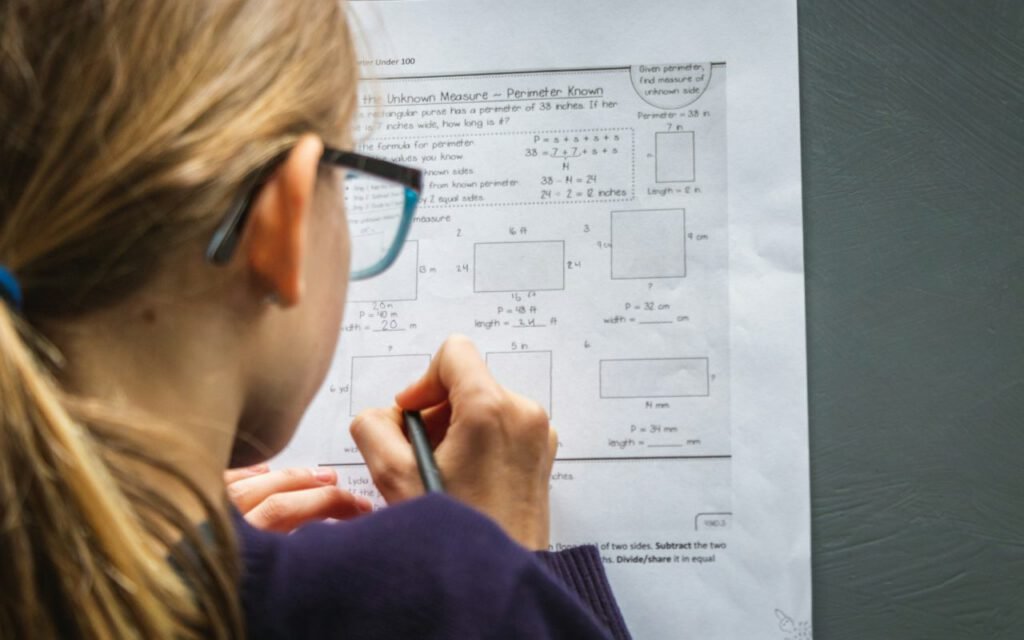

David Park
David leads SAT and ACT prep.

Many students who “hate math” are actually afraid of getting it wrong. That is something we can change. When a student sits down with one of our tutors and says, quietly, that they are just not a math person, we rarely hear a story about numbers. We hear a story about a test that went badly, a moment of embarrassment at the board, or years of feeling a step behind the rest of the class. Math anxiety is real, it is common and it is one of the most fixable problems we see at BrightPath Tutoring. Here is how we approach it, and how you can help at home.
What math anxiety looks like
Math anxiety is a feeling of tension, worry or dread around math that gets in the way of thinking clearly. It is not the same as being bad at math. In fact, many anxious students are perfectly capable; their worry simply crowds out the working memory they need to solve problems. The result looks like a lack of ability, which makes the anxiety worse, and the cycle continues.
Common signs at home
- Avoiding math homework until the last possible moment.
- Saying things like “I’m just bad at math” or “I’ll never get this.”
- Freezing, crying or getting angry when stuck on a problem.
- Rushing through work just to be done, leading to careless errors.
- Doing well on practice but falling apart on tests.
- Stomachaches or headaches on math test days.
If you recognize several of these, you are not alone. Math anxiety appears in students of every age, from second graders learning subtraction to high school seniors in calculus, and adults often carry it with them for decades.
Where it comes from
There is rarely a single cause. Some students feel pressure from timed tests, where speed matters more than understanding. Others absorb messages from adults around them; when a parent says, kindly, that they were never good at math either, a child may hear that math ability is something you either have or you do not.
The way math is built also plays a role. Math is cumulative. Each new topic rests on earlier ones, so a small gap in third grade can become a big wall in sixth. A student who never fully understood fractions will struggle with ratios, then with algebra, and may conclude that they are simply not capable, when the real problem is one missing building block.

Find the real gap
Often a single missed concept from two grades ago is the problem. This is where our work usually begins. Instead of drilling the current homework, our tutors take a step back and look at the foundations. We use short, low-pressure check-ins to find exactly where understanding breaks down. Sometimes it is place value, sometimes multiplication facts, sometimes negative numbers or the meaning of an equals sign.
Once we find the gap, we fill it directly, using visual models, hands-on examples and plenty of practice at the right level. Students are often amazed at how quickly current topics start to make sense once the foundation is solid. A seventh grader who has struggled with equations for a year might suddenly find them manageable after two weeks of reviewing fractions.
Mistakes are information, not failure.
David
David, one of our senior math tutors, repeats this line in nearly every session. When a student makes an error, he does not simply correct it. He asks what they were thinking, because the mistake shows exactly which idea needs work. Over time, students stop hiding their mistakes and start getting curious about them. That shift, from fear to curiosity, is the heart of overcoming math anxiety. It takes a few weeks, but once it happens, students start asking questions they would never have dared to ask in class.
Celebrate small wins
Short, winnable problems build confidence before harder ones. Anxious students need evidence that they can succeed. We structure sessions so that students solve several problems they can handle before stepping up to something more challenging. Each success is a small piece of proof that pushes back against the voice saying they are bad at math.
How we build confidence step by step
- Start where they are: begin with problems just below the edge of their ability.
- Name the progress: point out specifically what they did well, not just that they got it right.
- Step up slowly: add one new idea at a time, building on what they just mastered.
- Revisit wins: start the next session with a problem they solved last time.
- Track growth: keep a simple record so students can see how far they have come.
Progress charts are especially powerful. When a student can look back at problems that once felt impossible and see that they now solve them easily, the story they tell about themselves begins to change.

How parents can help at home
Parents play a huge role in how children feel about math, and small changes at home can make a real difference. You do not need to be a math expert. You simply need to keep the emotional temperature low and the message positive.
- Avoid saying you were bad at math, even jokingly. Try “math takes practice” instead.
- Praise effort and strategies rather than speed or being “smart.”
- Bring math into everyday life: cooking, shopping, sports stats and budgeting allowance.
- When they are stuck, ask questions rather than giving answers: “What do you know so far?”
- Keep homework sessions short and calm, and take a break when frustration rises.
- Talk to the teacher if timed tests are causing real distress.
If anxiety is severe, showing up as panic, sleeplessness or school avoidance, it is worth talking with your child’s school counselor or pediatrician as well. Math tutoring works best alongside the right emotional support.
Calming tools students can use
We also teach students a few simple strategies for the moments when worry spikes, especially during tests. None of them are magic, but together they help a nervous brain settle enough to think.
- Slow breathing: breathe in for a count of four, hold briefly, breathe out for a count of six, and repeat a few times.
- Brain dump: before starting a test, write down formulas or steps you are afraid of forgetting on scratch paper.
- Skip and return: if a problem feels impossible, mark it, move on and come back after a few easier wins.
- Kind self-talk: replace “I can’t do this” with “I haven’t figured this out yet.”
Practicing these tools during calm tutoring sessions makes them much easier to use when the pressure is real. Students tell us that simply knowing they have a plan for panic makes them less likely to panic in the first place.
Key takeaway: math anxiety usually hides a specific gap and a history of discouraging moments. Fix the gap, create small wins and change the conversation, and confidence follows.
We have watched students go from dreading math class to volunteering answers at the board. It does not happen overnight, but it happens far more often than most families expect. If your child is struggling, reach out to BrightPath for a free consultation. We will find the real gap together and build from there, one winnable problem at a time.
David Park
David leads SAT and ACT prep.



Start the conversation