 Megan Hayes6 min read
Routines beat willpower, for kids and adults. Every September, families tell us the same story: the first week of school starts with good intentions, color-coded planners and promises to start homework right after school. By October, evenings have turned into a nightly negotiation, complete with sighs, tears and a worksheet discovered at bedtime. It does not have to go that way. Here is the simple routine we suggest to families at BrightPath Tutoring, along with the reasons it works and a few tips for making it stick through the whole school year.
Why routines work better than reminders
Willpower is a limited resource, and kids have usually spent most of theirs by the time they get home. They have sat still, followed rules and focused for six or seven hours. Asking them to decide, every single afternoon, when and where and how to start homework adds one more hard decision to an already tired brain.
A routine removes that decision. When homework always happens at the same time, in the same place, in the same order, it stops being a debate and becomes simply what happens next, like brushing teeth before bed. The first two or three weeks take effort from parents. After that, most kids start the routine on their own, and the arguments fade.
Routines also reduce anxiety. Children who know what to expect feel more in control, and that sense of control makes it easier to tackle a hard assignment rather than avoid it.
Same time, same place
A clear spot with good light and no phone nearby. That is the foundation of everything else. The spot does not need to be a fancy desk. A clean corner of the kitchen table works perfectly well for many kids, especially younger ones who like having a parent nearby. What matters is that it is consistent and free from distractions.
Setting up the spot
- Good light, ideally natural light during the day and a desk lamp in the evening.
- A comfortable chair at the right height, with feet flat on the floor or on a stool.
- A small caddy of supplies: sharpened pencils, erasers, a calculator, highlighters and paper, so no one goes hunting mid-task.
- No TV in view and no phone within reach.
- A clock or timer they can see.
As for time, pick a start time that fits your family and protect it. For many kids, a short break after school followed by homework before dinner works best. Others do better after dinner. There is no single right answer, but there is a wrong one: a different time every day.
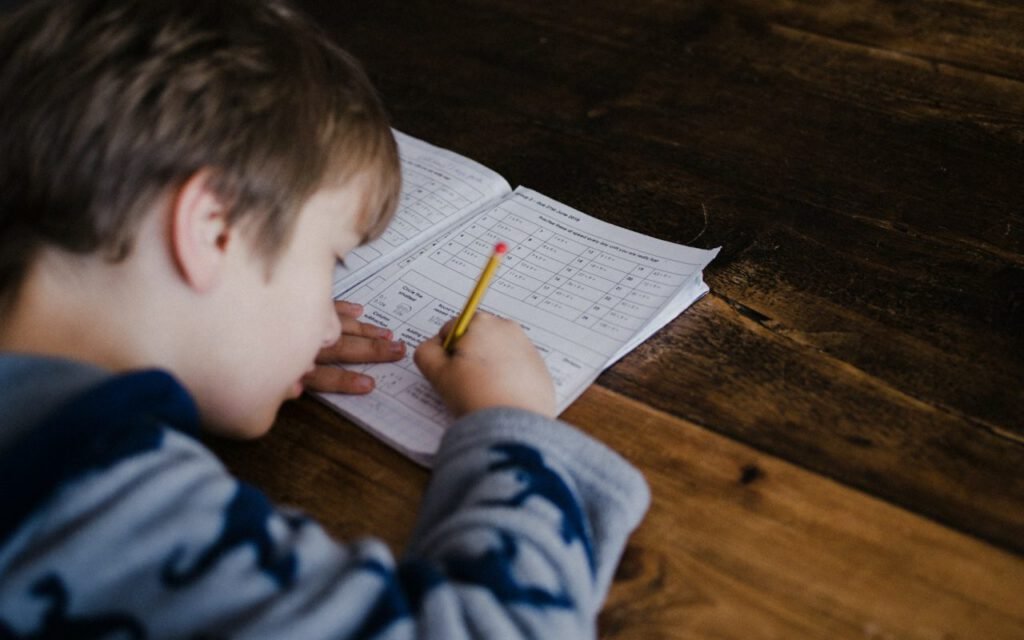
Start with the hardest subject while energy is high.
Megan
Megan, one of our lead tutors, gives this tip to every family she works with. It is tempting to start with the easy worksheet to build momentum, but by the time kids reach the difficult math set, their energy and patience are gone. Tackling the hardest task first means it gets the best version of their brain. The easy work can wait until the end, when a little fatigue does not matter as much.
Work in sprints
Twenty-five minutes of focus, five minutes of break, repeat. Long, open-ended homework sessions are hard for anyone. Short sprints with a clear end point are much easier to start and much easier to sustain. Set a visible timer, work until it rings, then take a genuine break: stretch, get a glass of water, walk around the house, pet the dog.
For younger children, shorter sprints make sense. A second grader might work for ten or fifteen minutes before a short break. Middle and high school students can usually manage the full twenty-five minutes, and some prefer longer blocks as they get older. Adjust to your child, not to a rule.
Tips for better breaks
- Keep breaks screen-free when possible. A quick video can easily become thirty minutes.
- Move the body: jumping jacks, a lap around the yard or a quick dance in the kitchen.
- Have a small snack or a drink of water ready.
- Use the same timer for the break, so it ends as clearly as it started.
After two or three sprints, take a longer break of fifteen minutes or so. Most nightly homework loads fit comfortably within a few sprints, and kids find it reassuring to know exactly how much is left.
The routine
Here is the full routine we share with BrightPath families, step by step. Print it out, stick it on the fridge and follow it every school night for three weeks. You will be surprised how quickly it becomes automatic.
- Snack first
- Phone in another room
- Plan the tasks
- 25-minute sprints
- Pack the bag
What each step does
Snack first. Hungry kids cannot focus. A simple snack with some protein, such as cheese and crackers, yogurt or apple slices with peanut butter, steadies their energy.
Phone in another room. Not face down on the table, not on silent in a pocket, but truly out of reach. Even a quiet phone nearby pulls attention away from the work.
Plan the tasks. Take two minutes to list every assignment, estimate how long each will take and put the hardest one first. Crossing items off a list is surprisingly motivating.
Twenty-five-minute sprints. Work through the list in focused blocks with short breaks in between.
Pack the bag. Finished homework goes straight into the backpack, along with anything needed for tomorrow. No more frantic morning searches for a lost worksheet.

When the routine slips
It will slip. Sports practices run late, birthdays happen, a sibling gets sick. That is normal. The goal is not perfection; it is returning to the routine as quickly as possible. Treat missed days as exceptions rather than reasons to give up. If a night is chaotic, do a shortened version: snack, phone away, one sprint on the most urgent assignment, pack the bag.
If your child consistently struggles to finish homework even with a solid routine, that is useful information. It might mean the workload is too heavy, a particular subject is causing trouble or there is a gap in an earlier skill. Talk to their teacher, and consider a tutor who can find the real problem. Our tutors often discover that a struggle with homework is really a struggle with one specific concept.
It also helps to involve your child in adjusting the routine. Every month or so, sit down together and ask what is working and what is not. Maybe the snack needs to be bigger, the sprints shorter or the spot moved away from a noisy hallway. Kids who help design the routine are far more likely to follow it, and the conversation teaches them a valuable skill: noticing how they work best and planning around it. That habit will serve them long after the last worksheet of the school year.
Key takeaway: consistency beats intensity. A simple routine followed most nights will do more than any heroic study session.
Start this week. Choose the spot, pick the time, print the five steps and walk through them together. Expect some pushback for a week or two, stay calm and stay consistent. By the end of the month, homework may simply be something that happens, not something everyone dreads.

Megan Hayes
Megan has tutored Triangle students since 2013.


Megan Hayes
Megan has tutored Triangle students since 2013.



2 Comments
Thanks for explaining this so clearly.
Great reporting — please keep following this story.