



 MakersPortland Furniture Maker Graham Pell on Slow Joinery, Local Wood and Chairs That Outlive UsFrom a small Central Eastside shop, Pell builds about 60 pieces a year. He explains why…
Written by
Ana Ruiz
Ana ran a two-person design studio for nine years. She asks the questions every small business owner is thinking.
11Articles
2026Writing since
Diane Foster signed up for a pottery class the week she turned 50. Her first twenty bowls collapsed. Her twenty-first is on our office desk. It is a little lopsided, glazed a soft sea green that pools darker at the bottom, and it holds paper clips, a few stray buttons and, on most afternoons, someone’s half-eaten granola bar. It is, by any honest measure, not a perfect bowl. It is also one of the most admired objects in our office, and the story behind it is one of the best we have heard this year.
Diane, a hospital billing manager from Kansas City, Missouri, wrote to us last spring after reading our makers issue. She had spent three decades working long hours at a desk, raising two children and taking care of everyone else. When her birthday came around, her daughter asked what she wanted to do for herself for once. Without thinking, Diane said she wanted to get her hands dirty. A week later she was sitting at a pottery wheel in a community studio, wearing an old apron, watching a lump of wet clay wobble violently in front of her.
Centering is everything
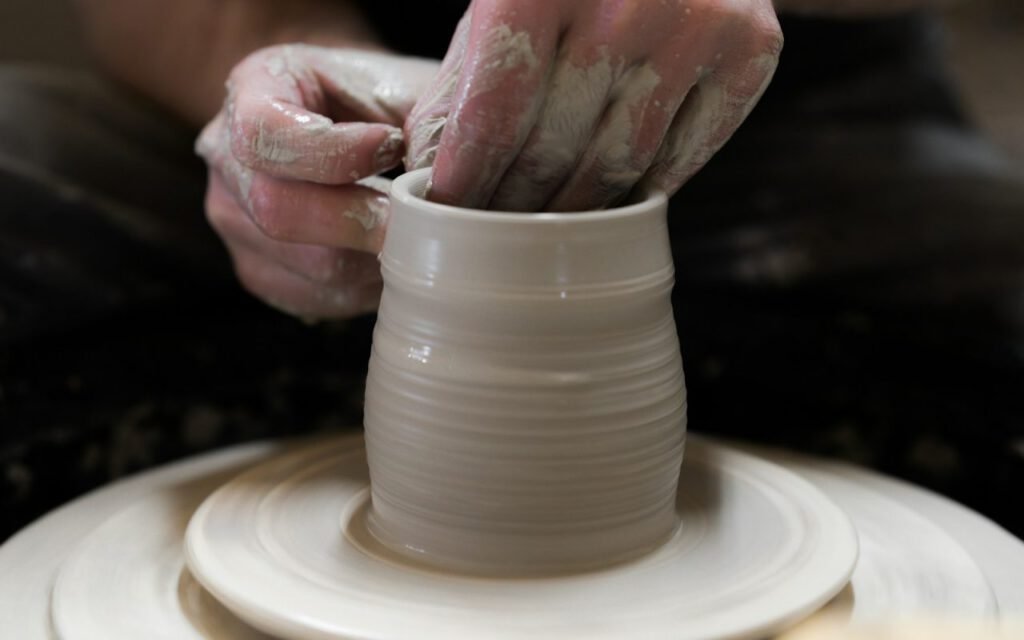
Before you make anything, you have to center the clay on the wheel. It takes most beginners weeks. Centering means pressing a spinning lump of clay into a perfectly symmetrical mound, so that it turns smoothly without wobbling. If the clay is even slightly off center, every bowl you try to throw from it will lean, twist or collapse as the walls rise.
It sounds simple. It is not. Centering requires bracing your elbows against your body, using steady pressure from both hands and learning to feel, rather than see, when the clay has settled. Diane’s instructor, a patient ceramic artist named Teresa Malone, told her class on the first night that centering is more about stillness than strength. Diane laughed at the time. By week three, after watching yet another bowl fold in on itself, she understood exactly what Teresa meant.
The first twenty
Diane kept a notebook that first year, recording each attempt. Bowl one tore in half when she opened it. Bowl four flew off the wheel entirely. Bowls nine through fourteen were too thick and heavy to fire. Bowl seventeen looked promising until she leaned in too quickly with a wet sponge. By the time she reached bowl twenty, she had learned to slow down, use less water and stop before the walls grew too thin. Number twenty-one survived the wheel, the trimming, the first firing and the glaze.
I make terrible bowls and I love every one of them. That’s the whole point.
Diane Foster, Slow Business reader
The joy of the mess
Clay under your nails, a wet apron and no screens for two hours. For Diane, that was the real gift. Pottery demands complete attention. You cannot check your phone with clay-covered hands, and the moment your mind wanders, the clay knows. Two hours at the wheel, she says, feels like a deep breath after a long week of meetings and spreadsheets.
There is also something freeing about being bad at something. Adults rarely allow themselves to be beginners. We tend to stick with what we already know how to do well, and we avoid situations where we might look foolish. In the pottery studio, everyone fails, often and loudly, and failure becomes a shared joke rather than a source of embarrassment. A collapsed bowl simply gets squashed back into a ball of clay and tried again.
Many of Diane’s classmates were also adults finding their way back to making things: a retired firefighter, a young nurse working night shifts, a pair of sisters in their sixties and a high school teacher who wanted something to do with his summers. They now meet for coffee after class most weeks.
Why making things by hand matters
Across the country, more adults are signing up for hands-on classes, from woodworking to weaving to bread baking, and most studio owners we spoke with say demand has grown steadily over the last several years. The reasons people give tend to sound alike. They want a break from screens. They want to make something real. They want to learn a skill slowly, alongside other people, without pressure to be perfect.
Handwork also produces something lasting. A bowl, a quilt or a wooden spoon outlives the evening it was made, and it carries a little of its maker with it. Diane now eats her morning oatmeal from a bowl she made in her second year, and she says no store-bought dish has ever felt quite so personal.

Community studios
Most cities have shared studios with classes, wheels and kilns for a monthly fee. For anyone curious about pottery, a community studio is by far the easiest way to begin. Buying a wheel and a kiln for home is expensive, takes up a great deal of space, and requires careful setup and ventilation. A good studio provides all of that, plus instruction, glazes, shelves for drying work and a community of fellow makers.
Studios typically offer a few different options. Beginner classes usually run for six to eight weeks and include clay, firing and basic glazes. After that, many studios offer memberships that give you access to wheels during open studio hours, along with a shelf for your work and a set number of firings each month. Prices vary widely by city, so call around and ask what is included before you sign up.
Look for a studio with patient teachers, a clean and well-organized workspace, and a relaxed atmosphere. Many studios hold open houses or single-evening sampler classes, which are a good way to see whether you enjoy the wheel before committing to a full course.
To start
If you have been tempted to try the wheel yourself, Diane has a short list of advice for new potters, especially those who are starting later in life:
- An eight-week beginner class
- Old clothes and short nails
- Patience for the first month
An eight-week class gives you enough time to get past the frustrating first stage and start seeing progress. Wear clothes you do not mind ruining, because clay gets everywhere, and trim your nails short so they do not gouge the soft clay. Most of all, be patient. Nearly every potter remembers the evening, usually somewhere around week four or five, when the clay finally settled under their hands and stayed centered. That moment is worth waiting for.
If you have arthritis or wrist trouble, mention it to your instructor; they can suggest adjustments, such as hand-building techniques that put less strain on your joints. And if a doctor has given you any limits on activity, ask what is sensible before signing up.
Key takeaway: It is never too late to learn something new with your hands. Expect to fail at first, and enjoy every lopsided bowl along the way.
Still turning
Two years after her first class, Diane is still at the wheel every Tuesday night. Her bowls are steadier now, her mugs have proper handles, and last winter she sold a small batch of planters at her studio’s holiday sale. She has no plans to turn pottery into a business. She just likes the feeling of clay spinning under her palms and the quiet that comes with it. When we told her that her twenty-first bowl had pride of place on our desk, she laughed and said she had made better ones since. We told her we would keep this one anyway.
Written by
Ana Ruiz
Ana ran a two-person design studio for nine years. She asks the questions every small business owner is thinking.
11Articles
2026Writing since
Read next
MakersPortland Furniture Maker Graham Pell on Slow Joinery, Local Wood and Chairs That Outlive UsFrom a small Central Eastside shop, Pell builds about 60 pieces a year. He explains why… MakersMeet the Potter Making Bowls for America’s Best KitchensFrom a converted barn in Kentucky, one maker throws 3,000 pieces a year — every one…
 Growing SlowlyFamily-Run Hardware Store Celebrates 75 Years in the Old North EndThree generations, one cash register and a cat named Bolt.
 MakersLocal Coffee Roasters Brace for Higher Bean Prices This WinterWholesale prices are up 30 percent this year. Small cafés say a $6 latte may be…
 MakersThe Farmers Market Is Moving Indoors for Winter — and Staying Open WeeklyForty vendors will set up in the old train depot every Saturday from November to April.
Start the conversation