



 MoviesReview: “The Lantern Keepers” Is the Best Mystery of the FallA lighthouse, a storm and a cast that never puts a foot wrong. ★★★★½
Behind the Scenes Ava Sinclair6 min read
Five Questions With the Director of “Saltwater”
On small budgets, big feelings and shooting on a real ferry.
Ava Sinclair6 min read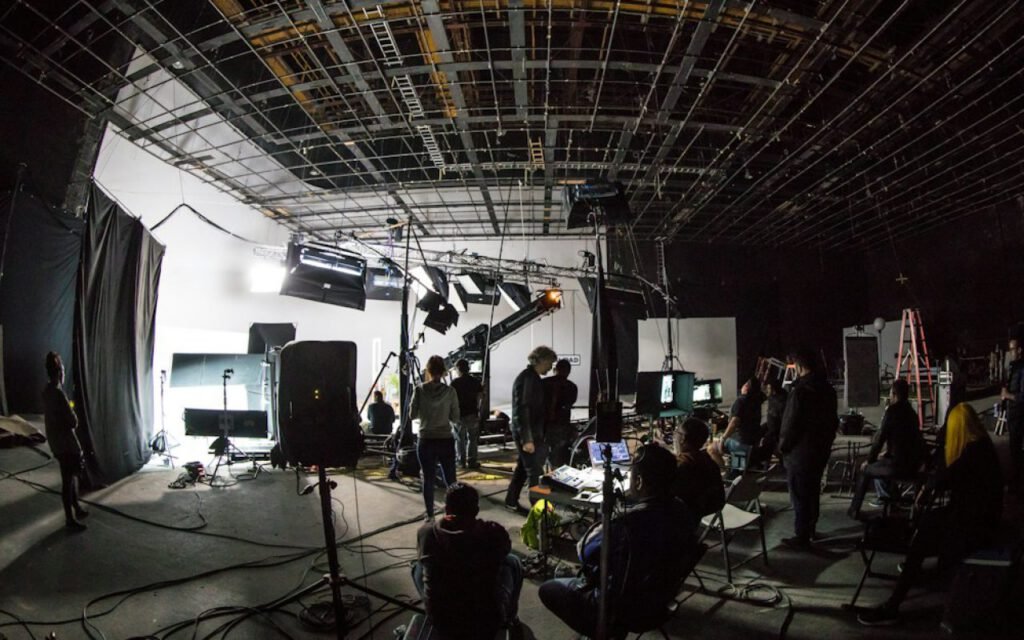

Written by
Ava Sinclair
Ava has reviewed films for 15 years and still cries at every animated movie.
13Articles
2026Writing since
Ivy Chen made “Saltwater” for less than most studio films spend on catering. She had one camera, a crew of nine, a borrowed ferry and twenty-three days. The result is the festival hit of the year, a tense, tender story about a ferry deckhand and a stranded passenger on the last crossing before a winter storm closes the harbor. Audiences have been leaving screenings in tears, critics have been leaving with long lists of questions and Chen herself has suddenly become one of the most talked-about new directors in American film. We spoke with the (fictional) director about her festival hit, about working within limits and about the ending that everyone wants to argue about. Our conversation has been edited for length and clarity.
Where “Saltwater” began
Matinee: How did the idea for “Saltwater” start?
Chen: “My grandfather ran a small ferry in Washington state for thirty years. When I was a kid, I spent summers riding back and forth with him, watching people. There is something about a ferry. You are stuck with strangers for forty minutes, and nobody can leave. People tell each other things they would never say on land. I always knew I wanted to make a film that took place entirely on one crossing.”
Matinee: Why set it during a winter storm?
Chen: “Because it raises the stakes without needing a villain. The weather is the threat. It means the ferry has to make it across before the harbor closes, and it means the two main characters have a reason to talk. They are both scared, and they are both pretending not to be.”

On the budget
Matinee: The budget was famously small. What did that mean on set?
Chen: “We had one camera and one ferry. Every limitation forced a better idea. When you only have one camera, you cannot cover a scene from six angles and fix it later in the editing room. You have to decide what matters before you roll. That made every shot more deliberate.”
“We also only had the ferry from midnight to six in the morning, because it was still running its regular route during the day. So we shot almost everything at night, which is why the film feels so dark and close. That was not a creative choice at first. It became one.”
Constraints are the best collaborator I’ve ever had.
Ivy Chen, director (fictional)
Matinee: Was there ever a moment when the limits felt like too much?
Chen: “Every single night. On day eleven, the ferry’s engine broke down and we lost two nights of shooting. We rewrote a whole sequence so that the engine fails in the story too. It became one of the best scenes in the film. I tell young filmmakers that all the time. The problem on set is often the answer you were looking for.”
Lessons from a tiny production
When we asked Chen what she would tell other first-time directors working on a small budget, she offered a short list:
- Write for the locations you can actually get, not the ones you dream about.
- Rehearse more than you shoot. Rehearsal is free.
- Hire people who are kind under pressure. Talent is easier to find than patience.
- Protect your actors’ sleep, even if it costs you a scene.
- Keep a notebook of every problem. Half of them become ideas.
On the actors
Matinee: The two lead performances have gotten a lot of praise. How did you find your cast?
Chen: “Neither of them had led a film before. Daniel Reyes, who plays the deckhand, had mostly done theater in Seattle. Grace Holloway, who plays the passenger, was a friend of a friend who had done a few commercials. I cast them because when they read together, they listened to each other. On a film this small, there is nowhere to hide. If the actors are not truly listening, the audience feels it right away.”
Matinee: Much of the film is just the two of them talking. How did you keep that interesting visually?
Chen: “The boat did it for us. The ferry is always moving, always rocking, and the light changes every few minutes as you pass buoys and the shore. We let the camera move with the water. Our cinematographer, Leah Morgan, spent weeks before the shoot just riding the ferry and taking notes about where the light fell. By the time we started filming, she knew that boat better than the captain did.”

On the ending
Matinee: Let’s talk about the ending, without spoiling it. Audiences are split. Was that the goal?
Chen: “I wanted the audience to decide what happens next. The film ends at the moment the ferry reaches the dock. You know what each character wants, and you know what they are afraid of. But you do not see them step off the boat. I think the story belongs to the audience after that.”
Matinee: Some viewers have called that frustrating.
Chen: “I understand that, and I respect it. But I have had people come up to me after screenings and argue with each other about what happens next, right in front of me. A couple in Denver told me they talked about it the whole drive home. That is the best thing a movie can do. It keeps going after the lights come up.”
Matinee: Will you ever tell us what you think happens?
Chen, laughing: “Never. My mother has asked me twelve times. She still does not know.”
On what comes next
Matinee: The festival success has opened a lot of doors. Are you tempted by a big studio film?
Chen: “I am tempted by a slightly bigger small film. I have been offered some large projects, and I am grateful. But I learned so much from having almost nothing. I want to keep that discipline. My next film takes place in a single diner over one night, so you can see I have not learned to think big yet.”
Matinee: Any advice for people who want to see “Saltwater” when it opens wider?
Chen: “See it with someone you can talk to afterward. And if you can, see it in a theater with a good sound system. We recorded the real sound of the ferry engine, the water and the wind. When it is loud, it feels like you are on the deck with them.”
Key takeaway: Chen’s story is a reminder that a strong idea, a committed cast and a willingness to adapt can matter more than a big budget.
Why this conversation matters
It is rare for a film this small to break through, and rarer still for its director to speak so openly about the problems behind it. Chen’s approach, writing around what she had instead of what she wished she had, is one that many independent filmmakers already know but few manage to pull off this well. “Saltwater” opens in more theaters next month, and you can add its release date from our calendar. Bring someone you are willing to argue with on the drive home.
Written by
Ava Sinclair
Ava has reviewed films for 15 years and still cries at every animated movie.
13Articles
2026Writing since
Read next
MoviesReview: “The Lantern Keepers” Is the Best Mystery of the FallA lighthouse, a storm and a cast that never puts a foot wrong. ★★★★½ Behind the ScenesThe Perfect Movie Night at HomeLighting, snacks and how to stop scrolling and start watching.
 Awards & ListsThe 25 Best Fictional Films of the Decade (So Far)Our critics argued for weeks. Here is the list.
 Behind the ScenesInside a Film Set: 12 Jobs You’ve Never Heard OfGaffers, best boys and the person in charge of rain.
 MoviesEverything Coming to Theaters This WinterOur calendar of the season’s biggest (fictional) releases.MoviesReview: “Pip & the Paper Moon” Will Make Grown-Ups CryAn animated adventure with a lot of heart. ★★★★★Behind the ScenesWhat to Watch This Weekend: Our PicksTwo movies, two series and one documentary — all fictional.
 Behind the ScenesHow Movie Projectors Went From Film to LaserA short history of the beam behind the big screen.
 Behind the ScenesMaking a Short Film on Your PhoneA weekend project with friends and zero budget.
Start the conversation