Fall on Route 1, Mile by Mile
A slow drive up the Maine coast, and the notebook I filled on the way.
 Nora Ellis6 min read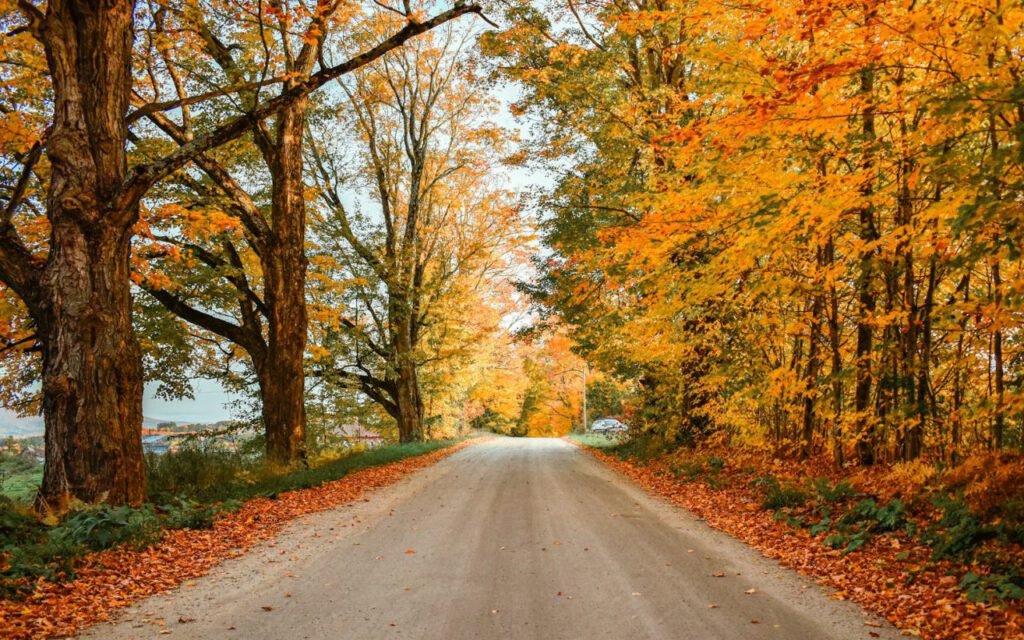

Nora Ellis
Nora is a registered dietitian who writes about food without rules, guilt or powders.



Every October I drive north on Route 1 with no plan except a full tank and an empty notebook. I leave early, before the sun is up, with a thermos of coffee and a bag of apples on the passenger seat. I do not book anything in advance. I do not look at maps more than I have to. I just follow the old coastal road up through Maine, town by town, and let the trip become whatever it wants to be.
This year I stopped in seven small towns and wrote one page in each. That was the only rule I gave myself. This post is a little travelogue and a little writing lesson, a record of five days, three hundred or so miles and a notebook that came home much heavier than it left.
 Sponsored · Quietdesk Writing AppWrite without distractionsFree for 30 days.Try free
The rule of the pull-off
If a view makes me slow down, I pull over and write a sentence about it. This is the other rule, and it is the one that shapes the whole trip. Route 1 is not a fast road. It winds through village centers, crosses tidal rivers on narrow bridges and slows to twenty-five miles per hour every few miles. There is always something worth stopping for.
The pull-off rule keeps me honest. It is too easy, on a road trip, to see something beautiful through the windshield, think “how lovely” and keep driving. Pulling over forces me to actually look. And writing a sentence forces me to look closely enough to describe what I am seeing, which is a different and deeper kind of attention.
Most of these sentences are not very good. “The marsh is the color of a lion.” “Three red barns in a row, like they are waiting for a bus.” But some of them turn out to be the best things I write all year, because they come from the eye before the brain has time to interfere.

Seven towns, seven pages
I don’t want to name the exact towns. Part of the pleasure is that they could be anywhere on that coast, and I would rather you find your own. But here is a short sketch of each stop, in order, as I wrote them down.
- The harbor town. Lobster boats coming in at dawn, gulls arguing over the bait shed. I wrote my page on the hood of the car while the coffee steamed.
- The town with the white steeple. A church bell rang nine times while I sat on the green. A woman walking a corgi waved as if she knew me.
- The antique town. Every other building was a shop selling old things. I bought a brass compass for six dollars that does not point north.
- The river town. A long bridge over a tidal river, the water running backward as the tide came in. I watched it for an hour.
- The apple town. An orchard stand with an honor box and a hand-painted sign. The apple butter came from here.
- The fog town. I never actually saw this town. The fog was so thick I wrote my whole page about the sound of a foghorn.
- The last town. A diner where the waitress called everyone “dear” and the blueberry pie was the best I have ever eaten.
Each page is different. Some are lists. Some are tiny scenes. The fog town page is almost a poem. The diner page is mostly about the pie, which I stand by completely.
Writing one page per town turned out to be the perfect size. A single page is small enough that I never dreaded it, even when I was tired or cold or hungry. But it is big enough to hold a real moment: a conversation overheard at a gas pump, the smell of woodsmoke on the main street, the exact shade of red on a lobster buoy hanging from a fence. By the end of the trip, I could flip through the notebook and walk through the whole coast again, one town at a time, in the order I met them.
What the coast teaches
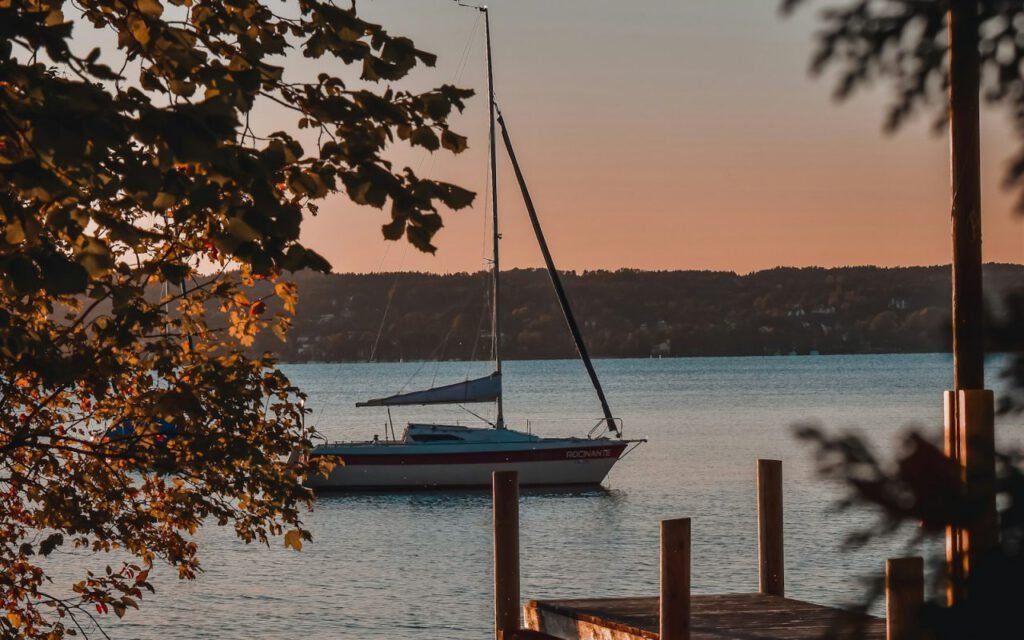
I have made this drive eight times now, and every year the coast teaches me something about patience. Life up there moves with the tide, the season and the weather, not the clock. Fishermen go out when the water allows. Shops close when the tourists leave. The fog comes in and everyone just waits for it to lift.
The coast teaches patience. The tide comes back whether you watch or not.
Nora
I wrote that line on the bridge in the river town, watching the water reverse direction beneath me. It struck me that I spend so much of my writing life trying to force things: forcing a draft to be finished, forcing an idea to arrive, forcing a sentence to work. The tide does not need to be forced. It comes back on its own schedule. Some ideas are like that too.
Practical notes for the drive
A few people have asked me for advice on making a similar trip, so here is what I have learned.
- Go in early to mid October. The leaves are at their best and the summer crowds are gone, though some shops and inns close for the season, so call ahead if you need a bed.
- Give yourself more time than you think. Route 1 is slow by design. Plan on fifty or sixty miles a day if you want to actually stop.
- Bring layers. Mornings can be near freezing and afternoons surprisingly warm. Fog can roll in at any time.
- Carry cash. Many farm stands use honor boxes, and some small diners still prefer it.
- Drive carefully. Watch for deer at dusk, and do not pull off anywhere that is not clearly safe and legal.
- Leave the radio off for at least an hour a day. You will notice more.
Key takeaway: slow down, pull over when something catches your eye and write one sentence about it. The trip will give you more than any itinerary could.
What I brought home
Forty pages, a jar of apple butter and a draft I actually like. The forty pages include the seven town pages, dozens of pull-off sentences and a few long entries written in motel rooms at night. The apple butter is already half gone. And the draft is the beginning of an essay about tides and patience and the strange comfort of a road that refuses to go fast.
I also brought home the brass compass that does not point north. It sits on my desk now, next to the notebook. I like to think of it as a reminder that the best trips, and maybe the best writing, do not always head in the expected direction.
Mostly, though, I brought home a feeling. Five days of driving slowly had loosened something in me. I slept better. I noticed more. When I sat down at my desk the following Monday, the sentences came easier than they had in months. I do not fully understand why a road trip does that, but I have stopped questioning it.

Next October
I am already thinking about next year. Maybe I will push further north, up toward the Canadian border, where the towns get smaller and the coast gets wilder. Maybe I will go the same route and see how much has changed, and how much I have.
Either way, the rules will stay the same. A full tank. An empty notebook. One page in every town. And whenever a view makes me slow down, I will pull over and write it down, because the road will still be there in five minutes, and the view might not.
Nora Ellis
Nora is a registered dietitian who writes about food without rules, guilt or powders.


2 Comments
Thanks for explaining this so clearly.
Great reporting — please keep following this story.