


Marcus Bell
Marcus reports from the statehouse and runs our election data desk.


A fade is a gradual blend from short to longer hair. Done well, it looks smooth and almost effortless, with no hard line where one length stops and another starts. It is the most requested service at Sharp & Co. Barbers by a wide margin, and also the one that generates the most questions. Low or mid? What is a skin fade? How is a fade different from a taper? And which one will actually suit you?
Where it starts changes the whole look. That is the key idea behind every type of fade. The technique is similar from one to the next, but the point where the shortest hair begins to blend upward shifts the feel of the cut from conservative to bold. In this guide, we break down the main types so you can walk into your next appointment knowing exactly what to ask for.
Fade basics
Every fade has three parts. There is the shortest section, usually near the bottom of the sides and back. There is the longest section, typically on top. And between them is the blend, the zone where your barber gradually changes the clipper length so the transition looks seamless.
Barbers create that blend with clipper guards and careful technique. Guards are numbered, and a lower number means shorter hair. A zero, or a closed clipper with no guard, leaves the hair very short. A one is about an eighth of an inch, a two about a quarter inch, and so on. A typical fade might move from a zero or one at the bottom, through a two and three, into longer hair on top cut with scissors or a higher guard.
Fade versus taper
People often use these words interchangeably, but most barbers draw a distinction. A taper keeps a little more length near the bottom and changes more gently, usually only around the sideburns and neckline. A fade carries the short length higher and shows more contrast. If you want something subtle for a conservative workplace, ask about a taper. If you want a clean, sharp look, you are probably thinking of a fade.
Low and mid fades
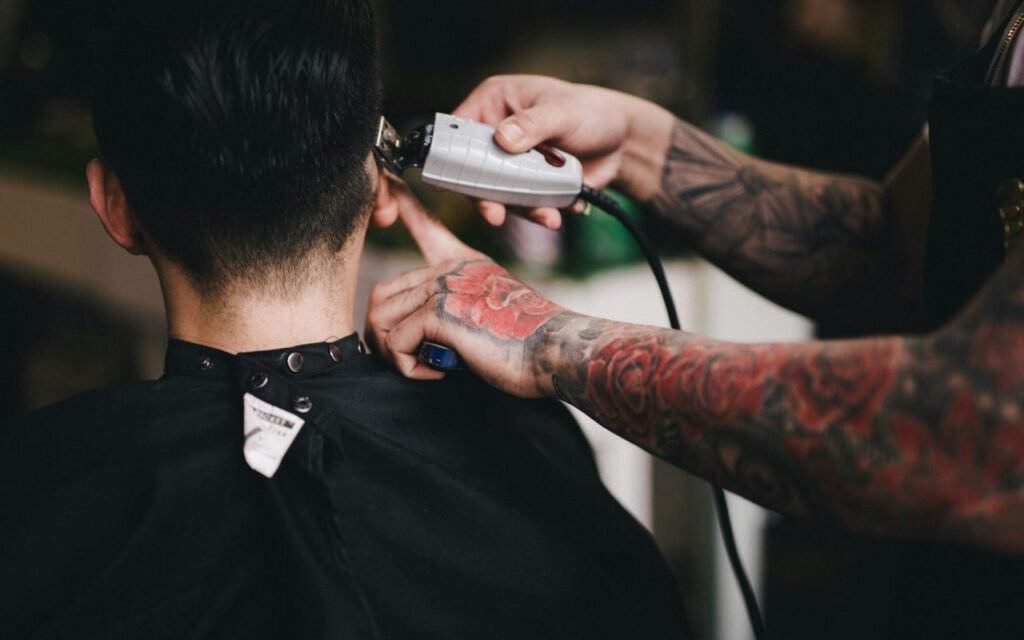
Clean and easy to grow out, great for the office. These two are the most versatile fades on the menu, and they are the right place to start if you are new to the style.
Low fade
A low fade starts just above the ears and follows the hairline around the back of the head. The shortest section stays close to the bottom, so most of the sides keep some length. The result is neat and polished, with a subtle sense of contrast. Low fades suit almost any hair type and look right at home in professional settings, at family events and on first dates alike.
Because there is not much skin showing, a low fade also grows out gracefully. Many clients can stretch three or four weeks between visits without the cut looking untidy.
Mid fade
A mid fade begins roughly halfway up the sides, often around the level of the temples. It creates more noticeable contrast than a low fade while still keeping a balanced shape. This is the cut many people picture when they think of a modern barbershop fade: clean sides, a smooth blend and plenty of room for length or texture on top.
Not sure? Start with a mid fade. It works on almost everyone.
Marcus, master barber
Marcus recommends the mid fade to most first-time clients because it is a safe middle ground. It is sharp enough to feel like a real change and soft enough to suit most head shapes. If you love it, you can go higher next time. If it feels like too much, it is easy to drop to a low fade at your next visit.
High and skin fades
Sharper contrast and a bolder look. Plan on a touch-up every two weeks. These styles make a stronger statement, and they need a bit more upkeep to stay crisp.
High fade
A high fade starts near the top of the head, often just below the area where the top and sides meet. Most of the sides are very short, and the longer hair is concentrated on top. This creates strong contrast and draws attention to the shape of the top section, which is why high fades are often paired with textured crops, pompadours or curls.
Skin fade
A skin fade, sometimes called a bald fade, takes the shortest section all the way down to the skin, usually with a foil shaver or razor. A skin fade can be low, mid or high; the term describes how short the bottom goes rather than where it starts. The result is the sharpest, cleanest contrast possible.
Skin fades look incredible the day you get them, but hair grows back quickly at that length. Within a week or so, the blend starts to soften, and by two weeks, most clients are ready for a touch-up. If you choose one, plan your schedule and budget around regular visits.

Choosing the right fade for you
The best fade depends on a few practical things, not just what looks good in a photo. Think through these questions before your appointment:
- How often can you visit? Low fades forgive a longer gap. High and skin fades need regular upkeep.
- What does your workplace expect? Low and mid fades fit most dress codes.
- What is your hair type? Thick, dark hair shows more contrast; fine or light hair can look subtler at the same length.
- What is happening on top? Longer styles on top often pair well with a higher fade for balance.
- Do you have scars or cowlicks? A good barber will plan the fade height around them.
Head shape matters, too. A skilled barber can adjust where the fade starts and how it curves around the back to flatter your profile. That is one more reason to have a conversation before the clippers come out.
Keeping your fade sharp
A great fade is part barber skill and part maintenance. Here is a simple schedule our team recommends:
- Low fade or taper: every three to four weeks
- Mid fade: every two to three weeks
- High fade: every two weeks
- Skin fade: every one to two weeks for the cleanest look
Between visits, wash and condition your hair regularly, and keep the scalp moisturized if the sides are very short, since exposed skin can get dry. Avoid trimming the blend yourself at home. Even a small slip with home clippers can create a line that takes weeks to fix. Many shops, including ours, offer quick line-up and touch-up appointments that are faster and less expensive than a full cut.
Key takeaway: The height of the fade sets the look. Low and mid fades are clean and low-maintenance, while high and skin fades are bolder and need a touch-up about every two weeks.
Low, mid, high and skin
Now you know the vocabulary. A low fade sits just above the ears and grows out gracefully. A mid fade starts at the temples and suits almost everyone. A high fade puts the contrast near the top for a bold shape, and a skin fade takes the bottom down to bare skin for the sharpest finish of all.
When you book at Sharp & Co., tell your barber which one you are leaning toward and bring a photo if you have one. If you are still undecided, start with a mid fade. We will dial it in from there.


Start the conversation