 Luis Romero7 min read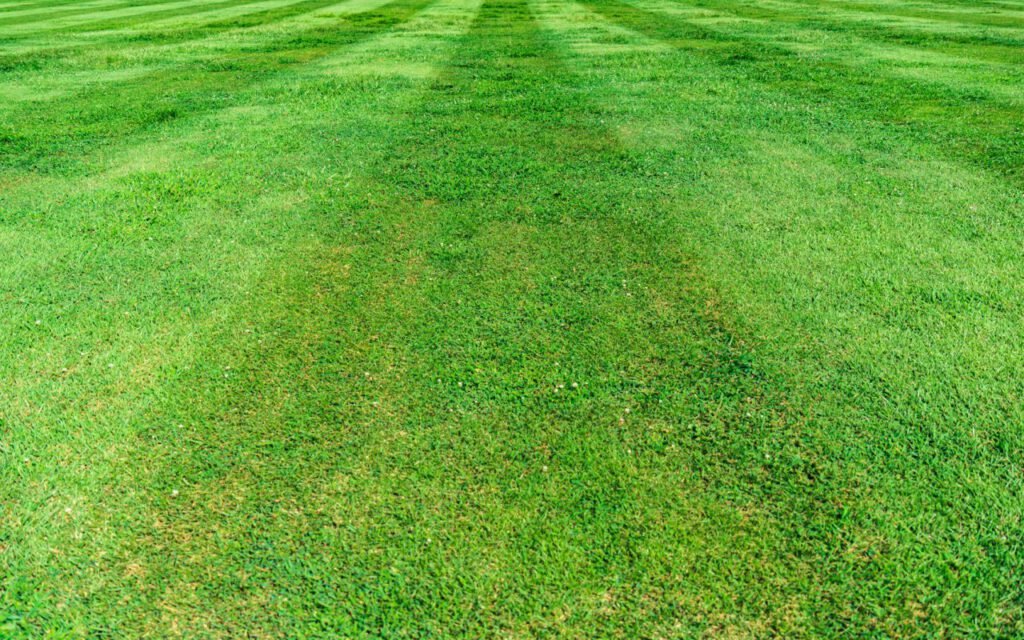
Austin lawns follow their own calendar. The national lawn-care advice you find on fertilizer bags and big-box store signs is usually written for cool-season grass in places with mild summers and hard winters. Central Texas is the opposite: our St. Augustine, Bermuda and zoysia lawns go dormant in winter, wake up slowly in spring and then spend July and August trying to survive weeks of triple-digit heat. Follow a calendar built for Ohio and you will feed weeds, scorch turf and waste a lot of water.
Here is the schedule our crews use on more than 600 yards across Austin, Round Rock, Cedar Park and the Hill Country. It is not complicated, and it does not require a shed full of products. It simply lines up each task with what warm-season grass actually needs at that time of year.
Winter rest: December through February
When the grass turns tan in December, it is not dying. It is dormant, much like a tree that drops its leaves. This is the quiet season, and the best thing you can do for a dormant lawn is mostly leave it alone.
- Water only during long dry spells, roughly once a month, and only when temperatures are above freezing.
- Keep leaves raked or mulched with the mower so they do not smother the turf.
- Stay off frosty grass. Footprints on frozen blades can leave brown tracks that last into spring.
- Service your mower now: sharpen the blade, change the oil and replace the air filter.
Winter is also the right time to look at the bigger picture. Walk the yard and note where water pooled after storms, where the grass thinned under trees and where foot traffic wore a path. Those notes will guide decisions about aeration, shade-tolerant planting and irrigation adjustments later in the year. Many of our clients use these quiet weeks to plan bed renovations or tree pruning, since most shade trees are easier to assess once leaves have dropped and the structure of each branch is clear.
Late February is also when we start watching soil temperatures. Once the soil holds around 55 degrees for several days, crabgrass seeds begin to sprout, and that sets up the first real task of the year.
Spring wake-up
March brings the first mow and the pre-emergent. A pre-emergent herbicide forms a barrier at the soil surface that stops weed seeds from establishing. Timing is everything: too early and it breaks down before the weeds arrive; too late and they are already growing. For most Austin yards, the first two weeks of March hit the mark. Always follow the label, and if you are not sure which product suits your grass type, ask a local professional.
The first mow of the season should be a cleanup. Lower the mower one notch to remove dead blades and let sunlight reach the new growth, then raise it back to normal for the rest of spring.
Feed after the second mowing in March or April, not before. Early fertilizer feeds the weeds. Warm-season grass cannot use nitrogen until it is actively growing, but winter weeds such as henbit and annual bluegrass will gladly take it. Waiting until you have mowed real green growth twice is a simple, reliable signal that the lawn is ready.

A note on watering in spring
Spring rains in Central Texas can be generous one year and nearly absent the next. Check your irrigation system in April: look for broken heads, sprinklers hitting the driveway and zones that run too long. A quick walk-through during a test cycle catches most problems before summer makes them expensive.
The best lawn in the neighborhood is usually the one that is mowed a little taller.
Luis, Greenline crew lead
Summer survival
Mow high, water deeply twice a week before 10 a.m., and let the lawn rest in August. That sentence sums up our entire summer strategy, and each part of it matters.
Mow high
In June we raise the mower. Taller grass shades its own roots and the soil around them, which keeps moisture in and crowds out weeds. For St. Augustine, that usually means three to four inches. Bermuda and zoysia can stay shorter, but they still benefit from a slight bump in height during the hottest months. Never remove more than a third of the blade in a single mow.
Water deeply
Short, daily sprinkles train roots to stay near the surface, where the soil bakes. Two deep soakings a week, roughly an inch of water in total, push roots down where it stays cooler. Watering before 10 a.m. cuts evaporation and lets the blades dry during the day, which helps prevent fungus. Always follow your city’s watering schedule; Austin-area restrictions change with drought stages.
Let the lawn rest
August is not the time to push growth. We skip fertilizer, avoid weed killers that can stress heat-weary turf and keep foot traffic light where possible. If a patch goes a little dull, that is often the grass protecting itself. Consistent watering will bring it back when temperatures drop.
Fall recovery
September is the turning point. Nights cool off a little, and warm-season grass gets a second wind before winter. It is the best time of year to aerate. Core aeration pulls small plugs of soil out of the ground, which relieves compaction from summer foot traffic and lets water, air and nutrients reach the roots. Our clay-heavy soils benefit from it more than most.
After aerating, we watch for brown patch, a fungus that loves cool, damp fall nights in St. Augustine. Watering only in the morning and avoiding excess nitrogen are the best defenses. If you see circular tan rings spreading quickly, it is worth calling a pro for a diagnosis.
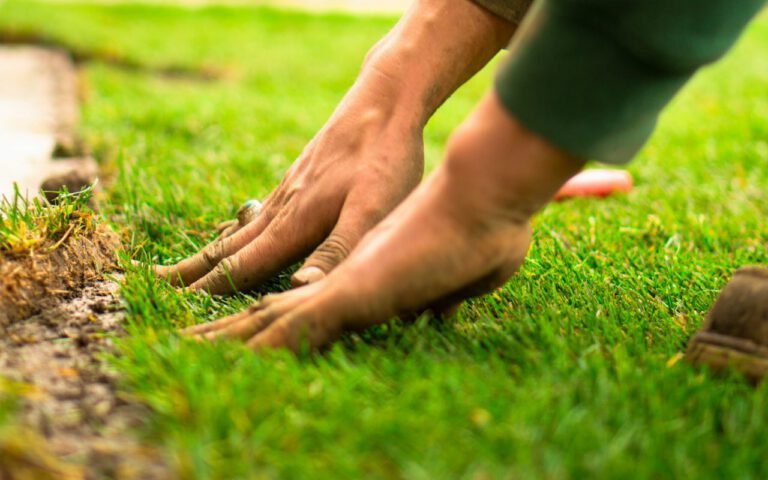
Fall is also a good season to fix thin spots. Plugs or small pieces of sod laid in September have several weeks of warm soil to root in before winter. Keep new patches consistently moist for the first two weeks, then taper back to the normal schedule. If a spot keeps failing year after year, the problem is usually shade, compaction or drainage rather than the grass itself, and it may be time to consider a planted bed instead.
November brings the final feed. A light fall application helps the grass store energy in its roots before dormancy, which means a faster, greener start next spring. We also apply a second round of pre-emergent around this time to stop winter weeds before they appear.
Key takeaway: warm-season grass rewards patience. Feed it when it is growing, protect it when it is stressed and let it sleep when it wants to.
The short version
If you want a quick reference to stick on the garage wall, here is the calendar we follow:
- March · first mow, pre-emergent
- April · feed
- June · raise the mower
- September · aerate
- November · final feed
Everything else fills in around those five dates: deep morning watering in summer, a light touch in August, leaf cleanup in winter and an irrigation check each spring. Weather will shift the schedule by a week or two in some years, so use the calendar as a guide and let the grass tell you when it is ready.

When to call in help
Plenty of homeowners follow this calendar on their own and get great results. Others would rather spend weekends somewhere other than behind a mower, and that is where our crews come in. Whether you want a full seasonal plan or just an aeration visit in September, the Greenline team builds the schedule around your yard, your grass type and your city’s watering rules. A healthy Central Texas lawn is not about doing more. It is about doing the right thing at the right time, and letting the grass handle the rest.

Luis Romero
Luis has mowed Austin lawns since 2011.


Luis Romero
Luis has mowed Austin lawns since 2011.

2 Comments
Thanks for explaining this so clearly.
Great reporting — please keep following this story.