
Small Backyard, Big Impact: Five Design Ideas
Layers, lighting and one great focal point.
 Erin Walsh6 min read
Most of the yards we design are smaller than a two-car garage. Austin has grown fast, and many newer homes, townhomes and infill houses come with a backyard that is little more than a fenced rectangle of grass. Owners often assume there is not much they can do with it. In our experience, the opposite is true: a small yard is easier to design well, cheaper to build and far easier to maintain than a sprawling one, as long as every square foot earns its place.
Here are the tricks that make them feel twice the size. These are the five ideas Greenline’s design team returns to again and again, whether we are working on a tiny courtyard in East Austin or a narrow side yard in Round Rock. None of them requires a huge budget, and most can be done in stages.
One focal point
A single specimen tree, water bowl or fire pit gives the eye somewhere to land. Small yards often feel cramped not because of their size but because there is too much competing for attention: a few pots here, a statue there, three kinds of shrubs along the fence. When nothing stands out, the eye bounces around and the space feels busy.
Choosing one strong feature changes that. A multi-trunk desert willow or a Texas redbud in the far corner draws attention to the back of the yard, which makes the whole space feel deeper. A simple water bowl adds sound and movement. A fire pit becomes the natural gathering place. Everything else in the design then supports that focal point instead of fighting it.
Great small gardens are edited, not crowded.
Erin, Greenline lead designer
Placement matters as much as the feature itself. We usually set the focal point slightly off center and toward the back, where it can be seen from the main window or the back door. That way the view from inside the house frames it like a picture, and the yard feels designed even in winter, when you are mostly looking at it through glass. On a recent townhome project in Mueller, a single low stone bowl of water, placed where it could be seen from the kitchen sink, became the owners’ favorite part of the whole house.
Erin’s rule applies to every choice in a small yard. Before adding a plant, a pot or a piece of furniture, ask whether it adds to the main idea or distracts from it. Often the best design move is taking something away.
Think in rooms
The second idea is to divide even a tiny yard into distinct areas. It sounds backward, since dividing a small space should make it feel smaller. In practice, creating a dining spot, a lounge corner and a planted edge makes a yard feel more generous, because you cannot see everything from one place and there is a sense of moving from one area to another.
We create those rooms with subtle tools rather than walls:
- A change in surface, such as pavers for dining and decomposed granite for a lounge area.
- A low hedge or a row of ornamental grasses that screens without blocking views.
- A single step or a slight change in level.
- An outdoor rug and a cluster of chairs to define a seating zone.
- A path that curves, so the far end of the yard is partly hidden until you walk there.
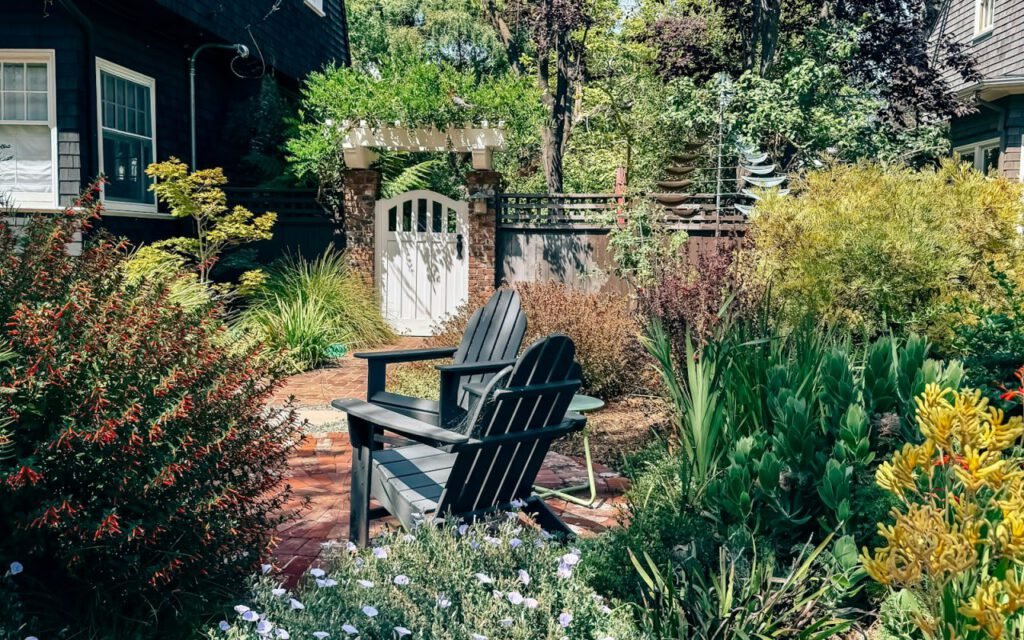
Go vertical
When floor space is limited, the walls and fences become your planting beds. Most small yards are surrounded by six-foot privacy fences, and those blank boards are a huge opportunity.
Climbing vines such as crossvine or Carolina jessamine can cover a fence in green and add seasonal flowers. Wall-mounted planters hold herbs within reach of the kitchen door. Narrow, upright trees and shrubs give height without taking up much ground. A trellis or slatted screen can hide an air conditioner or trash bins while adding texture.
Vertical planting also helps with privacy, which is one of the most common requests we hear from owners of small lots. Neighbors’ second-story windows often look straight down into a tiny yard. A small canopy tree, a pergola with a vine or a few tall panels of screening can block those sightlines without making the space feel boxed in. Placing the screen close to where you sit, rather than along the property line, blocks more of the view with less material.
Painting the fence a dark color is another trick we use often. Charcoal or deep green fences recede visually, so the boundary seems farther away and plants in front of it really pop.
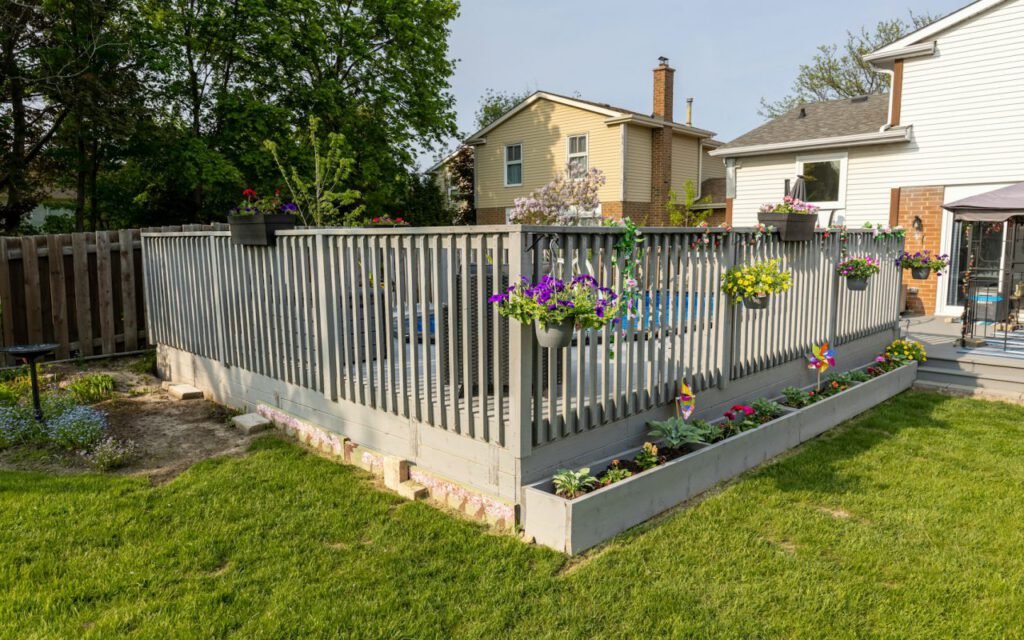
Choose fewer, bigger things
It is tempting to use small furniture, small pots and small pavers in a small space. Usually, that backfires. Lots of little pieces create visual clutter, while a few larger elements feel calm and intentional.
We often recommend large-format pavers for patios, since fewer joints make the surface look broader. One big planter with a bold plant reads better than five little ones. A comfortable outdoor sofa can replace a scattering of chairs. Repeating the same two or three plants in drifts, rather than mixing a dozen varieties, gives the garden a sense of order that makes it feel bigger.
Plants that work hard in small spaces
- Dwarf yaupon holly: evergreen structure in a compact, rounded form.
- Autumn sage: long season of color with modest water needs.
- Mexican feathergrass: soft movement that catches light at the edges.
- Texas redbud: a small tree with a spectacular spring show.
- Horseherb or frogfruit: tough groundcovers that fill gaps between stepping stones.
Choosing plants that fit their space at maturity also cuts down on pruning. A shrub that wants to be eight feet wide will never be happy squeezed into a three-foot bed.
Light it up
Warm path and uplighting turns a 20-minute yard into an evening room. In a Texas summer, the hours after sunset are often the most pleasant time to be outside, and good lighting is what makes those hours usable.
We keep lighting soft and warm rather than bright and white. A few low path lights guide footsteps. An uplight at the base of the focal tree makes it glow against the night sky. String lights overhead create a ceiling and a sense of enclosure. Lights tucked into beds or along the fence suggest depth beyond what you can see, which is one more way to make the space feel larger after dark.
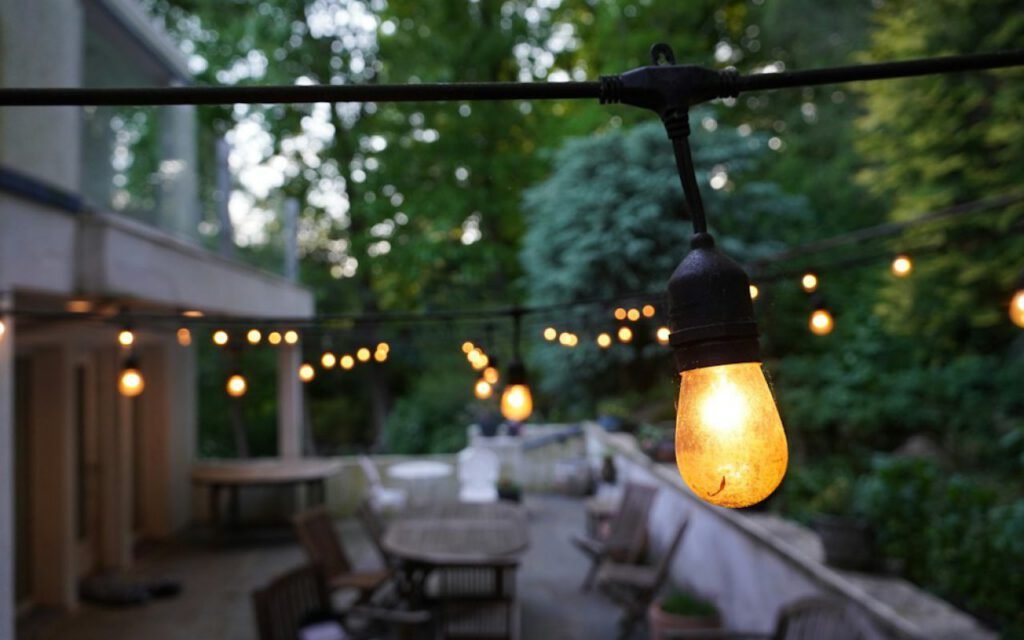
Low-voltage LED systems use little energy and can run on timers or smart controls. For any wiring work, we always recommend a licensed electrician or an experienced installer.
Key takeaway: pick one focal point, create a few rooms, plant upward, choose fewer and bigger elements and light it well. Those five moves can transform almost any small yard.
Small yard, big life
A small backyard is not a compromise. It is a chance to create something personal and easy to care for, a space you will use every day instead of maintaining every weekend. Our favorite projects are often the tiniest ones, because every decision shows. If your yard feels more like leftover space than an outdoor room, the Greenline design team would love to help you edit, plan and build a garden that feels twice its size.

Erin Walsh
Erin designs water-wise gardens for Texas yards.





Start the conversation