Little Chefs: Easy Recipes Kids Can Help Make
Washing, stirring and decorating — kitchen jobs for every age.
 Tessa Grant6 min read

Tessa Grant
Tessa develops family recipes and has fed one very picky eater since 2019.



Children who help cook are often more willing to taste new food. Every age has a job in the kitchen. A toddler rinsing blueberries, a preschooler pouring flour, a nine-year-old cracking eggs into a bowl: each of them is learning skills, building confidence and, very often, getting curious about what ends up on their plate. Cooking together also slows the day down in the best way. It gives you twenty minutes side by side, talking, laughing and occasionally wiping flour off the ceiling.
This guide breaks down kitchen jobs by age, shares five easy first recipes and offers simple safety rules so everyone has fun. You do not need special equipment or a big kitchen. A sturdy stool, a few bowls and a willingness to accept a little mess are enough.

Jobs by age
Toddlers wash vegetables and stir. Preschoolers measure and pour. Big kids crack eggs and follow recipes. Matching tasks to your child’s skills keeps them engaged and safe, and it lets them feel truly useful rather than just watching.
Toddlers, about ages 2 to 3
Little ones love jobs that use their whole hands. Let them wash fruits and vegetables in a bowl of water, tear lettuce and herbs, stir cold ingredients, mash bananas with a fork, sprinkle cheese and press cookie cutters into dough. Expect splashes and short attention spans, and keep the jobs simple.
Preschoolers, about ages 4 to 5
Preschoolers are ready for measuring, pouring and spreading. They can scoop flour, pour milk from a small pitcher, spread butter or nut butter with a dull knife, crack an egg into a separate bowl with help, and arrange toppings. This is a great age to count scoops together and talk about colors and shapes.
Big kids, about ages 6 to 12
School-age children can read simple recipes, crack eggs, whisk, grate cheese and use a kid-safe knife with supervision. Older kids in this range can start learning to use the stove or oven with an adult right beside them. Let them take the lead on one dish and become the family expert.
Why cooking together works
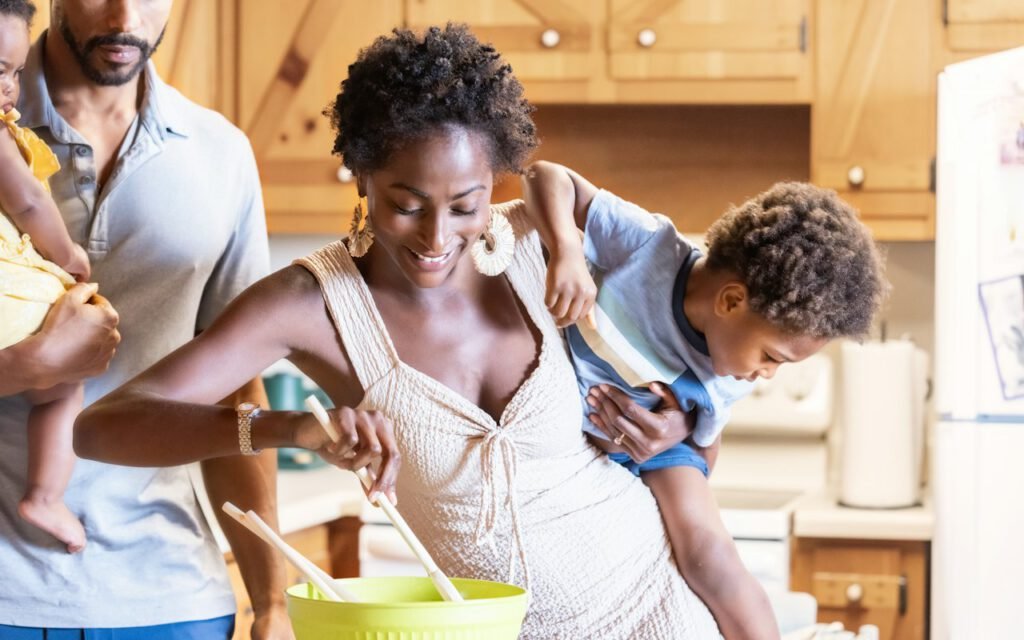
When children wash, stir and assemble food, they get to know it on their own terms. They touch it, smell it and watch it change. That familiarity takes away some of the fear many kids feel about new foods.
A child who made the salad will usually eat the salad.
Leah Morgan, registered dietitian
Leah says cooking is one of her favorite tools for families with picky eaters. It shifts the focus from “you have to eat this” to “look what you made.” Children also practice math as they measure, reading as they follow recipes and science as they watch dough rise or butter melt. And there is real pride in setting a dish on the table and hearing the family say thank you.
Easy first recipes
Fruit salad, mini pizzas, muffins and build-your-own tacos. These four, plus a simple yogurt parfait, are favorites in our test kitchen because they have lots of kid-friendly steps and very little that can go wrong.
- Rainbow fruit salad. Wash berries and grapes, peel bananas and clementines, and let kids slice soft fruit with a butter knife. Toss with a squeeze of lime.
- Mini pizzas. Use English muffins or small flatbreads. Kids spread sauce, sprinkle cheese and add toppings, then an adult bakes at 400°F for about 8 to 10 minutes.
- Banana oat muffins. Children mash bananas, measure oats and flour, stir and scoop batter into lined muffin cups. An adult handles the oven.
- Build-your-own tacos. Set out warm tortillas, seasoned beans or chicken, shredded lettuce, diced tomatoes, cheese and salsa. Kids help prep toppings and assemble their own.
- Yogurt parfaits. Layer yogurt, granola and fruit in clear cups. Great for breakfast or an after-school snack.
Recipe card: banana oat muffins
Our readers ask for this one more than any other kid-friendly recipe, so here it is in full. It makes 12 muffins.
- 3 ripe bananas
- 1/3 cup melted butter or vegetable oil
- 1/3 cup brown sugar or maple syrup
- 1 egg
- 1 teaspoon vanilla extract
- 1 cup all-purpose flour
- 1 cup quick oats
- 1 teaspoon baking soda and a pinch of salt
Heat the oven to 350°F and line a muffin pan. Kids mash the bananas in a large bowl, then stir in the butter, sugar, egg and vanilla. In a second bowl, they whisk the flour, oats, baking soda and salt. Gently stir the dry ingredients into the wet ones until just combined; a few lumps are fine. Let children scoop the batter into the cups, about two-thirds full. An adult bakes them for 18 to 22 minutes, until a toothpick comes out clean. Cool before eating.
Choose recipes with short ingredient lists and quick results. Young children love seeing their work turn into something they can eat right away. Save complicated dishes for when skills and patience have grown.
Keep the kitchen safe and calm
A few clear rules make cooking together relaxing rather than stressful. Talk about them before you start and repeat them often.
- Wash hands before touching food, and again after handling raw eggs or meat.
- Grown-ups handle sharp knives, the stove and the oven unless a big kid is learning with close supervision.
- Turn pot handles toward the back of the stove.
- Use a sturdy step stool so kids can reach the counter safely.
- Keep raw eggs, flour and meat out of little mouths until they are cooked.
If anyone in your family has food allergies, plan recipes carefully and check every label. Ask your pediatrician if you have questions about which foods are safe for young children, such as choking hazards for toddlers.
Making it fun, not perfect
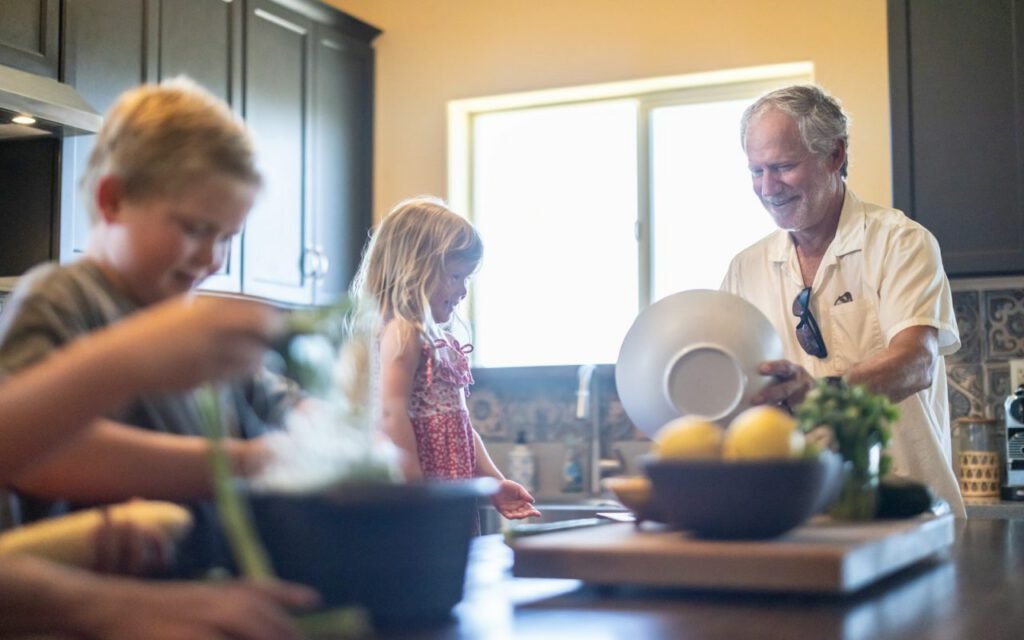
The muffins may be lopsided and the fruit salad may contain far too many grapes. That is fine. The goal is time together, new skills and a positive feeling about food. Choose a time when nobody is rushed; weekend mornings and slow afternoons work better than the six o’clock dinner rush. Set up ingredients in advance so kids can jump right in, and give them aprons or a special kitchen towel to make it feel official.
Clean-up can be part of the fun too. Give kids a sponge or a dish towel and let them wipe the counter, rinse bowls or put ingredients back in the pantry. Turning on music while you tidy makes it feel less like a chore and teaches that cooking includes the whole process.
Let children taste as they go when it is safe, and ask them to describe flavors and textures. Is it crunchy, sour, sweet or creamy? Take a photo of the finished dish and let them present it at the table. Some families keep a simple family cookbook where kids add their favorite recipes with drawings.
Key takeaway: Give every child a real job, start with simple recipes and expect a little mess. The confidence and curiosity your kids gain are worth every spilled cup of flour.
Quick tips
- Use a sturdy step stool
- Keep knives and heat for grown-ups
- Expect spills
- Pick recipes with short ingredient lists
- Let kids serve what they made
Start with one cooking session a week and see where it leads. You may find your child asking to make the Saturday pancakes or proudly packing their own lunch. Those small moments of independence add up, and they begin with an invitation to pull up a stool and help.
This article is general information, not medical advice. Talk to your own doctor or midwife about your family.
Tessa Grant
Tessa develops family recipes and has fed one very picky eater since 2019.

Start the conversation