Building a Reading Habit Without an App
A paper log, a library card and twenty minutes before bed.
 Nora Ellis6 min read

Nora Ellis
Nora is a registered dietitian who writes about food without rules, guilt or powders.

Apps that track my reading made me read faster, not better. So I went back to a paper log. For two years I let a glowing progress bar tell me how I was doing as a reader, and for two years I chased it. I picked shorter books in December to hit a yearly goal. I skimmed the slow middle chapters of novels I would have loved if I had let them breathe. I finished more books than ever and remembered fewer of them. One January I looked at my total, a number I had been proud of, and realized I could not tell you what half of those books were about.
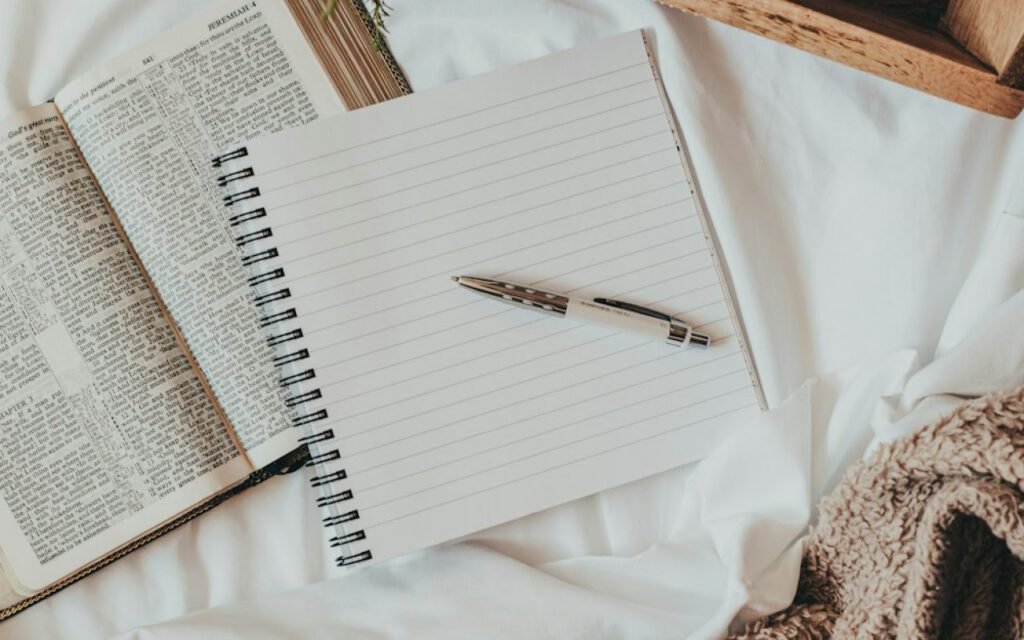
One line per book: title, date finished, one sentence about how it made me feel. That is the whole system now. It lives in a thin notebook on the shelf beside my bed, and it has quietly changed the way I read.
 Sponsored · Quietdesk Writing AppWrite without distractionsFree for 30 days.Try free
Why I quit counting
I do not think reading apps are bad. Plenty of people I admire use them happily, and they can be wonderful for finding new books or keeping up with friends. My problem was more personal. I am the kind of person who turns any number into a scoreboard. Once my reading had a score, it stopped being a place I went to rest and became one more thing I was trying to win.
The paper log broke that spell almost immediately. There is no total at the top of the page unless I count it myself, and I rarely do. There is no streak to protect, no badge, no notification at nine o’clock reminding me that I have fallen behind. The notebook simply waits until I have something to write down.
The single sentence turned out to matter more than I expected. Writing down how a book made me feel forces me to sit with it for a minute after the last page. Some entries are practical: “Slow start, worth it.” Some are embarrassingly earnest: “Cried on the bus, did not care who saw.” Flipping back through the notebook now feels like reading an old diary, which an app never did.
Twenty minutes, every night
Phone in the kitchen, book on the pillow. Most nights it turns into an hour. This is the habit that actually built my reading life, and it is almost embarrassingly simple. Around nine thirty I plug my phone in on the kitchen counter, well out of reach. When I get to my room, the book I am reading is already lying on my pillow, where I put it that morning while making the bed. I have to pick it up to lie down.
I promise myself twenty minutes, nothing more. Twenty minutes is small enough that I never dread it, even on the worst days. It is also long enough to get past the first page or two, which is where most of my resistance lives. Once I am inside the story, I rarely want to stop at twenty. On a good night I look up and an hour has gone by.

Keeping the phone in another room is the part people push back on most. I understand. It is also my alarm clock, my flashlight and, if I am honest, my favorite way to avoid my own thoughts. I bought a cheap battery alarm clock for about $12, and that solved the first problem. The other two I have learned to live without for an hour before sleep, and I sleep better for it.
Read what you love, and the habit takes care of itself.
Nora
I wrote that in my notebook after a month of nightly reading, and it still holds. On nights I am reading something I chose out of obligation, the twenty minutes feel long. On nights I am reading something I love, the habit is not a habit at all. It is just the best part of the evening.
The library card trick
Borrowed books have due dates. Deadlines are surprisingly good motivation. I came back to my local branch library a few years ago after a long absence, mostly to save money, and discovered that the due date was doing more for my reading than any app had managed.
A book I own can sit on the nightstand for a year. A book from the library has three weeks, and I know it. That gentle pressure is just enough to move a book from “someday” to “this week.” If I am not enjoying it, the due date also gives me permission to let it go. I return it, I have lost nothing, and somebody else on the waiting list gets their turn.
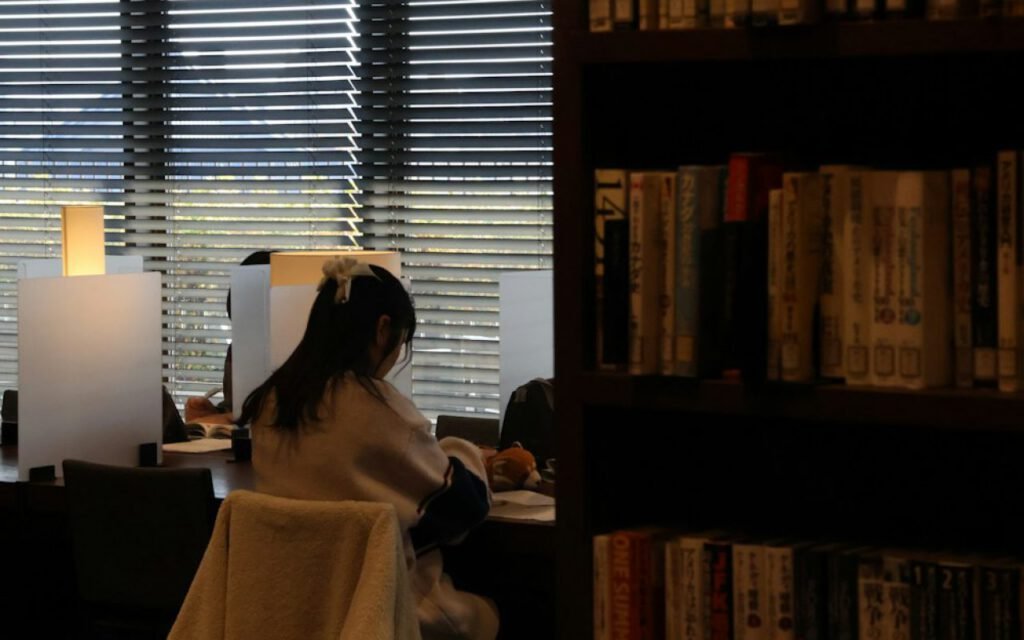
The library also widened what I read. When books are free, I take more chances. I have checked out poetry collections, a history of salt, a cookbook I read cover to cover without cooking a single recipe, and novels from writers I had never heard of. Some of those risks became favorites. A few I returned after ten pages. All of them cost me nothing but a short walk.
A few small library habits
- Borrow two books at a time, never more. One to read, one in reserve.
- Place holds on new releases early and let the waiting list surprise you.
- Ask a librarian for one recommendation each visit. They are almost always right.
- Write the due date on a sticky note inside the cover, not in a calendar app.
What the log looks like a year later
People sometimes ask whether I read less now that I am not counting. I honestly do not know, and that is a little bit of the point. When I flip through last year’s pages, I find roughly two books a month, sometimes three in a slow winter, sometimes one in a busy summer. It is fewer than my best app year. It is also the first year I can describe nearly every book on the list from memory.
The notebook has become a small record of my life as well as my reading. There is the novel I finished in a hospital waiting room. There is the mystery I read aloud to my partner on a long drive through Ohio. There is the memoir that convinced me to start this blog. None of those details would fit in a star rating, but they fit perfectly in a single sentence written in pencil.
Key takeaway: A reading habit does not need a tracker. It needs a book within reach, a few protected minutes and a way to remember what each book meant to you.
Start with one book tonight
If you would like to try this, do not buy anything fancy. Any notebook works. Draw a line down the left side for dates and write your first entry the next time you finish a book. Tonight, put your phone on the kitchen counter and a book on your pillow, and give yourself twenty minutes.
Then, sometime this week, walk into your local library and borrow something you would not normally pick up. Let the due date nudge you along. Read what you love, and if you find you do not love it, take it back without guilt. The habit, as I keep discovering, really does take care of itself.
Nora Ellis
Nora is a registered dietitian who writes about food without rules, guilt or powders.


Start the conversation