



 ShoppingThe 30-Piece Capsule Wardrobe for FallFewer clothes, more outfits — the pieces that do the most work.
Sustainable Style Ava Monroe6 min read
Closet Organization That Sticks
Hangers, folds and the one-in, one-out rule.
Ava Monroe6 min read

Written by
Ava Monroe
Ava has styled shoots for 15 years and still believes the best accessory is a good coat.
9Articles
2026Writing since
An organized closet makes getting dressed faster and shows you what you actually own. That second part matters more than most people realize. When clothes are crammed together, piled on shelves or hidden behind a tangle of hangers, it is easy to forget what is there. We buy another black sweater because we cannot find the first one. We overlook the perfect shirt because it is buried at the back. A well-organized closet is not about perfection or matching hangers. It is about visibility, and visibility changes how you dress and how you shop.
The challenge is making organization stick. Many of us have spent a weekend reorganizing, only to find the closet back in chaos a month later. This guide focuses on systems that are simple enough to maintain, with practical steps for small apartments and larger homes alike.
Edit first
Remove what doesn’t fit or you haven’t worn in a year. Organizing a closet that is too full is like rearranging a crowded room; it will never feel calm. Editing first gives your system a fighting chance.
Take everything out, or work one section at a time if a full purge feels overwhelming. As you handle each piece, ask a few honest questions. Does it fit right now? Have I worn it in the past year? Do I feel good wearing it? Does it need a repair I will actually make? Sort items into four piles: keep, donate or sell, repair and recycle.
Be gentle with sentimental items. A wedding dress, a beloved concert shirt or a grandparent’s sweater can be stored separately, in a labeled box, rather than taking up prime space in your everyday closet.
Once the edit is done, act quickly on the outgoing piles. Drop donations off the same week. Take repairs to a tailor or put them in a mending basket. Clothes that linger in bags by the door have a way of creeping back into the closet.
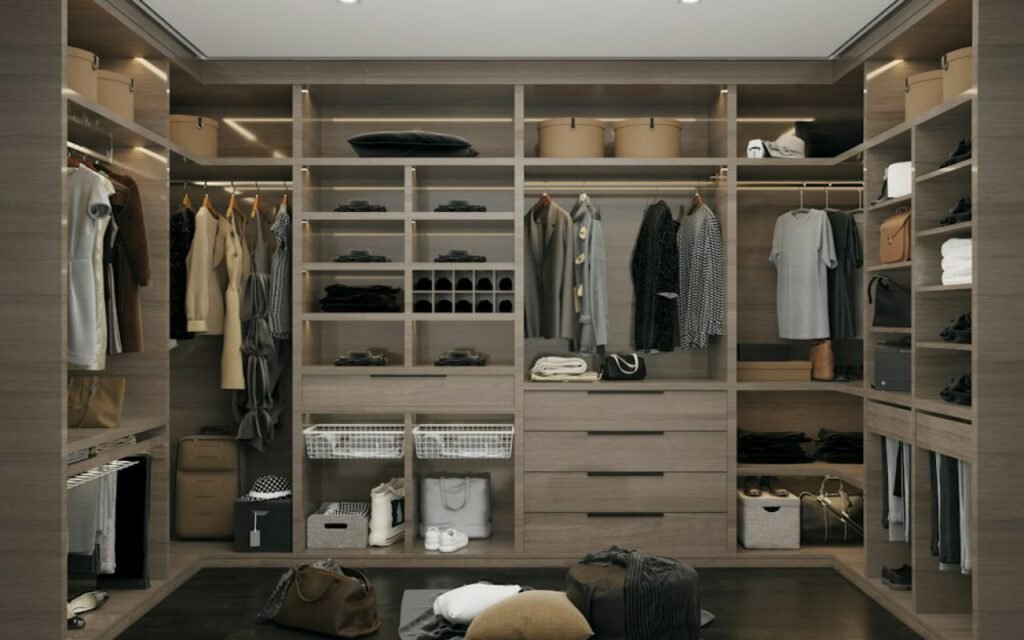
You can’t wear what you can’t see.
Professional organizer (fictional)
Store by type
Group tops, bottoms and dresses, then by color. This simple order makes getting dressed faster, because you know exactly where to look. It also shows you at a glance where you have too much and where there are gaps.
Within each category, arrange items from light to dark, or follow the order of a rainbow. Color sorting looks lovely, but more importantly, it helps you quickly see how many navy sweaters or white shirts you already own before you buy another.
What to hang and what to fold
- Hang: blazers, coats, dresses, button-down shirts, silk and other delicate tops, trousers that crease easily.
- Fold: sweaters and knits, which can stretch on hangers; T-shirts; jeans; workout clothes.
- Store in bins or drawers: socks, underwear, scarves, belts and small accessories.
Use matching slim hangers if you can. They take up less space than bulky plastic or wire ones and give the closet a calmer look. Velvet-covered hangers are great for silky items that tend to slip off.
Try folding knits and tees vertically in drawers, so each item stands on its edge like a file in a cabinet. Everything is visible from above, and pulling one shirt out does not topple the whole stack.
Make the most of the space
Most closets have more usable space than we think. A few small changes can transform a cramped closet.
- Add a second rod. In a reach-in closet, a lower hanging rod beneath a higher one doubles the space for shirts and folded trousers.
- Use the top shelf wisely. Store off-season clothes and rarely used items up high in labeled bins.
- Use the door. Over-the-door hooks or organizers hold bags, belts, scarves and shoes.
- Go vertical with shoes. A simple shoe rack or stackable shelves keep pairs visible and off the floor.
- Add light. A battery-powered motion light makes a dark closet far easier to use.
In small apartments, consider under-bed storage for seasonal items and a freestanding rolling rack in the bedroom for everyday favorites. A rack forces you to keep things tidy, because everything is on display.
Systems that actually stick
The best closet system is one you will maintain without thinking. Here are the habits professional organizers recommend most.
One in, one out. Every time you bring home a new piece, one similar piece leaves. This keeps your closet from slowly filling back up.
The hanger trick. At the start of the season, hang everything with the hook facing backward. When you wear something, turn the hanger around. At the end of the season, anything still facing backward is a candidate for donation.
A landing spot. Many closets fall apart because of half-worn clothes, items too clean for the laundry but not fresh enough to hang back up. Give them a dedicated hook or a small chair, so they do not end up on the floor.
A five-minute reset. Once a week, spend five minutes putting stray items back in their place. Small resets prevent big overhauls.
Seasonal swaps. Twice a year, as fall and spring arrive, rotate off-season clothes into storage. It is the perfect moment for a quick edit, too.
Key takeaway: edit before you organize, store by type and color, and protect the system with small weekly habits.
Accessories and shoes
Small items are often where closets fall apart, because they have no natural home. Give them one. Clear bins or drawer dividers keep belts, scarves, sunglasses and hats sorted and visible. Hooks inside the door work well for bags, and a shallow tray on a shelf can hold the jewelry you wear most. Roll belts instead of hanging them, and fold scarves loosely so they do not crease.
For shoes, store the pairs you wear most at eye level or on the floor of the closet, and move special-occasion shoes higher up. Keep boots upright with simple boot shapers or rolled-up magazines so they do not slump. If space allows, store each pair with the toe of one shoe facing out and the heel of the other facing out; it saves several inches per shelf.
Finally, label anything that goes into an opaque box or bin. A simple handwritten tag such as “winter hats” or “summer sandals” saves you from opening five boxes to find one item, and it makes the seasonal swap much faster.
The payoff
An organized closet does more than look nice. It saves time every morning, reduces impulse purchases and helps you rediscover clothes you forgot you loved. Many people find that after a good edit and a simple system, they actually wear more of what they own, and buy less.
It also makes it easier to see your personal style. When everything is visible, patterns emerge: the colors you always reach for, the shapes that make you feel good, the pieces you keep buying but never wear. That knowledge helps you shop smarter in the future.
Start this weekend
You do not need to transform your closet in a single day. Pick one category this weekend, perhaps tops or shoes, and edit it. Then organize what remains by type and color. Next weekend, tackle another category. Within a month, your entire closet will be easier to use, and with a few small habits, it will stay that way. After all, you can’t wear what you can’t see.
Written by
Ava Monroe
Ava has styled shoots for 15 years and still believes the best accessory is a good coat.
9Articles
2026Writing since
Read next
ShoppingThe 30-Piece Capsule Wardrobe for FallFewer clothes, more outfits — the pieces that do the most work. Sustainable StyleStreet Style Report: What People Are Actually WearingOversized coats, wide trousers and sensible shoes.
 AccessoriesHow to Shop Secondhand Like a StylistThrift stores, fabric checks and the art of the second look.
 Sustainable StyleReading Fabric Labels: What Lasts and What Doesn’tNatural fibers, blends and why weight matters.
 BeautyLearn to Sew a Button (and Five Other Easy Repairs)Mend, don’t toss — beginner fixes that save favorite clothes.
 ShoppingHow Clothes Should Fit: A Simple GuideShoulders first, sleeves second, everything else is tailoring.
 BeautyMakeup in Five Minutes: The Everyday EditTinted moisturizer, cheek, brow, mascara, lip.
 BeautyCaring for Wool and CashmereWash less, fold always, and de-pill gently.
Start the conversation