Three data centers rising along the county’s northern highway will together draw about 300 megawatts of electricity, the utility estimates, roughly the use of 90,000 homes. From the highway, the sites look like any large construction project: cranes, gravel lots, rows of trucks and long, windowless buildings slowly taking shape on what used to be soybean fields. Inside, once they are finished, tens of thousands of computer servers will run around the clock, storing files, streaming video and training the artificial intelligence systems that have become the hottest business in technology.
The projects bring about 400 permanent jobs and a large boost to the county’s tax base. They also bring questions about power, water, noise and who pays for the upgrades needed to keep the lights on. Over the past month, we spoke with county officials, utility planners, construction workers and the neighbors who will live next to the new buildings for decades to come.
Data centers need three things above all: lots of electricity, fast fiber-optic connections and large, flat parcels of land. The county’s northern edge has all three. A major fiber line runs along the highway, a high-voltage transmission corridor crosses nearby, and farmland in the area has been zoned for industrial use for more than a decade.
Demand for data center space has surged across the country as companies race to build computing capacity for AI. Developers have been looking beyond traditional hubs, where land and power have become scarce and expensive, toward smaller communities with room to grow. County officials say they received inquiries from more than a dozen developers over the past two years before approving the current three projects.
The three facilities are being built by separate companies: Northgate Digital, Prairie Compute and Silverline Data Systems. All three are expected to open in phases over the next three years, with the first buildings coming online late next year.
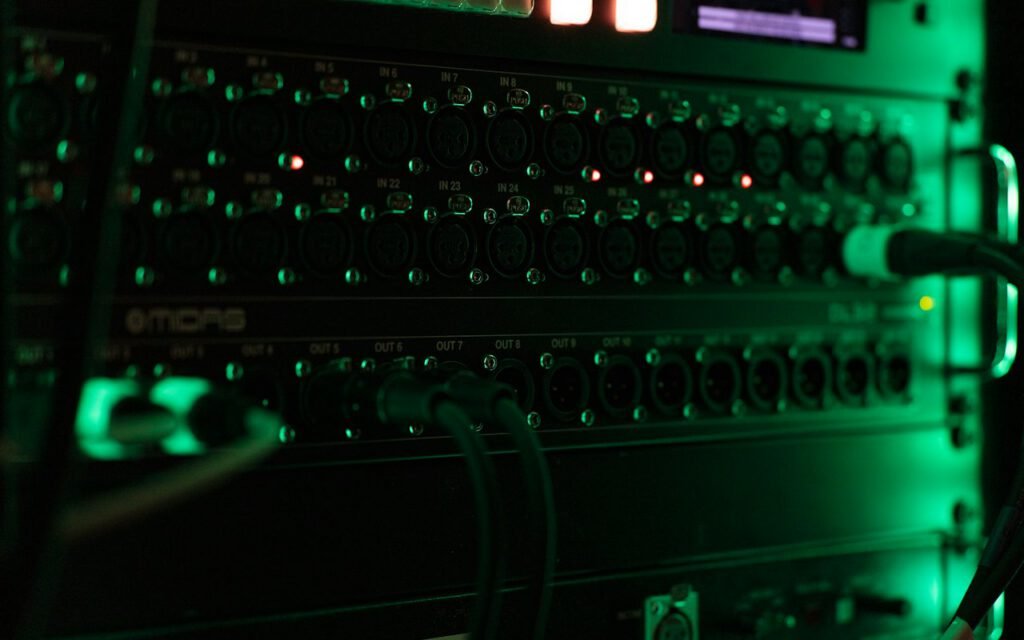
Each facility will house tens of thousands of servers running around the clock.
Power and water
The utility plans to add a solar farm and battery storage to cover the new load. The companies say they will use recycled water for cooling. Both promises are central to how the projects were sold to the public, and both are being watched closely.
The electricity question
Three hundred megawatts is a lot of power for a county this size. To meet it, the utility, Heartland Electric Cooperative, plans to build a 250-megawatt solar farm on land south of the data centers, along with a large battery storage system that can supply power after sunset. It will also upgrade two substations and add new transmission lines.
Utility planners say the data center companies have agreed to pay for most of the new equipment through special contracts, so the cost does not fall on residential customers. Under those agreements, the companies also commit to minimum power purchases for 15 years, which the utility says protects other customers if a facility closes early.
The water question
Data centers generate enormous heat, and many use water to cool their servers. In this case, the companies have agreed to use treated wastewater from the county’s sewer plant rather than drinking water or groundwater. A new pipeline will carry recycled water to the sites. Two of the three facilities will also use air-based cooling systems for much of the year, which the companies say will cut water use further during cooler months.
Environmental groups say they are encouraged by the recycled water plan but want regular public reporting on how much water the facilities actually use. County officials say quarterly reports will be required as a condition of the building permits.
A new solar farm and battery system will help supply the added load.
Jobs and taxes
For many residents, the jobs are the biggest selling point. Construction worker Tony Alvarez, who grew up a few miles from the Prairie Compute site, said the project has given him steady work close to home for the first time in years. “I used to drive two hours each way for jobs like this,” he said. “Now I’m home for dinner.”
The economic case for the projects is strong, at least on paper. About 400 permanent jobs will be created across the three sites, including technicians, electricians, security staff and facility managers. Construction is employing roughly 1,500 workers at its peak, many of them from local trade unions.
The county expects the facilities to add hundreds of millions of dollars to its property tax base once they are complete. Officials say that money could fund school improvements, road repairs and new public safety equipment, while easing pressure on homeowners’ property taxes. The local community college has already launched a data center technician certificate program, with its first class of 30 students starting in January.
Not everyone is convinced the benefits will be as large as promised. Several residents at public meetings noted that data centers employ relatively few people for their size, and that some tax breaks offered to the companies will reduce the county’s revenue in the early years.
Neighbors speak up
Residents at a packed town hall asked about noise from cooling fans and whether their electric bills will rise. More than 300 people filled the high school auditorium on a weeknight last month, and the meeting ran nearly three hours.
We want the jobs. We also want to sleep at night.
Linda Gray, nearby homeowner
Gray lives less than a mile from one of the sites. She said she supports the projects in principle but worries about the low, constant hum that some data centers produce. Other residents raised concerns about bright security lighting, increased truck traffic during construction and the loss of open farmland.
Questions raised most often at the town hall included:
Will residential electric rates go up to pay for new power lines and plants?
How loud will the cooling equipment be, especially at night?
What happens to the buildings if the companies leave?
Will the facilities use local groundwater during droughts?
How will construction traffic be managed on rural roads?
County officials said each company must meet noise limits measured at the property line, and that independent sound testing will be done after each building opens. The companies have also agreed to plant tree buffers and build earthen berms along roads near homes. The utility repeated that its contracts are designed to keep data center costs off residential bills, though it acknowledged that rates can change for many reasons.
Key takeaway: The projects promise jobs, tax revenue and new clean energy, but neighbors want clear, enforceable limits on noise, water use and electric rates.
What happens next
Construction will continue through the winter, and the first building at the Northgate site is expected to open late next year. The county has formed a community advisory committee of residents, farmers, business owners and environmental representatives to meet quarterly with the companies and the utility. Its first meeting is scheduled for December.
For now, the county’s northern edge is in the middle of a transformation that few residents imagined a few years ago. Whether the data centers become a lasting source of prosperity or a source of frustration will depend on how well the promises made at the town hall are kept. We will keep reporting on the projects as they take shape, and we want to hear from neighbors, workers and anyone else affected. Send your questions and observations to our newsroom.








 Tech & ScienceSchools Test AI Tutors — With Teachers Firmly in ChargeTwelve middle schools are trying chat-based math help this fall. Here’s what students and teachers think…


Start the conversation