


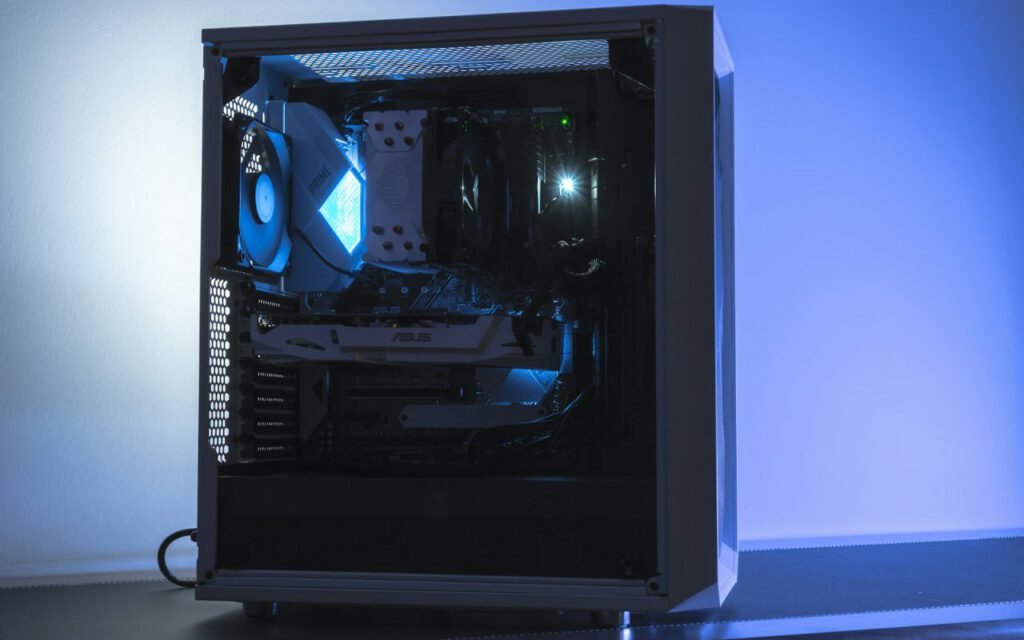
 EsportsAustin Comets Win the Fall Arena Championship in a Five-Map ThrillerA rookie support player clutched the final round in front of 12,000 fans in Dallas.
Written by
Jess Park
Jess has covered the Arena League since its first season and hosts our finals coverage.
6Articles
2026Writing since
At 8 a.m. the Seattle Sound are not playing games. They are running. Then breakfast, then video review, then five hours of scrimmages. By the time the sun sets over Lake Union, the team’s five starters and two substitutes will have spent nearly twelve hours on the craft of winning, and most of it won’t involve a game controller or a mouse. We spent a week with the Sound in the run-up to the Fall Arena Championship playoffs, and what we found looks more like a sports team than a gaming house.
The Sound’s boot camp takes place in a rented two-story house on a quiet street in Seattle’s Fremont neighborhood. Upstairs, seven bedrooms. Downstairs, a training room with nine identical gaming stations, a video review room with a large wall screen and a kitchen that, as players are quick to tell you, is the most important room in the house.
A day in the house
The schedule is posted on a whiteboard in the hallway and rarely changes. Here’s what a typical weekday looks like:
- 7:30 a.m. Wake up and weigh in, plus a short check-in with the team’s performance coach.
- 8 a.m. A 30-minute group run or a light workout, depending on the day.
- 9 a.m. Breakfast together at the kitchen table.
- 10 a.m. Video review of the previous day’s scrimmages.
- Noon Lunch, followed by a short break.
- 1 p.m. to 6 p.m. Scrimmages against other professional teams, with breaks between maps.
- 6:30 p.m. Dinner and team meeting.
- 8 p.m. Individual practice or free time.
- 11 p.m. Lights out.
It’s a long day, but it’s carefully balanced. The coaching staff says the goal is quality, not quantity: focused practice, then real rest.

Sleep is strategy
Players have strict bedtimes and wear sleep trackers. The coach checks the data every morning. Head coach Marcus Bell introduced the trackers last year after noticing that his players’ performance in scrimmages dropped sharply after late nights.
Each morning, Bell and the team’s performance coach, Tasha Greene, review the data on a tablet over coffee. If a player slept poorly, their scrimmage load might be reduced, or they might be sent for a midday nap. Phones are collected at 10:30 p.m. and returned at breakfast.
We treat them like athletes because they are athletes. The muscles are just smaller.
Coach Marcus Bell, Seattle Sound
Bell is quick to say he isn’t a doctor or a sleep scientist, and the team works with outside health professionals to set its guidelines. But he’s convinced the approach works. “When they sleep, they react faster, they communicate better and they argue less,” he said. “That’s three things that win matches.”
Not every player loved the rules at first. Captain Reid Calloway, a veteran who has played professionally for six years, admits he pushed back. “I used to play until four in the morning and think that was dedication,” he said. “Now I sleep eight hours and I’m better in every way. I wish someone had told me at eighteen.”
Food matters
A team chef replaced energy drinks with real meals two seasons ago. Reaction times improved. The team’s chef, Elena Ruiz, used to run a catering business in Tacoma before the Sound hired her full time. She plans every meal in the house, from breakfast to late-night snacks, working with a registered dietitian to keep meals balanced.
A typical breakfast might be scrambled eggs, whole-grain toast, fruit and yogurt. Lunch is lighter, often a grain bowl or a salad with chicken or salmon, so players don’t feel sluggish during afternoon scrimmages. Dinner is the main event, eaten together at a long wooden table.

“When I started, the fridge was full of energy drinks and frozen pizza,” Ruiz said, laughing. “Now it’s full of fruit, vegetables and leftovers. They still get treats. I’m not a monster. But they eat real food.”
The team says energy drinks are now limited, and sugary snacks have been swapped for options like nuts, cheese, fruit and homemade granola bars. Water bottles sit at every gaming station, and Ruiz refills them throughout the afternoon.
The family dinner
Players say the shared dinner has become one of the most valuable parts of the day. Phones are put away, and conversation ranges from strategy to movies to family news. “It’s the one time we’re all just people,” said rookie Theo Park, 18, who joined the team this summer. “It makes the hard conversations in review easier, because you actually know each other.”
The work behind the wins
None of this means the Sound practice less. The afternoon scrimmage block is intense, with the team playing five or six full matches against other professional teams. Every round is recorded, and assistant coach Priya Nair tags key moments for the next morning’s review.
Video review is where much of the real improvement happens. Players watch their own mistakes on the big screen, and Bell encourages open, honest discussion. The rule is that criticism is about decisions, never about people. Players are also expected to point out their own mistakes before anyone else does.

Hands, eyes and posture
Long hours at a desk take a physical toll, and the Sound take it seriously. Every gaming station has an adjustable chair, a monitor set at eye level and a footrest. Greene leads short stretching sessions between scrimmage blocks, focusing on wrists, forearms, shoulders and the neck. Players are reminded to look away from the screen at something across the room every so often to rest their eyes.
Wrist and hand pain is one of the most common complaints among professional players, and two Sound players have dealt with it in past seasons. The team works with a physical therapist who checks in weekly and adjusts each player’s routine. “Your hands are your career,” Greene said. “If something hurts, you tell us on day one, not week six. We’d rather rest you for a day than lose you for a month.”
Mental health is part of the plan too. The team works with a sports psychologist who visits twice a week, and players are encouraged to take short walks between scrimmages. Bell says he wants his players to have long careers, not short, burned-out ones.
Key takeaway: The Seattle Sound treat esports like a traditional sport, with structured days, strict sleep rules, real meals and honest video review.
Beyond the playoffs
The Sound entered the playoffs as the top seed and went on to reach the finals, where they lost a five-map thriller to the Austin Comets. Bell says the result stung, but the routine won’t change. “We lost the last round of the last map,” he said. “That doesn’t mean the process failed. It means we keep improving.”
Other teams have taken notice. Several Arena League organizations have reached out to Bell and Ruiz to ask about their approach, and the league itself is considering new guidelines for player health. For the Sound, it’s simply how they work. As the sun went down on our last evening, the players gathered at the long table, phones in a basket by the door, passing around a big pan of Ruiz’s roasted salmon. Then, at 11 p.m., the lights went out.
Written by
Jess Park
Jess has covered the Arena League since its first season and hosts our finals coverage.
6Articles
2026Writing since
Read next
EsportsAustin Comets Win the Fall Arena Championship in a Five-Map ThrillerA rookie support player clutched the final round in front of 12,000 fans in Dallas. EsportsCollege Esports Now Offers More Scholarships Than College LacrosseOver 300 US colleges now run varsity esports programs.
 EsportsArena League Adds Two Expansion Teams for 2027Phoenix and Atlanta join the league, bringing it to 14 teams.
 EsportsGaming Café Becomes the Neighborhood’s Favorite After-School HangoutHomework first, then games: how one owner turned a vacant storefront into a safe place for…
Start the conversation