How Long Does a Roof Really Last in North Carolina?
Asphalt, metal and slate — honest numbers.
 Ray Hollis6 min read

Ray Hollis
Ray has been on Charlotte rooftops for more than forty years.



Heat, humidity and summer storms are hard on roofs in the Carolinas. A shingle that might last three decades on a shaded hillside in a mild climate has a tougher life here, baking in July sun, soaking through long humid nights and taking the occasional beating from hail or a tropical storm that wanders inland. So when homeowners ask how long a roof really lasts in North Carolina, the honest answer is that it depends on the material, the installation and the house it sits on.
Here is what we actually see on the houses we inspect. These are not numbers from a brochure. They come from years of climbing onto ranch homes in Raleigh, older bungalows in Durham and new builds in the suburbs around Charlotte. They are ranges, not promises, but they will give you a realistic sense of where your own roof stands.
What wears a roof out here
Before we get to materials, it helps to understand what actually ages a roof in this part of the country. Most people assume storms are the main enemy. Storms do plenty of damage, but slow, everyday wear is usually what decides when a roof reaches the end of its life.
- Sun and heat: ultraviolet light breaks down the asphalt in shingles and dries out sealants, especially on south- and west-facing slopes
- Humidity: moisture encourages algae streaks, moss on shaded slopes and, if the attic is poorly vented, rot in the decking underneath
- Temperature swings: hot afternoons followed by cooler nights make materials expand and contract, loosening nails and flashing over time
- Wind and hail: spring and summer storms lift shingle edges, knock off granules and crack older, brittle shingles
- Trees: overhanging branches drop debris that traps moisture and scrape the surface in every breeze
Ventilation deserves a special mention. An attic that cannot breathe gets extremely hot in summer, and that heat cooks shingles from below. We regularly see two roofs of the same age on the same street in very different shape, and the attic is often the difference.
Asphalt shingles
Usually 18 to 25 years here, less on south-facing slopes with little shade. Asphalt shingles cover the large majority of homes we work on, and for good reason. They are affordable, they come in many styles and they are quick to install. Architectural shingles, the thicker, layered kind, tend to sit toward the upper end of that range. Older three-tab shingles often land toward the lower end.
You may see warranties of 30 years or more on shingle packaging. Those warranties are real, but they describe the product under ideal conditions, and they often have fine print about installation, ventilation and what is actually covered. In our climate, a well-installed architectural shingle roof with good attic airflow can certainly reach the mid-twenties. A roof on a sun-blasted slope with a hot attic may show its age well before that.

Signs your shingles are aging
From the ground, look for curling or cupped edges, bald patches where granules have washed away, and dark streaks. In your gutters, look for piles of sandy granules after a rain. Inside, check the attic on a bright day for pinpoints of light or water stains on the wood. None of these signs alone means you need a new roof, but they are worth a professional look.
Age alone is not a reason to replace. Condition is.
Ray
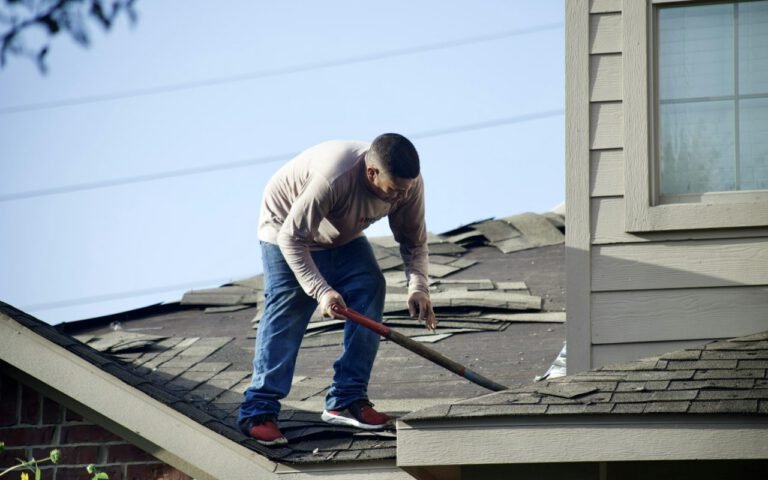
Ray, who leads our inspection team, has seen 25-year-old roofs with plenty of life left and 12-year-old roofs that were failing because of a bad install. That is why we never quote a replacement just because a roof crosses a certain birthday. We get up there, take photos and show you what we see.
Metal and slate
Metal often lasts 40 to 60 years; slate can outlive the house if it is maintained. Both cost more upfront than asphalt, sometimes much more, but they change the math because you may only buy one roof in the time you own the home.
Metal roofing
Standing-seam metal has become a popular choice across the state, from mountain cabins to coastal homes. It sheds rain quickly, stands up well to wind when installed correctly and reflects a good share of summer heat, which can help keep the attic cooler. The panels themselves rarely wear out. What needs attention over the decades are the fasteners, seals and the flashing around chimneys and vents. A simple inspection every few years catches small issues before they become leaks.

Slate roofing
Slate is the long-distance champion. You will find slate roofs on historic homes and churches across North Carolina that have been keeping rain out for generations. Natural stone does not care much about sun or humidity. The weak points are the nails and copper flashing that hold it all together, along with the occasional cracked tile from a falling branch. Slate is heavy, so the house framing must be able to carry it, and repairs need a roofer who actually knows how to work with it.
Key takeaway: asphalt usually gives you two decades here, metal can give you two generations, and slate can last as long as the house. Upkeep matters for all three.
How to get the most years from any roof
Whatever your roof is made of, a few habits help it reach the top of its range. None of them are complicated, and most cost little or nothing.
- Keep gutters clean so water flows off the roof instead of backing up under the edges
- Trim branches so they stay at least several feet away from the roof surface
- Make sure the attic has balanced intake and exhaust ventilation
- Have the roof inspected after major storms and every few years in between
- Fix small problems, like a lifted shingle or cracked boot around a pipe, right away
It also helps to keep a simple roof file. Write down the year the roof was installed, the name of the company that did the work, the shingle line and color, and any warranty paperwork. Add a note every time someone repairs or inspects it. When a storm comes through or you decide to sell, that file answers questions in minutes that would otherwise take days of digging. Buyers and their inspectors appreciate it, and so does your insurance adjuster.
Finally, pay attention to what happens inside the house. A sudden jump in summer cooling bills, a musty smell upstairs or a small stain on a bedroom ceiling can all be early hints that the roof or attic needs attention. Catching those signs early is often the difference between a small repair and a big one.
Algae streaks are mostly a cosmetic issue, but heavy moss holds moisture against the roof and should be dealt with gently. Never pressure-wash shingles. It strips granules and shortens their life. A soft wash with a cleaner made for roofs, or simply waiting for the professional, is the better path.
The bottom line
If your asphalt roof is somewhere between 15 and 20 years old, it is a good time to start paying attention, not a reason to panic. Have it inspected, ask for photos and plan your budget so a replacement never catches you off guard. If you are building or replacing and plan to stay in the house a long time, metal is worth pricing out. If you are lucky enough to own a slate roof, take care of it and it will take care of you.
Every roof is different, so the best number is the one that comes from a real inspection of your house. Give us a call, and Ray or one of his inspectors will climb up, take a close look and give you an honest answer about how many good years you have left.
Ray Hollis
Ray has been on Charlotte rooftops for more than forty years.

Start the conversation