A Five-Minute Breathing Ritual for Busy Days
Calm you can take anywhere.
 Olivia Chen6 min read
You do not need a spa to feel a little calmer. You do not need a candle, a quiet room, a special cushion or an hour you do not have. Some of the most useful calm we know of fits into the space between two meetings, the minutes before school pickup or the moment you sit in a parked car before walking into a hard conversation. All it takes is your breath and a willingness to slow it down on purpose.
This simple breathing pattern takes five minutes. Our therapists at Saltbloom Day Spa use a version of it at the start of many treatments, and guests ask about it so often that we decided to write it down. Below you will find the steps, a few tips for making it a habit and some ideas for fitting it into the busiest kind of day.
Why slow breathing helps
When life speeds up, breathing usually does, too. Stress tends to make our breaths short, shallow and high in the chest. Over a long day, that pattern can leave you feeling wired, tense and tired all at once. Slowing the breath on purpose, and letting it move lower into the belly, is a widely used way to help the body shift toward a calmer state. Many people notice their shoulders soften, their heartbeat settle and their thoughts get a little quieter within a few minutes.
This kind of paced breathing, sometimes called resonant or coherent breathing, is simple by design. You breathe in for a set count and out for the same count, at a slow and steady pace. Five seconds in and five seconds out works out to about six breaths per minute, which most people find comfortable and easy to keep up.
One honest note: breathing exercises are a tool for everyday stress, not a treatment for a medical or mental health condition. If you live with anxiety, panic attacks, a breathing condition or a heart condition, talk with your healthcare provider about what is right for you. And if any exercise makes you feel lightheaded, stop and return to your normal breathing.

Breathe in for five
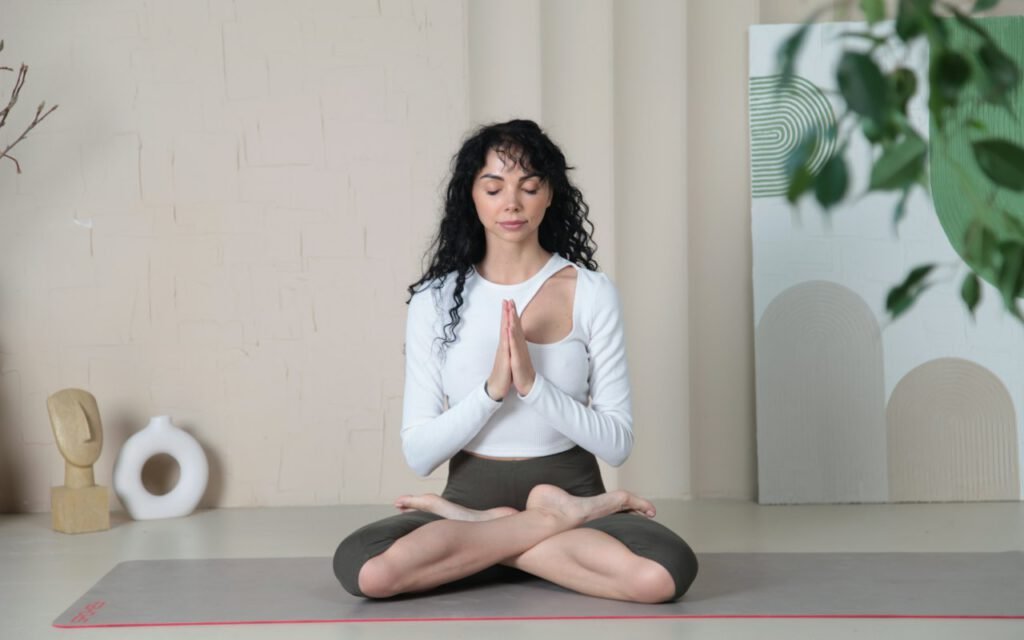
Slowly through the nose, letting the belly rise. Start by sitting comfortably with your feet flat on the floor, or lie down if you can. Rest one hand on your chest and one on your belly. Let your eyes close or soften your gaze toward the floor.
As you breathe in through your nose, count slowly to five in your head. Try to let the hand on your belly move first, as if you are filling a balloon low in your body, while the hand on your chest stays fairly still. Do not force a huge breath. A comfortable, full inhale is all you need. If five feels too long at first, start with four and build up over a few days.
Tips for a smoother inhale
- Relax your jaw and let your tongue rest gently behind your top teeth.
- Keep your shoulders down and soft; they should not rise toward your ears.
- Think of the breath as slow and quiet rather than big and dramatic.
- If your nose is congested, breathing in gently through the mouth is fine.
Try it with the breathing circle at the top of our website.
Natalie, wellness lead
Natalie, who leads wellness programming at Saltbloom, designed that circle for guests who find counting distracting. The circle slowly grows for five seconds and shrinks for five seconds, so you can simply breathe along with it. Many people find it easier to follow something visual for the first week or two, until the rhythm feels natural on its own.
Breathe out for five
Slowly through the mouth, letting the shoulders drop. After your inhale, let the breath leave through slightly parted lips, as if you were gently blowing on a spoonful of warm soup. Count to five again. Feel the belly fall under your hand, and with each exhale, let your shoulders sink a little lower.
The exhale is where much of the calm lives. Many people notice that as they breathe out, small areas of tension let go on their own: the forehead, the hands, the muscles around the eyes. You can help that along by silently naming one place to relax on each breath out, such as your jaw on one breath and your shoulders on the next.
The full five-minute ritual
Once you know the inhale and exhale, putting them together is simple. Here is the whole routine from start to finish:
- Settle in (30 seconds). Sit or lie down, place your hands on your chest and belly, and take a couple of normal breaths.
- Find the rhythm (1 minute). Begin breathing in for five through the nose and out for five through the mouth.
- Stay with it (3 minutes). Keep the same pace. When your mind wanders, gently bring it back to the count.
- Soften the edges (30 seconds). Let the counting go and breathe naturally while you notice how your body feels.
Setting a gentle timer on your phone helps, so you are not checking the clock. Choose a soft tone rather than a loud alarm. That is the whole ritual: about 30 slow breaths and five minutes of your day.
Key takeaway: Five seconds in through the nose, five seconds out through the mouth, for five minutes. Simple enough to remember, short enough to actually do.
Fitting it into a busy day
The best breathing practice is the one you actually use, so tie it to moments that already happen every day. A habit sticks more easily when it has an anchor. Some ideas our guests have shared with us:
- After you park the car and before you walk into work
- While your morning coffee or tea brews
- Between back-to-back video calls, with the camera off
- Before opening email after lunch
- In bed, as the last thing you do before sleep
Some guests like to keep a simple note on their phone for the first two weeks, writing down the time of day and one word for how they felt before and after. It is not about tracking progress perfectly. It simply helps you notice which moments of the day benefit most, so you can protect those five minutes when the calendar fills up. Others prefer to pair the ritual with a sensory cue, such as a favorite essential oil on the wrists or a warm mug held in both hands.
You will not feel dramatically different every time, and that is fine. Like stretching, the benefits tend to build gradually. After a week or two, many people find they reach for slow breathing automatically when they feel stress rising, without needing to plan it.

Calm you can take anywhere
A spa visit is a wonderful reset, and we will always be happy to welcome you. But the calm you feel on our treatment tables should not have to stay there. Five minutes of slow breathing, done consistently, is one of the simplest ways to carry a little of that feeling into an ordinary Tuesday.
Try it once today. Breathe in for five, breathe out for five, and let your shoulders drop. If you would like a guide, the breathing circle at the top of our website is always there. And the next time you visit Saltbloom, ask your therapist to start your session with a few rounds together. It is a small habit with a surprisingly big payoff.

Olivia Chen
Olivia created our facial menu.



Start the conversation