
Repair or Replace? The Questions We Ask on Every Inspection
Most roofs need a repair, not a new roof.
 Dana Hollis6 min read
Dana Hollis
Dana runs Summit Ridge, the roofing company her father started in 1998.



About two out of three inspections we do end in a repair quote, not a replacement. That surprises people. Many homeowners call us bracing for a five-figure number, and they are relieved when we come down the ladder with a plan to fix a few shingles and reseal a vent. Roofing has a reputation for upselling, and we understand why. The best answer to that reputation is to be completely open about how we make the call.
Here is how we decide — and how you can check our work. Every inspection we do runs through the same set of questions. They are not secret, and you are welcome to ask any roofer, including us, to walk you through them on your own house.
What we look at first
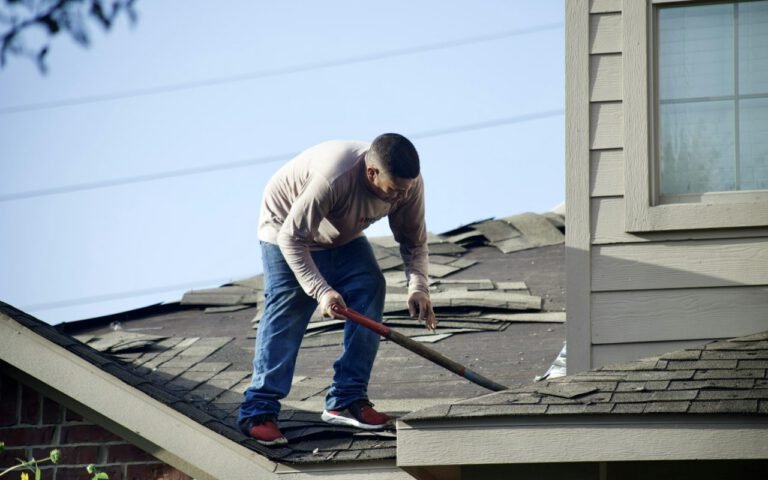
A good inspection is more than a quick glance from the gutter line. Our inspectors start on the ground, walking all the way around the house to look at each slope, the gutters, the downspouts and the siding just under the eaves. Then they go up, if the roof is safe to walk, and finally into the attic. Each part tells a different piece of the story.
- From the ground: overall shape of the roof, sagging lines, missing shingles and stained siding
- On the roof: shingle condition, flashing, pipe boots, vents and any soft spots underfoot
- In the gutters: piles of granules that show how fast the shingles are wearing
- In the attic: daylight coming through, water stains, mold and how well the space is ventilated
We photograph everything along the way. By the time we finish, we usually have a few dozen pictures, and they go straight into the report we send you.

How widespread is it?
A few missing shingles is a repair. Granules in every gutter and soft decking across the roof is not. This is the first and most important question, because it separates a local problem from a system that is wearing out everywhere at once.
Localized damage is common. A branch falls and cracks a handful of shingles. A strong gust peels back a row along the ridge. A pipe boot, the rubber collar around a plumbing vent, dries out and splits after years of sun. These are well-defined problems with clear edges, and a skilled repair can handle them for a fraction of the cost of a new roof.
Widespread wear looks different. Shingles on every slope are curling. Granules are gone in large patches. Walking the roof, you can feel the decking flex in several spots, which tells us water has been getting underneath for a while. At that point, a patch on one slope does not fix the problem on the other three.
Ask any roofer to show you photos of every problem they find. We always do.
Ray
Ray, who leads our inspection crew, insists on this rule for a simple reason. Most homeowners never go on their own roof, and they should not have to. Photos let you see exactly what the inspector saw, so the recommendation is not a matter of trust alone. If a roofer cannot or will not show you the damage, that tells you something.
How old is it?
Patching a 22-year-old roof often just delays the inevitable by a season. Age is not the whole story, but it matters when you weigh the cost of a repair against the life the roof has left.
Here in the Carolinas, asphalt shingles usually last somewhere around 18 to 25 years. On a roof that is eight or ten years old, a repair is almost always the smart move. The rest of the roof has plenty of life, and fixing the problem area keeps it going for many more years. On a roof that is past twenty, the math changes. Older shingles become brittle, so walking on them to make a repair can crack nearby shingles. Matching the color and style can be hard, too, because product lines change over the years.
We will still quote a repair on an older roof when it makes sense, for example if you are planning to sell soon or need to stretch the budget another year. We just want you to know what you are buying: time, not a long-term fix.
Is the damage hidden underneath?
Some of the most important answers are under the shingles, not on top of them. That is why the attic matters so much. Dark stains on the underside of the decking, damp insulation or a musty smell all suggest water has been getting in for a while. A spongy feel when walking the roof points the same way.

Valleys, where two slopes meet, and the flashing around chimneys, skylights and dormers are the usual suspects. A leak at one of these spots can often be repaired, along with replacing a few sheets of decking. If soft decking shows up across many areas, though, the job grows quickly, and replacing the whole roof becomes the more sensible choice.
Ventilation is part of this question, too. An attic that traps heat and moisture shortens the life of the whole roof, and it can cause problems that look like leaks, such as frost or condensation dripping from nails in winter. Sometimes the right fix is not new shingles at all but better intake vents along the eaves or a proper exhaust vent near the ridge. We check for this on every inspection, because replacing a roof without fixing poor airflow simply sets the new one up to fail early.
What about insurance?
If the damage came from a storm, your policy may cover some or all of the repair or replacement, depending on your coverage. We document storm damage carefully and share our photos with your adjuster. We do not decide what insurance pays. That is between you and your carrier, and your agent is the right person to answer coverage questions.
The questions you can ask us
You do not need to know anything about roofing to hold a contractor accountable. A few plain questions make it easy to tell an honest recommendation from a sales pitch.
- Can you show me photos of every problem you found?
- Is the damage in one area or spread across the roof?
- How old do you think the roof is, and how much life does it have left?
- What did you find in the attic?
- What would a repair cost, and how long would it realistically last?
- If you recommend replacement, why is a repair not enough?
A good roofer will answer every one of these without hesitating. If the answers are vague, or the pressure to sign today is strong, it is perfectly fine to get a second opinion. We encourage it.
Key takeaway: localized damage on a younger roof is almost always a repair. Widespread wear, soft decking or a roof past twenty years usually points toward replacement.
Our promise on every inspection
Every inspection ends with a written report, clear photos and a recommendation in plain English. If the roof needs a repair, we quote the repair. If it needs nothing at all, we say so and do not charge you for telling you. If replacement is the right call, we explain why, line by line, and give you time to think it over.
Two out of three homeowners leave our inspections with a repair plan rather than a replacement, and we are proud of that number. It means people trust us to tell them the truth. Call our office to book an inspection, and Ray or one of his inspectors will show you exactly what is happening over your head.

Start the conversation