
What I Read While Writing
The books that kept me going through a hard draft.
 Elliot Hayes6 min read
I can’t write without reading. When I am deep in a draft, other people’s books are the oxygen that keeps me going, and when I stop reading, my own sentences start to go stale within a week. People sometimes ask whether I worry about picking up another writer’s style by accident. I don’t. I worry much more about running dry. Here’s what was on my nightstand during the last draft, the long, difficult one that finally became my third novel. Mostly old novels, a few poems and one cookbook.
I have grouped these by what they did for me rather than by genre, because that is how I actually chose them. On any given night, I reached for the book that would fix whatever had gone wrong at the desk that day. Some nights I needed better sentences. Some nights I needed courage. And some nights I just needed to be comforted.
For sentences
Short story collections remind me how much one sentence can hold.
A novelist can get lazy. We have hundreds of pages, so we let a paragraph sprawl, or we explain something twice just to be safe. A short story writer can’t afford that. Every sentence has to carry weight, and the best ones carry several things at once: character, setting, mood and a small push forward. When my own prose started to feel loose, I would read one story before bed and go to sleep with a sharper ear.
My favorites during the draft were an old collection of stories set in small Southern towns that I found at a library sale, and a newer collection of linked stories about a family running a motel in New Mexico. Both books are full of sentences I copied by hand into my notebook, not to steal them, but to feel the shape of them in my own handwriting.
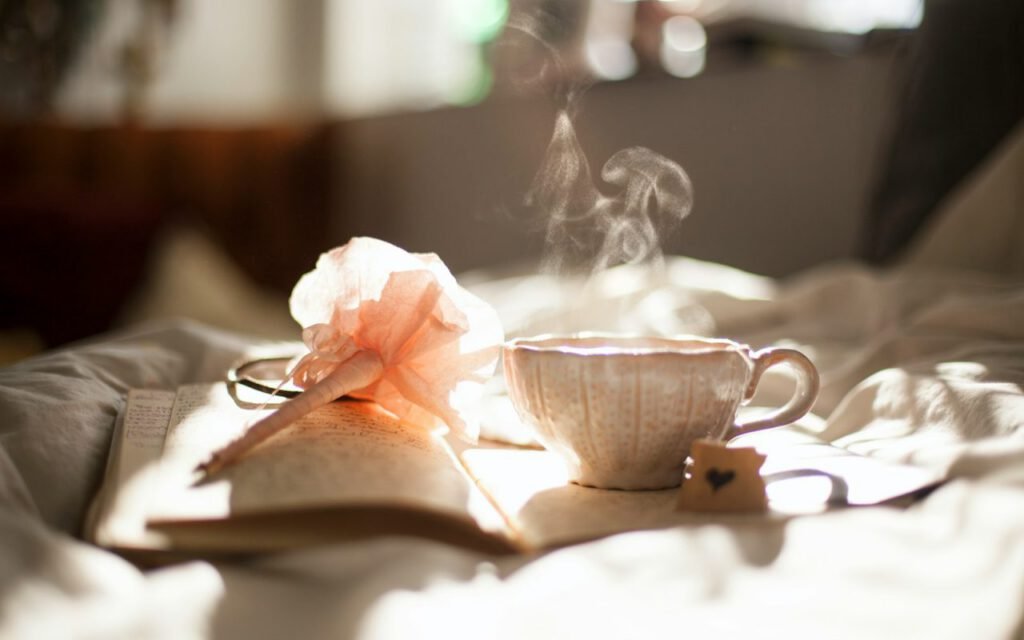
Read like a writer: slowly, and with a pencil.
Elliot
How I read for craft
Reading like a writer is different from reading for pleasure, though the two overlap. When I am reading for craft, I slow down and mark things in the margins. Here is roughly what I look for:
- Where a scene begins and where it ends, and what was left out
- How the writer moves through time, especially jumps of months or years
- Lines of dialogue that do two jobs at once
- The first sentence of each chapter and why it works
- Any moment where I felt something, and what on the page caused it
For structure
My draft was a family story that covers about a year and a half, told by the younger of two sisters. I struggled for months with the middle, where the sisters stop speaking. So I went back to old novels that handle long stretches of time and silence well.
I reread two big nineteenth-century family novels I first read in college, both of them long, slow and full of quiet scenes where very little seems to happen. What struck me this time was how carefully they move between dramatic moments and ordinary days. The ordinary days aren’t filler. They are where the characters change. That idea gave me permission to slow down the middle of my book rather than rush through it.
I also read a slim modern novel told in short numbered sections, some only a sentence long. I would never write that way, but it reminded me that structure can be a form of meaning. The gaps between sections said as much as the sections themselves.
I read these structural books differently from the others. Instead of marking sentences, I sketched rough timelines on the inside back cover, noting where each chapter jumped forward and how much time passed between them. Seeing another writer’s skeleton laid bare made my own problems feel solvable. If they could leap across six months in a single white space, so could I.
For courage
Poetry is what I read when I feel timid. Somewhere in the second year of the draft, I noticed my sentences getting careful and polite. Poems shook that loose. A good poem takes risks in every line, with odd images, abrupt turns and endings that refuse to explain themselves.
I kept a battered anthology of American poetry on my desk and read one poem every morning before I started writing. Some mornings it was a long, sprawling poem about the country, full of lists and big feelings. Other mornings it was a tiny poem about a bird or a kitchen table. Either way, it reminded me that language can do strange, beautiful things if you let it.

Key takeaway: When your writing feels safe, read something braver than you are.
For comfort
A cookbook. Reading recipes is oddly calming.
I didn’t expect this one to make the list, but it may have been the most important book of the year. During the hardest months, I would come home from a bad writing day too tired for fiction and too restless for television. So I started reading an old church cookbook that once belonged to my grandmother, spiral-bound and stained, with recipes contributed by women in a small Iowa town.
There is something soothing about a recipe. It has a beginning, a middle and an end. It tells you exactly what to do, and if you do it, something good happens. After a day of not knowing whether my book was working, I needed that certainty. Some of the recipes came with little notes, like “Ruth’s, best with fresh peaches” or “double this for funerals,” and those notes felt like tiny stories in their own right.
A few of the dishes even made it into my novel. The younger sister bakes a pie from her mother’s recipe card in one of the most important scenes, and I wrote it after making that pie myself on a Sunday afternoon.

My nightstand rules
Over the years, I have settled on a few loose rules for reading while I write. They aren’t strict, and I break them all the time, but they help.
- Keep at least one book that has nothing to do with your project.
- Avoid reading novels too similar to yours during the first draft.
- Reread old favorites when you feel lost. They remind you why you started.
- Read some poetry every week, even just one poem.
- Never feel guilty about reading something purely for fun.
That second rule matters to me. When I read a book with a premise close to mine in the early stages, I start comparing and doubting. Later, once the book has its own shape, I can enjoy similar novels without worrying.
What’s on the nightstand now
The draft is finished and the book comes out this spring, but the nightstand is just as crowded. Right now there is a collection of essays about rivers, a mystery a friend insisted I read and, yes, another cookbook, this one about bread. I suspect the next novel is hiding somewhere in that pile.
If you are writing something of your own, I hope you keep reading through it. Find the books that fix what is broken at your desk, and keep a pencil nearby. And if you need comfort, try a recipe. It may not help your plot, but at least you will have dinner.

Elliot Hayes
Elliot writes novels about small towns and the people who leave them.



Start the conversation