Five User Interviews Beat a Hundred Opinions
How I talk to real users in a single week.
 Owen Clarke6 min read
Teams argue for weeks about what users want. Five short interviews usually settle it. I have sat in planning meetings where a product manager, an engineering lead and a sales director spent an entire quarter debating a feature, each armed with strong opinions and a few anecdotes. Then we talked to five real customers for thirty minutes each, and the debate was over by Thursday.
Here’s how I plan, run and share them in a week. None of it requires a research lab, a big budget or a dedicated research team. It requires a clear goal, a handful of the right people, good questions and the discipline to listen more than you talk.
Why five is enough
Five can sound like a suspiciously small number. It is not meant to be a statistically meaningful sample, and I never present it as one. The goal of these interviews is not to measure how many people feel a certain way. It is to discover how people actually behave, what gets in their way and why.
In my experience, the same themes start repeating by the third or fourth conversation. By the fifth, I am mostly hearing things I have already heard. That is the signal that we have learned what we can from this round. If the stakes are high or the audience is very diverse, I run another round of five with a different group, rather than one huge round that takes a month to finish.
Small, fast rounds also keep research from becoming a big, scary event. When interviews take a week instead of a quarter, teams are far more willing to do them again and again.
Planning the week
I run most interview rounds on the same simple schedule. It keeps everyone focused and makes the whole thing feel manageable.
- Monday · write the goal and the interview guide
- Tuesday · confirm participants and send reminders
- Wednesday and Thursday · run the five interviews
- Friday · pull out themes and share the highlights
The goal is one sentence, similar to the question I use in workshops. For example: “Understand how small landlords track rent payments today, and where it goes wrong.” Everything in the interview guide should help answer that sentence. If a question does not, it gets cut.
Recruiting is often the slowest part, so I start it before Monday whenever I can. Existing customers are usually the easiest to reach. I also try to include at least one person who tried the product and left, and one who has never used it, because they see things loyal customers have stopped noticing. A small thank-you, such as a gift card, is a fair way to respect people’s time.

Ask about the past
Not “would you use this?” but “tell me about the last time you did this.”
This is the single most important rule in the whole process. People are terrible at predicting their own future behavior, and they are very kind to interviewers. Ask someone whether they would use a new feature and most will say yes, because it is polite and easy. That answer tells you almost nothing.
Ask instead about a specific recent moment, and the conversation changes. “Tell me about the last time you paid a contractor.” “Walk me through what happened the last time a tenant paid late.” Now people describe real steps, real tools, real frustrations and real workarounds. Those workarounds are gold. A spreadsheet someone built to fill a gap in your product is a feature request written in their own handwriting.
Listen for what people do, not what they say they’ll do.
Owen
Questions I lean on
- Tell me about the last time you did this.
- What happened right before that?
- What was the hardest part?
- What did you do when that went wrong?
- Is there anything you wish you had known at the start?
Then I mostly stay quiet. Silence feels awkward to the interviewer, but people often fill it with their most honest observations. When I am tempted to explain how the product works or defend a design choice, I remind myself that I am there to learn, not to sell.
Running the session
Each interview lasts about thirty minutes, with a short buffer afterward to write notes while they are fresh. I always ask permission to record, and I explain how the recording will be used. Most people are happy to agree when they know only the project team will see it.
I like to have one colleague join as a note-taker. Ideally it is someone outside the design team, like an engineer or a product manager. Hearing a customer struggle firsthand is far more persuasive than reading my summary later, and it builds empathy across the team in a way no report can.
If the participant is using a product during the session, I ask them to share their screen and think out loud. I resist the urge to help when they get stuck. Those stuck moments are exactly what we came to see.

Share clips, not slides
Two minutes of a real user struggling changes minds faster than any deck.
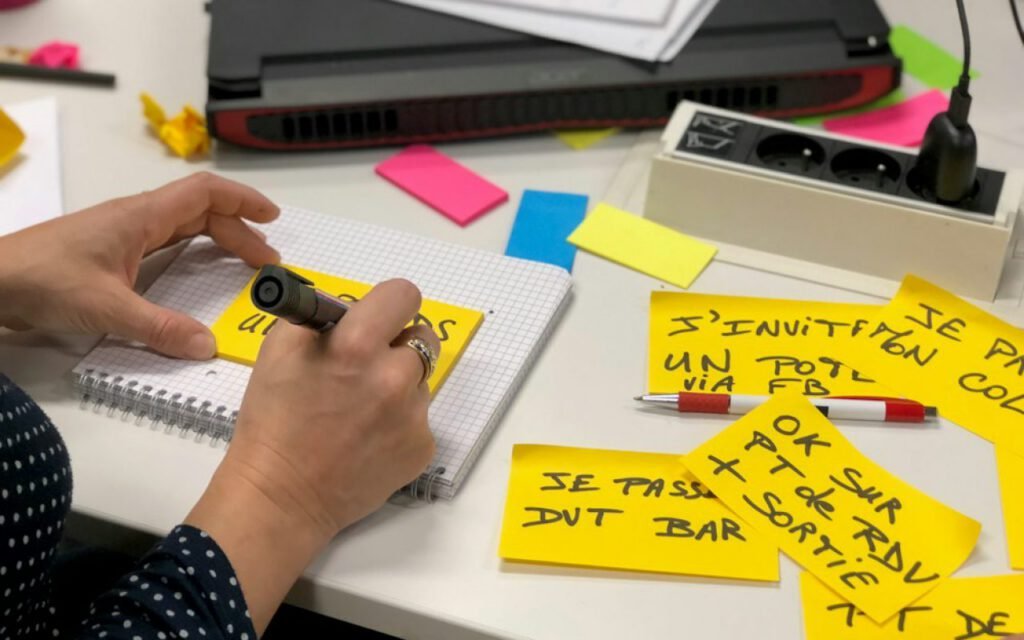
On Friday I go back through my notes and the recordings. Each meaningful observation goes on a sticky note, one per note, and I group them on a wall until clear themes appear. Usually there are three to five. For each theme, I pick one short video clip, often less than a minute long, where a participant shows or explains it in their own words.
Then I share those clips, along with a one-page summary, in a short meeting with the whole team. No long slide deck. No forty-page report nobody reads. Just the themes, the evidence and what we think we should do next.
I have watched a skeptical executive change their mind halfway through a ninety-second clip of a customer sighing at a confusing form. No chart could have done that. Real people, in their own words, cut through opinions in a way nothing else does.
Mistakes to avoid
A few traps catch almost every team on their first round. The most common is asking leading questions, such as “Wouldn’t it be easier if this button were bigger?” Of course the participant agrees. Another is interviewing only your happiest customers, who tend to love everything. A third is waiting until the very end to share anything, which means the team’s opinions have hardened again by the time the findings arrive.
The last trap is treating one interview as gospel. A single vivid story can be memorable enough to drown out the other four. That is why I always look for themes that show up in at least three of the five conversations before I call something a pattern. One-off comments still go on the wall, but they are labeled as questions for the next round, not conclusions.
Key takeaway: Interview five people about real recent experiences, watch what they actually do, and share short clips instead of long reports. It is faster and more convincing than any debate.
Make it a habit
The real value comes from doing this regularly. One round of interviews settles one argument. A steady rhythm, even one round a month, keeps the whole team close to the people they are building for and makes future arguments shorter.
If your team is stuck in a long debate right now, try it. Pick a question, find five people and book the calls for next week. I would be surprised if you are still arguing by Friday.

Owen Clarke
Owen designs calm software for complicated work.





Start the conversation