For three decades, the ballpark on the east bank of the river has been a summer ritual: two-dollar hot dog nights, fireworks after Friday games and kids lined up along the railing for autographs from players who might one day make the majors. It has also been showing its age. The city and the team’s owners agreed Friday on a $60 million renovation of the 30-year-old ballpark, keeping the minor-league club in town for at least 25 more years.
The deal, approved by the city council on a 7–2 vote after months of negotiation, ends speculation that the River City Herons might look for a new home when their current lease runs out. It also sets out an ambitious goal for the stadium itself: to turn a building that sits empty most of the year into a gathering place that stays busy long after the final out of the season.
Under the agreement, the city will contribute $36 million toward construction, largely through bonds repaid with revenue from an existing hotel and visitor tax. The team’s ownership group will cover the remaining $24 million and any cost overruns. In exchange, the Herons signed a 25-year lease that includes penalties if the club leaves early.
City officials said the agreement protects taxpayers better than earlier proposals, which would have had the city cover a larger share. Council member Diane Porter, who voted in favor, called it “a fair deal for a building that belongs to everyone in this city.” The two members who voted against it argued that the money would be better spent on roads and neighborhood parks, and said they will watch the project’s costs closely.
The key terms, as outlined in the agreement:
Total cost: $60 million, with $36 million from the city and $24 million from the team.
Lease: At least 25 years, with financial penalties for early departure.
Cost overruns: Paid by the team’s ownership group.
Community use: The city may book the stadium and plaza for a set number of public events each year at no rental cost.
Timeline: Construction begins after next season and is expected to finish before the following opening day.
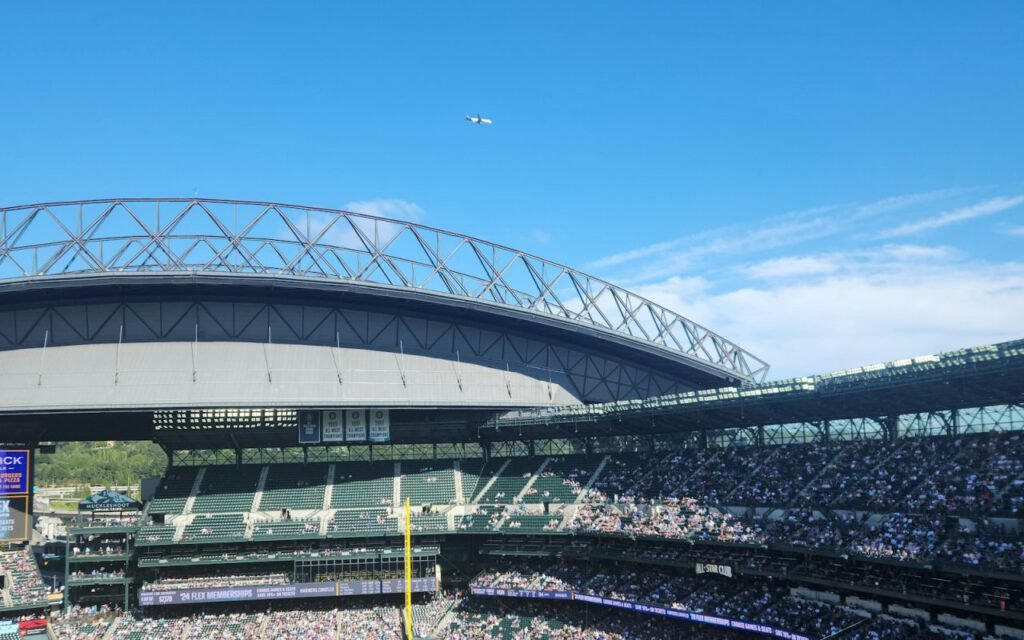
The 30-year-old ballpark will get new seats, a wider concourse and better sightlines.
A new look for an old park
Plans include a wraparound concourse, a kids’ play zone and a plaza that can host concerts and farmers markets in the off-season. The concourse will allow fans to walk all the way around the field for the first time, with views of the game from every point. Today, fans in the outfield bleachers must exit and walk around the outside of the stadium to reach the main grandstand.
Architects with the design firm Halvorsen Studio presented early drawings at Friday’s council meeting. The renderings show new, wider seats throughout the lower bowl, a shaded terrace above the left-field wall, upgraded restrooms and concession stands and a new video board in center field. Seating capacity will drop slightly, from about 7,200 to roughly 6,800, as rows are widened and standing-room areas are added.
Accessibility improvements are a major part of the plan. The current ballpark has limited wheelchair seating and only one elevator. The renovation would add accessible seating in every section, new ramps and elevators and a quiet room for fans who need a break from noise and crowds.
The kids’ zone
The play area beyond the right-field fence will include a small wiffle ball field, climbing structures and a splash pad designed to stay open on summer afternoons, even when there is no game. Team officials said the area is meant to make the ballpark feel like a neighborhood park rather than a venue that opens only on game days.
Busy 200 days a year
The biggest change may be the one fans notice least during a ballgame. A minor-league season typically brings around 70 home dates. For the remaining months, most of the stadium sits locked behind gates. The new design aims to change that.
This park should be busy 200 days a year, not 70.
Team president Angela Russo
Russo said the team plans to use the new plaza, which will open onto the street outside the main gate, for a weekly farmers market from spring through fall, outdoor movie nights, holiday markets and small concerts. The field itself could host high school and college baseball games, charity softball tournaments and community festivals.
“People drive past this building every day and think of it as a baseball stadium,” Russo said. “We want them to think of it as the place where things happen in this city.”
Local business owners near the ballpark welcomed the idea. Marco Delaney, who owns a diner two blocks from the main gate, said his busiest nights are always game nights. “If they can bring people down here in October and March, that is a big deal for everybody on this street,” he said.
A new plaza outside the main gate is designed to host weekly farmers markets.
Construction timeline
Construction starts after next season, which means fans will get one more summer in the ballpark as it stands today. The team said it intends to complete all work during a single offseason so that no home games are lost, an aggressive schedule that will require crews to work through the winter.
The work is expected to proceed in phases:
Fall: Demolition of the outfield bleachers and old concession buildings.
Late fall and winter: Construction of the wraparound concourse and the new plaza, along with seating replacement in the lower bowl.
Late winter: Installation of the video board, lighting upgrades and the kids’ zone.
Early spring: Field work, final inspections and a public open house before opening day.
City officials acknowledged that weather or supply delays could push some work into the following season. If that happens, the team said, it may open with some areas still under construction rather than relocate games.
What fans are saying
Reaction among season-ticket holders has been mostly positive. In a Gridiron Daily reader poll this week, a majority of respondents said they supported the renovation, though many raised questions about ticket prices once the new park opens. Russo said the team has no plans for major price increases and pledged to keep a section of affordable general admission seats in the outfield.
Longtime fan Gloria Hutchins, who has held the same two seats behind the home dugout since the stadium opened, said she is excited but a little nostalgic. “I have watched hundreds of games from these seats,” she said. “I hope they keep a little of what makes this place feel like home.”
Key takeaway: The $60 million renovation keeps the Herons in town for at least 25 more years and aims to turn the ballpark into a year-round community space, with construction starting after next season.
One more summer, then a new era
For now, the old ballpark will host one final season in its current form. Team officials said they plan to mark it with throwback nights, alumni reunions and a closing ceremony after the final home game, when fans will be able to take home a piece of the stadium, such as a seat or a section sign.
Then the cranes arrive. If the plan holds, fans will walk through the gates the following spring into a ballpark that looks familiar from the field but very different everywhere else. And if Russo gets her way, they will keep coming back long after the season ends.







 SportsUnderdog Huskies Stun the Top-Ranked Rivals in OvertimeA last-second field goal sealed a 27–24 win and the first conference title in 14 years.


Start the conversation