Estate Sales: Etiquette and Tips
Arrive early, be kind and remember it was someone’s home.
 Walter Hayes6 min read

Walter Hayes
Walter taught history for 34 years and now writes about local history, genealogy and antiques.



Estate sales are where I find the best history, and where manners matter most. Antique shops are lovely, and flea markets have their charms, but nothing compares to walking into a home where someone lived for fifty years and seeing their life laid out on tables, shelves and beds. The cast-iron skillet seasoned by decades of Sunday suppers. The stack of seed catalogs with notes in the margins. The wedding photo on the dresser, still in its frame.
A family is letting strangers walk through a loved one’s life. I try never to forget that. Behind every estate sale is a loss, a move or a hard decision, and often there’s a son or daughter or grandchild somewhere in the house trying to hold it together while people they don’t know pick through their mother’s kitchen drawers. Over thirty years of estate sales, I’ve learned that kindness and good manners make the experience better for everyone, and, frankly, they often lead to better finds too.
 Sponsored · Rootline DNAFind your family storyDNA kit and family-tree builder.Start now
Before you go
Most estate sales are run by professional companies or by the family itself, and they’re usually advertised a few days ahead in local newspapers, on community bulletin boards and on online listings. The listings often include photographs of some items, the sale hours and any special rules. Read them carefully. Some sales use a numbered sign-in list for the first morning. Others ask buyers to bring cash only, or to leave large bags in the car.
Here’s what I always bring with me:
- Cash in small bills. Many sales prefer cash, and exact change speeds things up.
- A tape measure. So you’ll know whether that dresser will actually fit through your door.
- A flashlight. Small and handy for peering into drawers and dark closets.
- A tote bag or a sturdy box. For small items, if the sale allows it.
- A friend with a truck. Or at least their phone number, for the furniture you didn’t plan to buy.
Arrive early, and be kind
The best items usually go in the first hour of the first day. Dealers and serious collectors know this, and you’ll often see a small line forming before the doors open. If you want first pick, plan to arrive a little early. But be patient and courteous in line. Don’t block driveways, don’t park on the neighbors’ lawns and don’t try to peek through windows before the sale opens. Those neighbors probably knew and loved the person whose home this was.
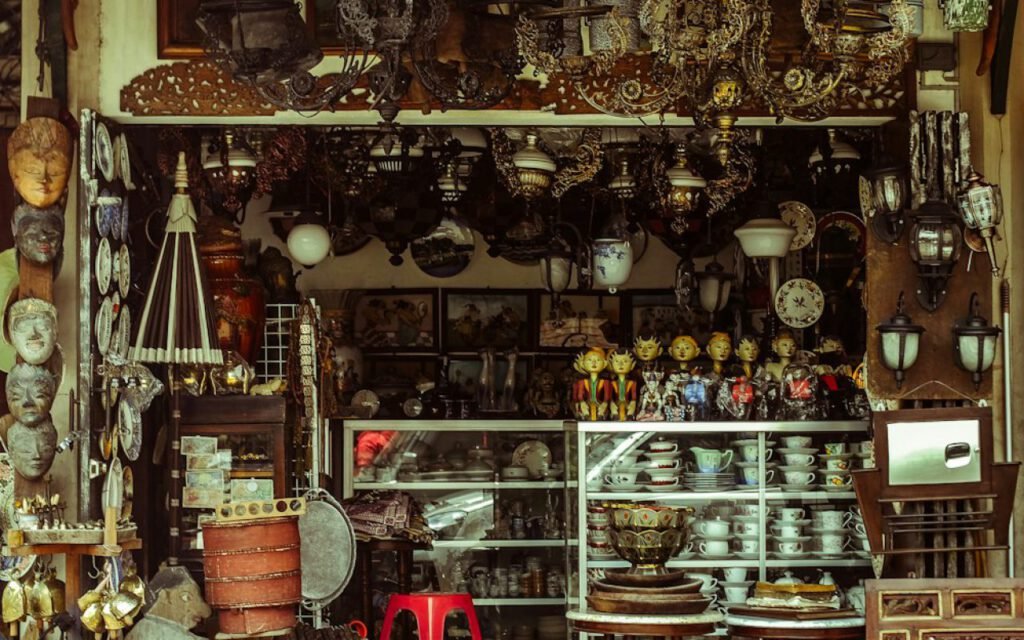
Once inside, take a deep breath and look around before you start grabbing. A quick walk through every room will give you a sense of what’s there and where the treasures might be. Many of my best finds came from a back bedroom or a garage shelf that the crowd hadn’t reached yet.
Be respectful
Don’t criticize prices out loud. Ask before opening closed doors. Those two rules cover a lot of ground, but here are a few more I live by:
- Don’t comment on the condition of the house or the belongings within earshot of anyone.
- Stay out of rooms that are roped off or marked private.
- Handle items gently and put them back where you found them if you decide not to buy.
- Keep children close and supervised. Many homes are full of fragile things.
- Don’t ask the staff or family personal questions about how the person died.
- If a family member shares a story about an item, listen. It’s a gift.
Treat every estate sale like you’re a guest. Because you are.
Walter
That last rule has given me some of my favorite moments. At one sale in a little river town, I picked up an old fishing creel, and the woman running the cash table, the owner’s granddaughter, told me her grandfather had carried it every Saturday for forty years. She told me which creek he fished and what he always caught. I bought the creel, and I think of him every time I see it hanging in my study. Stories like that don’t come with a price tag.
Asking about prices
It’s perfectly fine to ask whether a price is firm or whether the sale will consider an offer, especially on larger items. Just do it quietly and politely, without suggesting the price is unfair. Many professional sales have a set policy, and the staff will happily explain it. If they say no, smile and accept it. You can always come back later.
What to look for
As a history lover, I’m drawn to things that carry a story. Furniture and silver get the most attention at estate sales, but the real treasures for a history buff are often overlooked. Here’s where I look first:
- Paper. Letters, postcards, diaries, recipe boxes, old maps and local newspapers.
- Photographs. Family albums, school portraits and loose snapshots, especially with names or places written on the back.
- Books. Look inside covers for names, dates, bookplates and pressed flowers.
- Tools and kitchenware. Everyday objects that show how people actually lived and worked.
- Local items. Church cookbooks, school yearbooks and souvenirs from long-gone local businesses.
If you find something deeply personal, like family letters or photographs, consider asking the staff whether the family meant for it to be sold. Sometimes items end up on a table by mistake, and families are grateful when a buyer asks.

Go back on the last day
Prices often drop by half on the final afternoon. This is the estate sale secret every regular knows. Most sales run two or three days, and on the last day, especially the last few hours, the company wants to clear out as much as possible. Discounts of fifty percent or more are common. Some sales even offer “fill a bag” pricing at the very end.
The selection will be thinner, of course, but you’d be surprised what remains. Many of my favorite paper finds, boxes of old letters, stacks of postcards and family Bibles, came from the last afternoon, after everyone else had moved on to the next sale. Furniture that didn’t sell may also be marked down dramatically, since moving it is a burden for the company and the family.
On the last day, the mood in the house is different, too. The crowds are gone, the staff is tired and the rooms feel quieter and emptier. I find it a good time to slow down, thank the people working the sale and, if the moment feels right, ask whether there’s anything the family especially hopes will find a good home. More than once, I’ve left with a box of old photographs that would otherwise have gone to the dump, and I’ve spent many happy evenings trying to figure out who the people in them were.
Key takeaway: Arrive early for the best selection, come back on the last afternoon for the best prices and behave like a guest the whole time.
Remember it was someone’s home
I’ll close with the rule that matters most to me. Every estate sale is the final chapter of somebody’s life in that house. The pencil marks on the kitchen doorframe measured real children. The worn spot on the porch step came from real feet. When you buy something, you’re taking a small piece of that story home with you. Treat it with care, learn what you can about it and, if you ever pass it on, pass along its story too. That’s how the history keeps going, one kind buyer at a time.
Walter Hayes
Walter taught history for 34 years and now writes about local history, genealogy and antiques.

Start the conversation