

Every custom piece starts as a conversation, then a sketch, then a stencil. By the time the machine starts buzzing, a tattoo has already lived several lives: as a story told across a table, as a rough pencil drawing, as a cleaned-up design and as a purple outline on your skin. People often see only the final step, but the work that comes before it is where a good tattoo is really made. Here’s the full journey.
For this post, I am walking through a recent custom piece from start to finish: a fine-line wildflower bouquet with a small swallow, placed on the forearm of a client named Jess. She was kind enough to let me share the process, and it is a good example of how a simple idea grows into a design that fits one person and one body.
The consult
We talk about meaning, placement and size — and I listen a lot. Jess came in with a clear feeling but not a clear picture. She had moved across the country for a new job, and she wanted something to mark the move: flowers from the state where she grew up and a bird to represent the journey.
During the consult, I asked a lot of questions. Which flowers? Did she want them realistic or more illustrative? How visible should the tattoo be at work? How did she feel about color versus black and gray? Did she want the swallow flying toward the flowers or away? Each answer narrowed down the design, and some of her answers surprised her. She came in thinking she wanted color and left certain she wanted fine black line work.
What to bring to a consult
- Photos of tattoos you love, even in different styles
- Pictures of the actual subject, like your dog, a flower or a place
- A rough idea of size, using your hand or a ruler on the spot you want
- Your budget, so we can plan sessions realistically
- Any story or meaning behind the piece, if you want to share it
Your story, my lines.
Mara, tattoo artist
That is the simplest way I can describe custom work. You bring the meaning. I bring the craft. The best tattoos happen when both sides of that trade are honest and clear.
The drawing
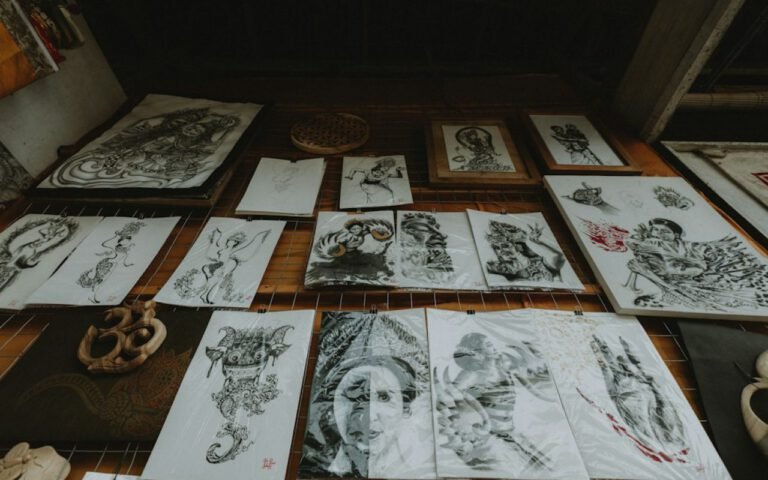
I draw it by hand first, then refine it for the body. Even though I use digital tools later, every custom design starts with pencil and paper. Drawing by hand helps me find the natural flow of a piece, the way a stem curves or a wing tilts, before I start worrying about exact lines.
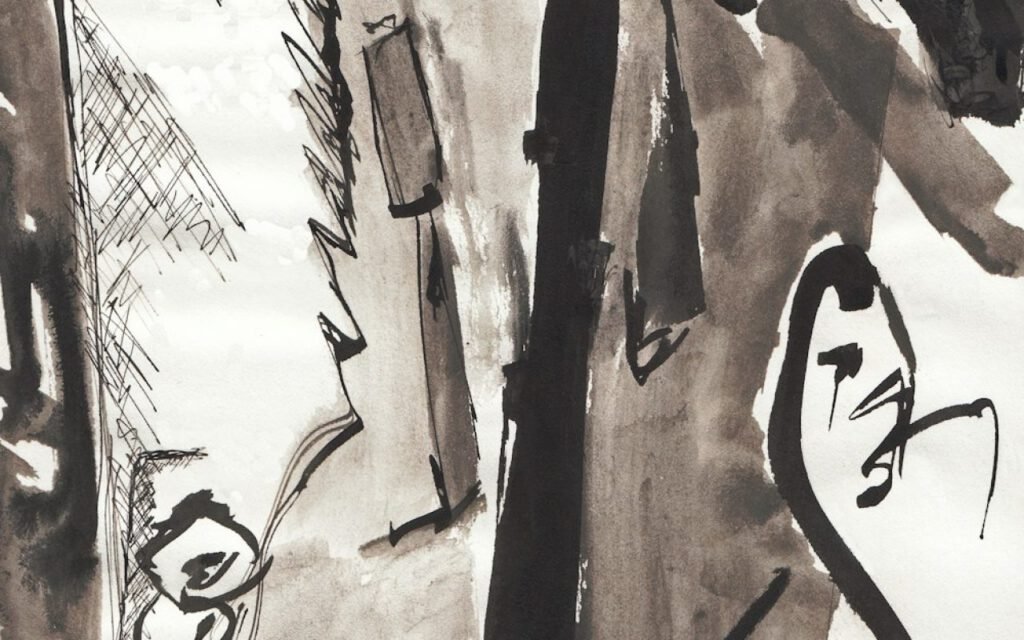
For Jess’s tattoo, I started with loose studies of each flower she chose: black-eyed Susans, purple coneflowers and a few sprigs of wild bergamot. I sketched the swallow in several poses until one felt like it was carrying the whole design forward. Then I combined everything into a rough composition, playing with where the bird should sit in relation to the bouquet.
Refining the design
Once the rough drawing felt right, I scanned it and refined it digitally. This is where I clean up lines, adjust proportions and make sure every detail will hold up on skin over time. Fine-line tattoos need enough space between lines so they do not blur together as the skin ages, so I simplified a few overlapping leaves and opened up the petals slightly.
I sent Jess the design a few days before her appointment. She asked for one change, making the swallow a little smaller so the flowers took center stage. That is exactly the kind of feedback I want. Small adjustments before the session are easy; changes after are not.
The stencil
On the day of the appointment, I printed the final design as a stencil and placed it on Jess’s forearm. The stencil transfers a purple outline onto the skin, giving me a guide to follow. Before I start, we always check the placement together. Jess stood, bent her arm, turned her wrist and looked in the mirror from several angles.
The first placement was a touch too close to her wrist, so we moved it up about half an inch. The second felt right. I always remind clients that a stencil can be removed and reapplied as many times as needed. It is the last chance to make changes before anything becomes permanent, so we take our time.
To skin
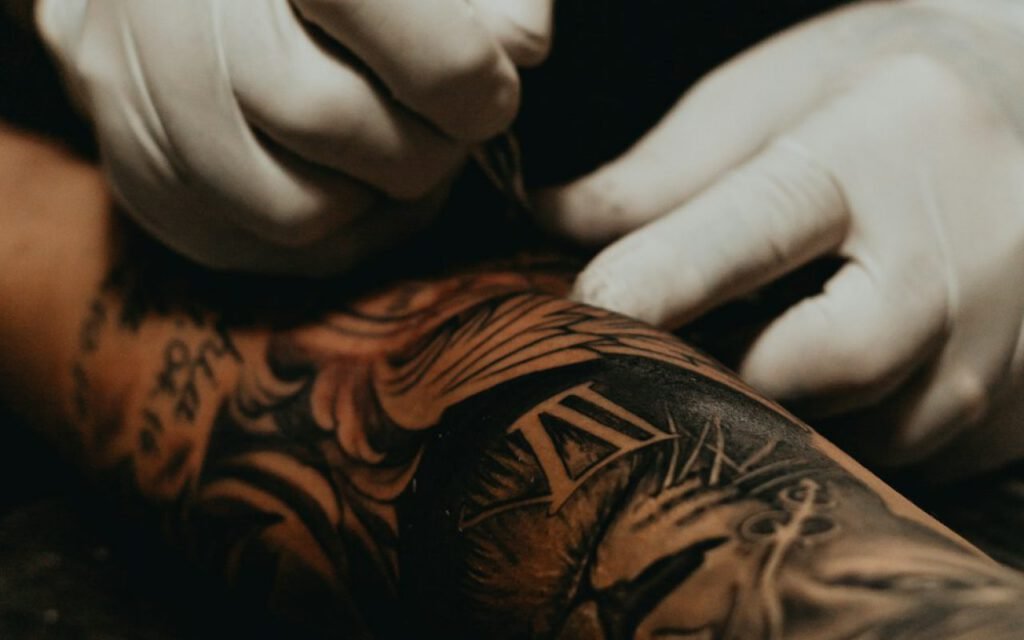
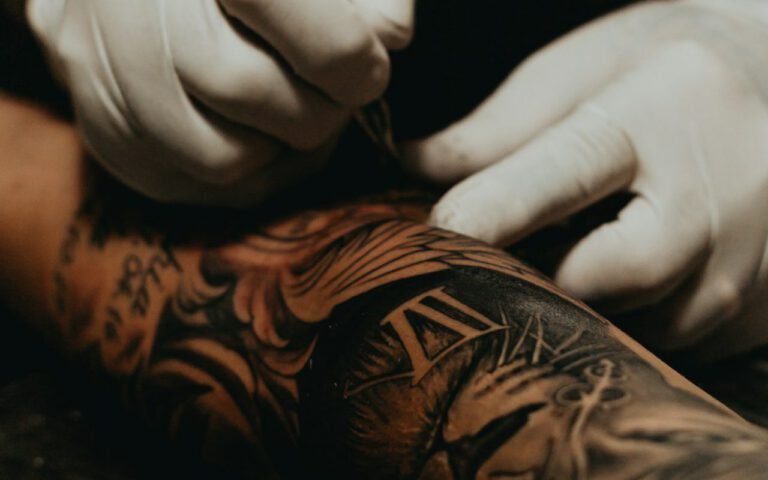
The tattooing itself took about three hours, with a couple of breaks. I started with the linework, outlining the flowers and swallow using a fine needle grouping. Then I added soft shading to give the petals and feathers depth. Fine-line work rewards a steady hand and patience, so I worked slowly and stepped back often to check the balance.
Jess brought snacks and water, ate a big lunch beforehand and spent most of the session chatting about her new city. She said the inner part of her forearm was the most sensitive spot, but overall it felt much easier than she expected.
The finishing touches
Near the end, I added a few tiny details that were not in the original drawing: a couple of seeds drifting from one of the coneflowers and a faint motion line behind the swallow. These little additions often happen in the moment, once I can see the design living on the body. I always check with the client first, and Jess loved them.
Key takeaway: A great custom tattoo is built in stages. Each step, from the first conversation to the final stencil, gives you a chance to shape the design before it becomes permanent.
What changes along the way
It is worth saying that the final tattoo rarely matches the first sketch exactly, and that is a good thing. Between the consult and the last line, Jess’s piece changed color palette, lost a few leaves, gained two drifting seeds and moved half an inch up her arm. Every one of those changes made it better suited to her and to her body.
Clients sometimes feel bad asking for revisions, as if they are criticizing the drawing. Please don’t. A custom design is a conversation, and your feedback is part of the process. I would much rather redraw a swallow three times than tattoo one you are not sure about. The goal is not my favorite drawing. The goal is your favorite tattoo.
After it heals
Jess followed our aftercare routine closely, washing gently twice a day, using a thin layer of unscented lotion and keeping it out of the sun and water for two weeks. When she sent a healed photo a month later, the linework had settled beautifully, and the shading looked soft and even.
For me, that healed photo is the true end of the journey. A tattoo is not finished when I put the machine down; it is finished when it has healed and become part of you.
Starting your own custom piece
If you have an idea that has been rattling around in your head, even a vague one, book a consult. Bring photos, stories and questions. We will figure out the rest together, step by step, from sketch to skin. I take a limited number of custom projects each month, so I can give each one the time and care it deserves.
Thank you to Jess for trusting me with her story, and for letting me share how her tattoo came to life.

Mara Voss
Mara draws custom fine-line, botanical and blackwork tattoos.


Start the conversation