 Nina Patel7 min read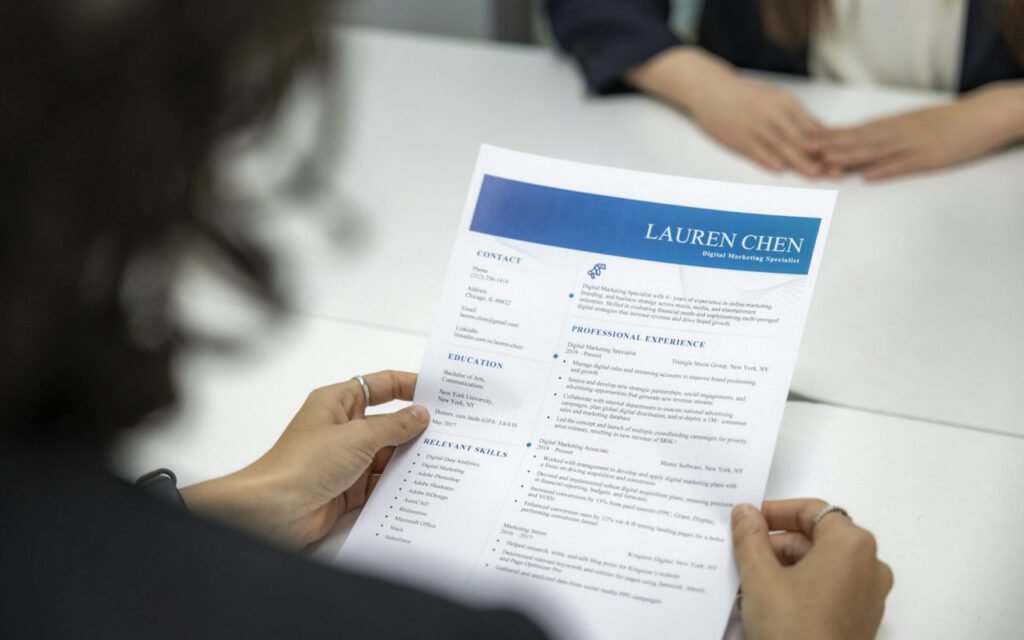
Recruiters skim first and read second. On a busy Monday, one of our TalentBridge recruiters might open eighty resumes before lunch, and the first pass on each one lasts only a few seconds. That is not because recruiters are careless. It is because they are looking for a reason to slow down. Your job is to give them that reason in the top third of the page. Make the skim count, and the reading will follow.
We work both sides of the hiring table, with job seekers and with the employers who hire them, so we see exactly what happens to a resume after you click submit. This guide pulls together the advice our recruiters give every week, from entry-level candidates to senior directors. None of it requires expensive software or a professional writer. It requires honesty, a little editing discipline and a clear picture of the job you want next.
What a recruiter sees in six seconds
When a resume lands in front of a recruiter, their eyes follow a fairly predictable path. They look at your name and headline, then your most recent job title and employer, then the dates, and then they scan down the left side of the page for anything that matches the role they are filling. If those first few landing spots line up with the job description, they keep reading. If they do not, the resume goes into the maybe pile, and the maybe pile rarely gets a second look.
That means the top of your resume carries far more weight than the bottom. A strong headline such as “Customer Success Manager, SaaS, 6 years” tells a recruiter in one line who you are and why you might fit. A vague objective statement about “seeking a challenging role in a growth-oriented company” tells them nothing. Replace the objective with a headline and a two- or three-line summary that names your specialty, your level and one result you are proud of.
Tailor the top third of your resume to each job. That is where eyes land first.
Nina, senior recruiter at TalentBridge
Tailoring does not mean rewriting your whole resume for every application. It means adjusting the headline, the summary and the order of your skills so that the words a hiring manager is looking for appear early. If a posting asks for “vendor management” and you have done it under the name “supplier relations”, use their phrase. Applicant tracking systems and human readers both reward a close match.
Results, not duties
The most common problem we see is a resume that reads like a job description. “Responsible for social media.” “Managed client accounts.” “Handled scheduling for the team.” These lines tell a recruiter what you were supposed to do, not what you actually achieved. Every person who held that job did the same duties. What makes you different is the result.
Instead of “managed social media”, write “grew followers 40% in six months”. Instead of “handled customer complaints”, try “resolved an average of 35 support tickets a day with a 96% satisfaction score”. Numbers give a recruiter something concrete to remember, and they make it easy for a hiring manager to picture you doing the same thing for their team.

How to find your numbers
Many candidates tell us they do not have numbers to share. Usually they do; they just have not looked. Start with these questions for each role:
- How much money did you save, earn or manage?
- How many people, customers, projects or accounts did you handle?
- How much faster, cheaper or more accurate did something become because of you?
- What awards, rankings or promotions did you receive?
- What did you build, launch or fix that is still in use today?
If you truly cannot share exact figures because of confidentiality, use ranges or relative terms. “Cut month-end close time by about a third” is still far stronger than “assisted with month-end close”. Just make sure every number is honest and something you could explain in an interview. Recruiters do ask, and a number you cannot back up does more damage than no number at all.
One page, clean layout
For most candidates with less than ten years of experience, one page is the right length. It forces you to choose your best material, and it respects the recruiter’s time. Senior candidates with long, relevant careers can stretch to two pages, but the first page still has to do the heavy lifting. Nobody has ever been hired because of something on page three.
Use clear headings, simple fonts and the most recent role at the top. Fancy templates with columns, icons, skill bars and photos might look impressive in a design app, but they often confuse applicant tracking systems and make the page harder to skim. A clean, single-column layout with consistent spacing reads well on a laptop, a phone and a printed page.
Small details that matter
Keep your font size between 10 and 12 points for body text, with slightly larger headings. Leave enough white space that the page does not feel crowded. Align your dates on the right so a recruiter can see your career timeline at a glance. Save the file as a PDF unless the employer asks for a Word document, and name it with your full name and the word “resume” rather than “final_v7_new”.

Contact details belong at the top: name, city and state, phone number, a professional email address and a link to your online profile or portfolio if you have one. You do not need your full street address, and you should never include personal details such as age, marital status or a photo for roles in the United States.
Skills that match the job
The skills section is where many resumes become a long, unfocused list of every tool the candidate has ever opened. A better approach is to list eight to twelve skills that directly match the role, grouped in a way that makes sense. A marketing coordinator might group them as “Channels”, “Tools” and “Strengths”. An engineer might use “Languages”, “Frameworks” and “Platforms”.
Leave out skills everyone is expected to have, such as basic email or word processing, unless the posting specifically mentions them. Put the skills that appear in the job description first. And remember that soft skills such as “communication” or “teamwork” are far more convincing when they show up inside your results than when they sit alone in a list.
Key takeaway: a recruiter should be able to connect your skills section to the job description in one glance. If they have to hunt for the match, they probably will not.
Resume checklist
Before you send your next application, run through this short checklist. Our recruiters use a version of it when they help candidates prepare for roles with TalentBridge clients.
- Clear headline. Your target role, specialty and years of experience in a single line.
- Results with numbers. At least one measurable result for each of your recent roles.
- Skills that match the job. The language of the posting appears early and naturally.
- One page. Or two at most for long, relevant senior careers.
- Clean layout. One column, simple fonts, consistent dates and no graphics.

After the checklist, read your resume out loud once. You will catch awkward phrasing, repeated words and typos that your eyes skip on screen. Then ask a friend in your field to give it the six-second test: hand them the page, take it back after a few seconds and ask what they remember. If they cannot name your role and at least one result, your top third needs more work.
Your next step
A resume is not a biography. It is a short, focused sales document with one goal: earning you a conversation. Lead with a clear headline, show results instead of duties, keep the layout clean and match your skills to the job in front of you. Those changes take an afternoon, and they can change how many calls you get for months.
If you would like a second pair of eyes, the TalentBridge team reviews resumes for candidates in our specialties as part of our free registration process. Send us your latest version, tell us the kind of role you want next, and one of our recruiters will come back with honest, practical notes. Six seconds is not much time, but with the right page in front of a recruiter, it is enough.

Nina Patel
Nina has helped Chicago candidates land great roles since 2012.



Nina Patel
Nina has helped Chicago candidates land great roles since 2012.




2 Comments
Thanks for explaining this so clearly.
Great reporting — please keep following this story.