

 ReviewsHollow Pines Review: A Cozy Mystery With Sharp TeethA small-town detective game that is warm, funny and quietly devastating.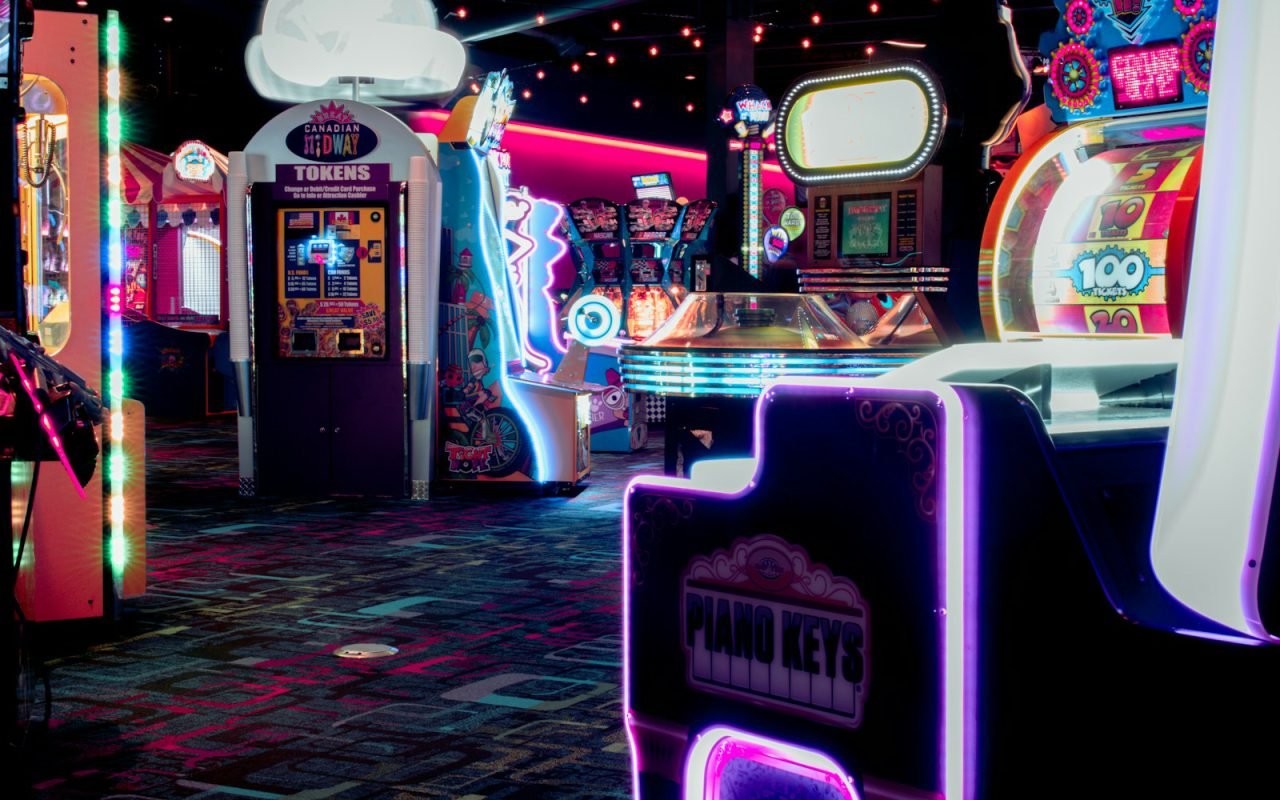
Reviews Alex Rivera6 min read
Starfall Drift Review: The Best Space Racer in a Decade
Neon tracks, a soundtrack that never quits and a career mode you won’t want to finish.
Alex Rivera6 min read
Written by
Alex Rivera
Alex has reviewed games for twelve years and still plays every one to the credits before scoring it.
8Articles
2026Writing since
Starfall Drift takes the anti-gravity racer back to its roots: absurd speed, tracks that loop through nebulas and a handling model that rewards practice. It’s a game that feels instantly familiar to anyone who spent the late nineties hunched over a futuristic racer, yet it never leans on nostalgia alone. Lumen Forge, a small independent studio in Portland, Oregon, has made something sharper, prettier and far more generous than it had any right to be.
Neon tracks, a soundtrack that never quits and a career mode you won’t want to finish. Over 30 hours, across every cup, dozens of online races and a few too many late nights of four-player split-screen, Starfall Drift rarely put a foot wrong. It is, quite simply, the best space racer we’ve played in a decade.
Speed you can feel
At top speed the screen bends at the edges and the music pitches up. It never stops being thrilling. That sense of velocity is the heart of the game, and Lumen Forge has tuned it carefully. At the lowest speed class, Starfall Drift is fast but readable, a comfortable place to learn the tracks. By the top class, you’re threading ships through gaps that open and close in fractions of a second, reacting more on instinct than sight.
The handling model is the real star. Ships have weight and momentum, and every input matters. Tapping the air brakes swings the nose into a corner; holding them sends you into a long, controlled drift that builds a glowing boost meter. Release at the right moment and your ship launches forward in a burst of light. Mistime it and you scrape a wall, lose your shield and watch three rivals slide past.
It takes a few hours for the drift system to click. When it does, Starfall Drift becomes something close to a rhythm game, where every corner has a perfect line and every straight is a chance to recover. The early cups are a gentle introduction; the later ones demand mastery.
Tracks that show off
Starfall Drift’s 24 tracks are a gallery of inventive design. One course spirals around a dying star, the track glowing orange as you skim its surface. Another drops you through a crystalline asteroid field where the walls shimmer and reflect your ship. A late-game favorite loops through the inside of a giant space station, with gravity flipping every few corners so you race on the ceiling. Each track has alternate routes and shortcuts that reward exploration and repeated play.
A career worth playing
Forty cups, rival pilots with their own stories and upgrades that change how your ship handles. Career mode is where Starfall Drift goes beyond the classics that inspired it. You start as a rookie in a struggling team, picking up a battered ship and racing in low-stakes cups on the edge of the galaxy. As you win, you unlock new parts, sponsors and rival storylines.
The rivals are a delight. Each has a short, well-voiced arc that plays out in brief scenes between races. There’s a veteran pilot who wants one last title, a hotshot rookie with a chip on her shoulder and a mysterious racer whose identity becomes a running mystery. They show up in races with distinct driving styles, and beating a rival you’ve grown to dislike is enormously satisfying.
Upgrades matter more than in most racers. Swapping engines, wings and stabilizers genuinely changes how a ship feels. A lighter frame turns sharper but loses shield strength. A heavier engine boosts top speed but makes drifting harder to control. Tinkering between races becomes a big part of the fun, and there’s no single best build.
We built every upgrade to change a feeling, not just a number. If you can’t feel it in your hands, it doesn’t belong in the game.
Theo Marsh, lead designer at Lumen Forge
Sight and sound
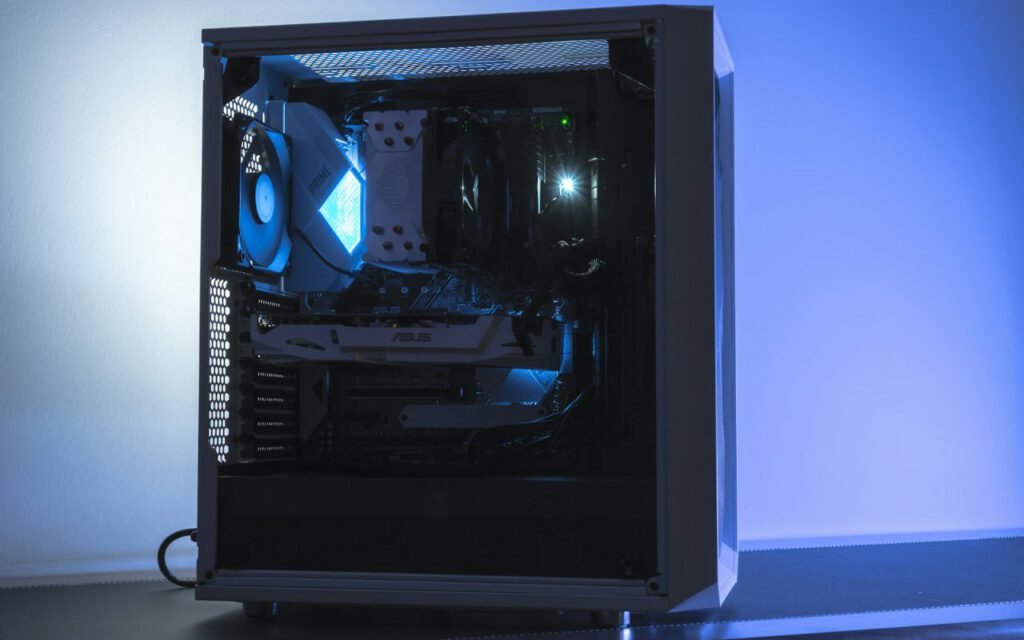
Starfall Drift is gorgeous. Its art direction leans into bold neon, deep purples and glowing pinks, with tracks that pulse in time with the music. Particle effects, from engine trails to sparks off a wall, fill the screen without ever making it unreadable. On a mid-range gaming PC, we held a smooth 120 frames per second at 1440p with high settings, and console versions offer a choice between a 120 fps performance mode and a sharper quality mode.
The soundtrack deserves its own paragraph. Composed entirely in-house, it’s a brilliant collection of synthwave and electronic tracks that build in intensity through each race. Music subtly speeds up and adds layers as you take the lead, and the final lap of a close race, with the bass thundering and your boost meter full, is one of the best feelings in any game this year.
Built for friends
Four-player split-screen is a rare gift in modern racing games, and Starfall Drift handles it beautifully. Performance holds up even with four screens, and a dedicated party mode lets friends mix cups, swap ships and play with silly modifiers like reversed tracks or low gravity. On a couch with three friends, it’s an easy recommendation.

What we liked
- Silky 120 fps on mid-range PCs
- Brilliant synthwave soundtrack
- Split-screen for four players
- A deep handling model that rewards practice
- Career rivals with genuine personality
Beyond the headline features, Starfall Drift is full of thoughtful touches. A ghost replay system lets you race against your own best times or those of friends. Accessibility options include adjustable assists, color-blind modes and the ability to slow the game down while learning. Load times are short, menus are clean and you’re back on the track within seconds of finishing a race.
What we didn’t
- Later cups get punishingly hard
- Online lobbies are thin outside peak hours
Starfall Drift’s difficulty curve has one steep cliff. The final ten cups of career mode ask for near-perfect runs, and rival pilots in the top speed class can feel unfair, with little margin for error. Patient players will push through, but some will hit a wall and stop. An optional easier setting for the late game would help.
We’d also like a little more variety in the rival storylines toward the end of the career. Once the main mystery is solved, the final cups lose some of their narrative pull, and the closing scenes feel brief compared to the strong setup. It’s a small complaint, and the racing itself carries the last stretch, but the story deserved a bigger finish.
Online play is smooth when you find a race, but outside evening hours in North America, lobbies can take several minutes to fill, and you’ll often race against bots. Lumen Forge has said it’s working to improve matchmaking, but for now, online play is best during peak times.
Key takeaway: If you love speed, style and a racer that rewards practice, Starfall Drift is essential. Its few flaws barely dent an outstanding package.
The verdict · 9.2/10
The most fun we’ve had with a racer in years. Buy it, turn it up and hold on. Starfall Drift captures what made classic anti-gravity racers great, then adds a deep career mode, brilliant music and a handling model that keeps you coming back. It’s a huge achievement for a small studio and a reminder that bold, focused games can still come from unexpected places. Turn the lights down, put on some good headphones and see how fast you can really go.
Written by
Alex Rivera
Alex has reviewed games for twelve years and still plays every one to the credits before scoring it.
8Articles
2026Writing since
Read next
ReviewsHollow Pines Review: A Cozy Mystery With Sharp TeethA small-town detective game that is warm, funny and quietly devastating. ReviewsIronclad Tactics Review: Smart, Deep and a Little Too LongA turn-based strategy game with brilliant ideas buried under one too many missions.
 ReviewsEcho Divers Review: Co-op Horror That Gets Under Your SkinFour friends, one sunken lab and a sound design team that wants you to never sleep…
 IndieGarden Guild Review: The Most Relaxing Game of the YearBuild a village garden, trade seeds with friends and forget about your inbox.